
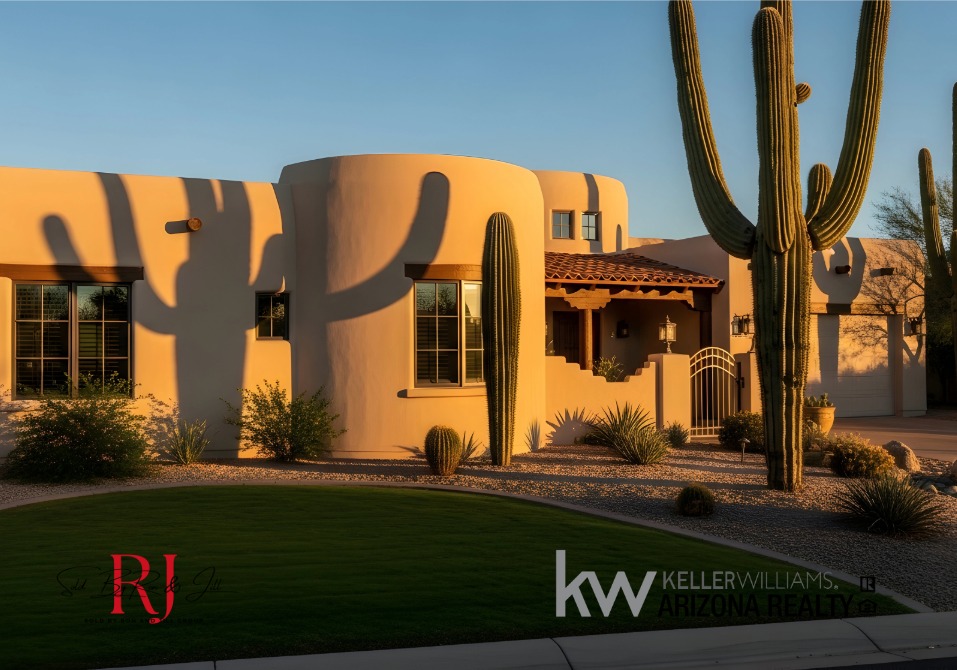
9 Smart Tips for Making a Standout Offer in Phoenix
The Terrain: The Market Your Offer Is Walking Into
ARMLS January 2026: 24,358 active listings, $444,740 median sale price, 94 average days on market, 5.17 months supply, 59.6% of closings below list price, 56% with seller concessions. West Valley entry range $380,000–$434,000.
With sellers paying concessions in more than half of all closings and the median home selling below list price, Phoenix buyers in 2026 have legitimate negotiating power that did not exist three years ago. Negotiating power and negotiating skill are different things. These nine tips are the skill layer.
Most buyers submit a pre-qualification letter with their offer. In Arizona, this is the baseline expectation — not a differentiator. The actual differentiator is the AAR (Arizona Association of Realtors) Pre-Qualification Form, prepared by your lender and submitted alongside your offer.
The standard pre-qualification letter says “this buyer is approved for up to $X.” The AAR Pre-Qualification Form goes further: it identifies the loan type, documents reviewed, credit score range, whether income and assets have been verified, and the lender’s contact information for direct verification.
Fully underwritten vs. pre-approved: A full underwrite means the lender has reviewed income documentation, W-2s, tax returns, bank statements, and pulled credit before the offer. The only remaining conditions are property-specific: appraisal, title, and final closing docs. Submit fully underwritten. If your lender cannot offer this, find one who can.
Days on market is the single most useful data point for price strategy in Phoenix right now. The 94-day metro average is a blunt instrument. What you need is the DOM story for the specific property — including the full listing history, not just the current ARMLS counter.
Competitive Window
If priced correctly and showing well, offer at or near list price. Modest concession requests only. Escalation clause may be warranted if multiple showings confirmed.
First Look Has Passed
Market has had its first look. If no offer: there’s a reason, usually price or condition. Research before writing. Seller beginning to feel time pressure.
Negotiating Leverage
This is where 59.6% below list price lives. Meaningful concession requests are reasonable here. Seller has watched comparable homes move and feels it.
Market Has Spoken
The seller knows it. Below-list offer with full concession package is a legitimate starting position. The listing agent’s job is to get a deal to the table, not hold a rejected price.
List price is the seller’s aspiration. Closed sales are market reality. In a market where 59.6% of closings happen below list price, using list price as your pricing anchor is a structural mistake.
Concession-adjust your comps: The January 2026 Phoenix market has 56% of closings with seller concessions. If a comparable home sold for $415,000 with $12,000 in seller concessions, the actual net-to-seller was $403,000. That is the relevant figure for seller net calculations, not the $415,000 headline. When you understand what sellers are actually accepting — concession-adjusted — you understand the real floor of the market.
In Arizona, earnest money of approximately 1% of the purchase price is the common baseline. On a $420,000 home that is $4,200 — it meets the minimum expectation. A buyer who submits $8,000 to $12,000 is sending a different signal.
Earnest money is held by the title/escrow company. It is credited toward your closing costs at close. It is refundable during the inspection period if you cancel within the proper timeline. It is at risk only if you default after the inspection period expires without a valid contract-based cancellation reason.
Most buyers submit a 30-day close because their lender said 30 days is standard. This is fine when the seller has no timeline preference. But sellers frequently do — and it is almost always in the ARMLS private remarks that most buyers never see.
Read private remarks before submitting: Your agent has access to the ARMLS private remarks. “Seller has already purchased — needs to close by April 30.” “Prefer end-of-month close for tax purposes.” “Flexible — seller needs 60 days post-close to relocate.” These are not in the Zillow description. They are in ARMLS, and they are offer-shaping information.
The leaseback option: If a seller needs additional time to vacate after closing, offering a short post-closing leaseback — typically 3 to 30 days at a daily rate — can be the decisive factor between otherwise similar offers. The seller closes on the buyer’s preferred date and gets additional time to move. Discuss logistics and legal requirements with your agent before offering a leaseback, as it has specific documentation requirements in Arizona.
In a market where 56% of closings carry seller concessions, asking for a concession in your initial offer is not bold — it is current. The mistake buyers make is waiting for the counteroffer, after the seller has already anchored to the original price. Front-load the concession ask.
| Loan Type | Down Payment | Max Seller Concessions |
|---|---|---|
| Conventional | Less than 10% | 3% of purchase price |
| Conventional | 10% to 25% | 6% of purchase price |
| Conventional | More than 25% | 9% of purchase price |
| FHA | 3.5% minimum | 6% of purchase price |
| VA | 0% (no PMI) | No formal cap; lender-specific limits apply |
| USDA | 0% | 6% of purchase price |
Concession caps are lender-enforced. If the seller agrees to concessions that exceed the program cap for your loan type, the excess cannot be applied at closing. Structure your concession request within the applicable cap before submitting. Your agent and lender should confirm the exact cap before the offer is written.
The 2020–2022 era of waiving inspections in Phoenix is over. With 5.17 months of supply and 94 average DOM, sellers are not in a position to demand waived inspections from most buyers. More importantly: a West Valley home without an inspection is a liability position, not a negotiating move.
Standard Arizona inspection period: 10 days beginning the day after contract acceptance (per the AAR Residential Resale Purchase Contract). During this period, the buyer may hire licensed inspectors for any and all systems. If findings are disapproved, the buyer may cancel within the period and receive a full earnest money refund.
What can be negotiated: The length of the inspection period (5–7 days is more competitive in fast-moving situations), the specific items raised on the BINSR (focus on safety and systems, not cosmetics), whether you request repairs or credits. What should not be negotiated away: the right to inspect and cancel if findings are material.
An escalation clause automatically increases your offer above competing offers up to a stated ceiling. Example: “Offer of $400,000, escalating $2,000 above any bona fide competing offer, up to a maximum of $425,000.” If no competing offer exists, your offer stays at $400,000.
The ceiling discipline: Set your escalation ceiling at the maximum you will pay regardless of whether the home appraises at that value. If you escalate to $425,000 and the home appraises at $415,000, you face a $10,000 appraisal gap. Know this before setting the ceiling.
Require proof of competing offer: A properly drafted escalation clause should require the seller to provide documentation of the competing offer that triggered the escalation. Do not escalate against an undocumented claim. Reference: Arizona Association of Realtors (aaronline.com) for escalation clause guidance.
This tip is Arizona-specific and differentiates Phoenix buyers from relocators who do not know the local system. The AAR Pre-Qualification Form is a standardized document prepared by your lender that provides structured, detailed information about your financial qualification — far beyond what a standard pre-approval letter communicates.
What the AAR Pre-Qual Form includes: Loan type, loan amount, down payment amount, credit score range (not the specific number), which documents the lender has reviewed, whether income and assets have been verified, the lender’s contact information, and their NMLS license number.
The Pivot: Putting the Nine Tips Together
These nine tips are not a menu — they are a sequence. Pre-approval and comp analysis happen before you tour. DOM read and private remarks review happen before you write the number. Concession structure and earnest money decisions happen in the offer drafting session with your agent. Inspection terms are set at submission, not after the fact.
Every element of an offer communicates something about the buyer’s intent, financial position, and likelihood of closing. In a market where 5.17 months of supply gives you time but not infinite time, the buyers who close on the right homes are the ones whose offers are built with the seller’s decision criteria in mind — not just their own wishlist.
Frequently Asked Questions
What is a typical earnest money amount for Phoenix in 2026?
The baseline expectation in Phoenix is approximately 1% of the purchase price — on a $420,000 home that is $4,200. Buyers looking to signal stronger commitment typically submit 2% to 3% ($8,000–$12,000). Earnest money is held by the title/escrow company and credited at closing. It is refundable during the inspection period if you cancel for a valid contract reason.
Should I include an escalation clause in my Phoenix offer?
Only if you have confirmed reason to believe multiple offers exist or are expected. An escalation clause makes sense on well-priced homes fewer than 14 days on market in active submarkets. On a home with 60+ DOM, an escalation clause reveals your ceiling to the seller without any competitive trigger and works against you. Always require documentation of any competing offer that triggers the escalation.
What seller concessions can I ask for in a Phoenix offer?
In the current market (56% of January 2026 closings carry seller concessions), requesting concessions in your initial offer is standard practice. Common types: closing cost credits, prepaid items, permanent rate buydown discount points, and temporary rate buydowns. Concession amounts are capped by loan program: conventional with less than 10% down is 3% of purchase price; FHA is 6%; VA has no formal cap. Concessions cannot be used as down payment.
How long is the inspection period in Arizona?
The standard AAR purchase contract inspection period is 10 days, beginning the day after contract acceptance. During this period you may conduct any inspection and cancel for any reason with earnest money returned in full. The 10-day standard can be negotiated shorter (5–7 days for a more competitive offer) or longer if the seller agrees.
What is the AAR Pre-Qualification Form and why does it matter?
The Arizona Association of Realtors Pre-Qualification Form is a standardized lender document providing detailed qualification information to the seller’s agent — including loan type, verified income and assets, credit score range, and the lender’s direct contact information. It is more detailed than a standard pre-approval letter and allows listing agents to verify your file directly by phone, communicating closing certainty in a way a letter cannot.
Is it still competitive to include an inspection contingency in Phoenix?
Yes. With 5.17 months of supply in January 2026, the era of waiving inspections to compete is over in most Phoenix submarkets. What can be negotiated is the length of the inspection period and the scope of what you raise on the BINSR, not the right to inspect. West Valley homes have specific inspection needs — pool, HVAC, sewer scope, WDIIR termite — that carry real costs if undiscovered at time of purchase.
How do days on market affect my offer price in Phoenix?
Heavily. 0–14 days requires at or near list price with minimal concessions; 30–60 days opens below-list pricing and full concession packages; 60+ days supports a well-researched below-list offer. Always check the full listing history for properties that may have been listed under previous MLS numbers — a current 22 DOM may represent 87 total days across two listing periods, changing the negotiating landscape entirely.
Schedule a Consultation With Ron and Jill
The difference between an offer that wins and one that generates a counteroffer — or no response — in Phoenix right now comes down to how well the offer is built for the specific seller’s situation. The comp analysis, DOM read, concession structure, earnest money signal, timeline match, and AAR Pre-Qual Form all need to be calibrated to the specific listing. That calibration is what we do before every offer we advise on. Schedule the consultation before you start writing offers.