
12 Things to Do Before Selling Your House in Phoenix
With 24,358 active listings competing for buyers and a 94-day average days on market in the Phoenix Metro, this is not the market where an unprepared home gets forgiven for cutting corners. Buyers in 2026 have time, options, and leverage — and the homes that move are the ones priced accurately, inspected proactively, documented correctly, and photographed professionally. The 12 things in this list are not nice-to-haves. They are the specific actions that separate a seller who closes at full price from a seller who takes a concession, a BINSR credit, an appraisal gap, or a combination of all three. Most of the work happens before the sign goes in the yard — not after.
The Phoenix Metro entered spring 2026 with improving absorption — the December 2025 absorption rate of 28.75% was the strongest in over 12 months — but with 56% of Q3 2025 closings still including seller concessions averaging $10,000 and a 98% sale-to-list ratio, sellers are not operating in a market where preparation is optional. The buyers touring West Valley homes in Peoria, Surprise, Goodyear, and Glendale are patient and analytical. They have been watching inventory for months. They know the comps. They will request repairs, they will scrutinize the disclosures, and they will walk if the numbers do not work. The seller who prepared is the seller who closes.
The 2021–2022 market conditioned Phoenix sellers to believe that preparation was secondary to listing quickly. Inventory was so low and demand so high that homes sold before inspections, above asking, with waived contingencies. That psychology is residue. A 2026 Phoenix seller who lists with deferred maintenance, phone camera photos, and a price set from 2022 comps is not competing in their market — they are competing with the market of three years ago that no longer exists. The preparation investment pays in fewer BINSR credits, fewer appraisal gaps, and faster closes at better prices.
The 12 Things Phoenix Sellers Must Do Before Listing
1 Run Your Net Proceeds Calculation First
Before any other decision, know what you will actually walk away with. The formula: anticipated sale price minus remaining mortgage balance minus total transaction costs. Transaction costs in the Phoenix Metro run 8%–9% of sale price, covering listing agent compensation (~2.66%), buyer agent compensation if offered (~2.5%–3%), title and escrow fees (~0.5%–1%), owner’s title insurance (~0.36%), prorated property taxes, HOA transfer and estoppel fees ($100–$600 if applicable), and anticipated BINSR concessions.
On a $475,000 sale with a $280,000 remaining mortgage balance, total transaction costs of approximately $40,000 produce net proceeds of roughly $155,000. That figure tells the seller whether proceeds cover the down payment on the next home, fund the planned move, and absorb the rate lock-in payment increase if they are buying again at current rates. Sellers who skip this step sometimes discover at the closing table that net proceeds do not support their next move — a problem that is entirely preventable with a 30-minute pre-listing financial model.
2 Get a Current CMA From Your Listing Agent
A Comparative Market Analysis (CMA) based on the last 60–90 days of ARMLS closed sales in your submarket is the foundation of everything else. It tells you the realistic price range, confirms which condition adjustments the appraiser will apply, and anchors the net proceeds calculation from Step 1. A CMA that uses 2022 data, Zillow’s automated estimate, or sales from a different subdivision is not a CMA — it is wishful thinking. The 94-day average DOM in the current Phoenix market is a direct result of sellers pricing above what the most recent comps support. The first two to three weeks of a listing generate the most qualified buyer traffic — wasting that window on an overpriced home costs more than the aggressive pricing itself would have.
3 Verify Your Actual Square Footage
Do not rely on county assessor records. Phoenix Valuations LLC estimates that approximately 30% of Maricopa County homes have incorrect square footage in public records. The appraiser measures independently, and if their measurement differs materially from the advertised square footage, the appraisal may come in below the contract price. At $175–$225/sq ft in a mid-range West Valley home, a 200 sq ft discrepancy represents $35,000–$45,000 in potential value. Have your agent measure the GLA before setting the list price — do not let the appraiser find a discrepancy you could have caught and corrected first.
4 Identify and Address Unpermitted Work
A garage converted to a bedroom, a room addition, a pool enclosure, a patio cover — these are common in Phoenix homes and commonly done without permits. Unpermitted work creates three problems: the appraiser cannot count it as gross living area, lender minimum property requirements may be triggered, and Arizona law requires disclosure of known material facts on the SPDS. Retroactive permits are possible in most Maricopa County jurisdictions but require inspections and may require bringing work up to current code. Address this before listing — not after an appraiser flags it mid-transaction or a buyer’s attorney raises it post-closing.
5 Get a Pre-Listing Home Inspection
A pre-listing inspection costs $350–$600 and surfaces the same findings a buyer’s inspector will find 30–45 days later — under a 10-day BINSR deadline, with a transaction at risk, and a buyer’s agent presenting the findings as leverage. Addressing inspection items proactively gives the seller control: their own contractor, their own timeline, competitive bids, and documentation to include in the listing information. In the current Phoenix market where buyers request concessions in 56% of closings, a seller who can honestly say “we’ve had the home inspected and addressed the findings” eliminates the most common source of post-contract renegotiation.
The pre-listing inspection math: A $500 inspection that reveals a $2,800 HVAC capacitor replacement and $1,400 in minor plumbing repairs gives the seller the option to fix both for $4,200 before listing. The same items found during the buyer’s inspection under BINSR pressure typically cost the seller $5,500–$8,000 in credited concessions because the buyer’s agent presents them as negotiating leverage. Proactive costs less than reactive in nearly every Phoenix BINSR scenario.
6 Service the HVAC System — It Is the Most Scrutinized Item in Phoenix Inspections
Phoenix HVAC systems run virtually year-round — cooling from April through October, heating from November through March. Every home inspector in the Phoenix Metro tests the HVAC during the inspection visit. A unit that runs, cools to the correct temperature differential, and has a clean service record presents very differently in an inspection report than one that is dirty, struggling, or approaching the end of its service life (typically 12–15 years for split systems in Phoenix).
Have the HVAC serviced by a licensed contractor and get a written report documenting the service date, refrigerant check, filter change, and any components replaced. This becomes part of the comp package you provide to the appraiser and the disclosure packet you provide to buyers. A well-documented, recently serviced HVAC system supports a C3 condition rating and reduces the appraiser’s incentive to flag it as deferred maintenance.
7 Inspect the Roof and Address Any Issues
Phoenix roofs face two specific stressors national checklists miss: extreme thermal cycling (the daily temperature differential between summer afternoon peaks and overnight lows accelerates material fatigue) and monsoon season moisture. Lifted shingles, damaged ridge caps, deteriorated flashing, and penetration seals that have cracked under heat expansion are among the most common findings in Phoenix home inspections.
A licensed roofing contractor inspection costs $150–$300. Addressing minor issues proactively — re-sealed flashings, replaced ridge caps, cleared debris — costs far less than the concession a buyer’s inspector will request. If the roof has significant remaining life but minor visible damage, getting a roofer to document condition and address the minor items before listing removes the most emotionally charged inspection finding from the equation.
8 Service and Prepare the Pool (Phoenix-Specific)
Pools appear in a very high percentage of West Valley homes — and they appear on every inspection report. A pool appraiser and home inspector both evaluate the pool separately: equipment function (pump, filter, heater if present), plaster condition, deck surface, and barrier compliance under Arizona law (A.R.S. § 36-1681).
Before listing: have the pool serviced and chemically balanced; confirm the pump, filter, and any automation systems are functional; verify the barrier (fence or wall with self-closing, self-latching gate) meets current code; and document the service record. A pool that is clean, blue, and equipment-functional photographs beautifully and inspects cleanly. A pool with green water, non-functional equipment, or a barrier compliance issue creates both a disclosure obligation and a BINSR target. In West Valley submarkets, a well-maintained pool in appraisal-supported territory adds $15,000–$30,000 in value — a poorly maintained one becomes a liability.
9 Complete the SPDS Accurately and Fully — Before the First Showing
The Arizona Association of Realtors Seller’s Property Disclosure Statement is not a formality. It is a nine-page legal document that covers property history (past damage, repairs, additions, insurance claims), utilities, environmental conditions, structural components, appliances and systems, and a catch-all section for anything else material to the property. The seller must answer every question from their actual knowledge — guessing, leaving fields blank, or deliberately omitting known issues creates post-closing liability that survives the transaction under Arizona common law (Hill v. Jones, 1986).
Complete the SPDS before the first showing — not three days after contract acceptance under deadline pressure. Completing it early forces a useful systematic review of the property’s history, ensures the seller has thought through items like prior water intrusion, pest treatment history, HOA disputes, and unpermitted work before a buyer’s attorney asks. Work through it with your listing agent, not alone.
10 Declutter, Deep Clean, and Desert-Proof the Exterior
Declutter aggressively. Buyers evaluate square footage as much visually as they do numerically. A room crowded with furniture, boxes, and personal items reads as smaller than its actual dimensions. Remove at least 30% of furniture and 100% of personal photographs and memorabilia from the spaces that will be photographed. Buyers need to see themselves in the home — not the seller’s life.
Deep clean.** In Phoenix, this means more than floors and counters. Ceiling fans accumulate desert dust visibly and photograph poorly. Window tracks fill with caliche and insect debris. Outdoor furniture fades and stains under UV exposure. HVAC vents in a dusty desert environment collect visible buildup. The smell of pet dander, cooking, or must is significantly more noticeable to a buyer arriving from outside than to the seller who has acclimated to it. Clean to the standard of a model home — not the standard of a lived-in one.
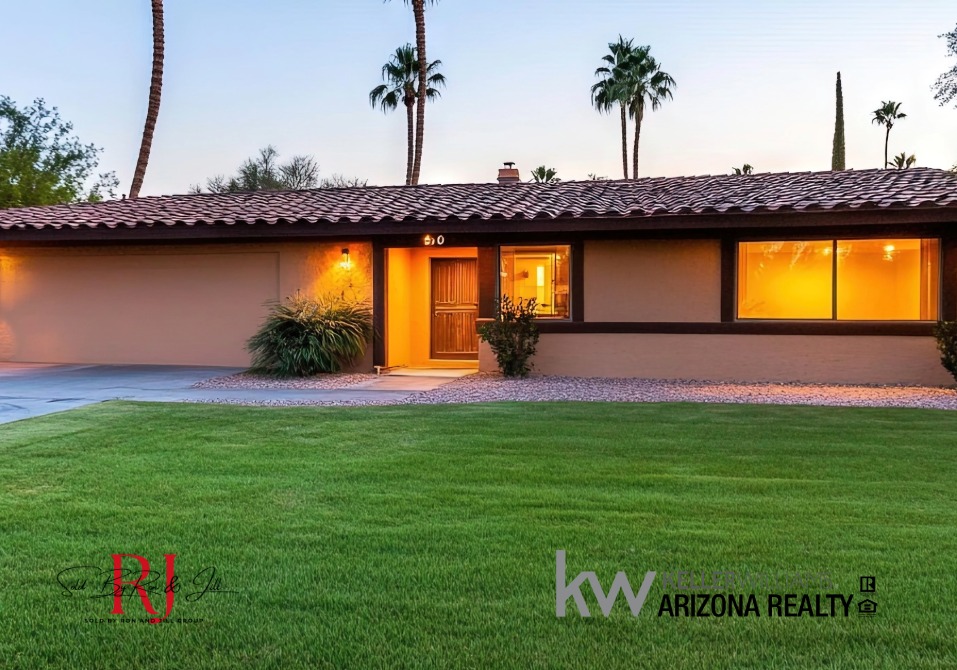
Address the desert exterior. Phoenix curb appeal has specific maintenance demands: dead desert landscaping, cracked concrete from thermal cycling, faded exterior paint from UV exposure, and caliche-stained block walls. A fresh gravel refresh, removal of dead plants, repaired cracks in concrete flatwork, and a pressure wash of the exterior dramatically improve listing photos and drive-up impressions — for a total cost typically under $1,500.
11 Hire a Professional Real Estate Photographer (and Add a 3D Tour)
More than 90% of buyers begin their home search online. The listing photographs are the first and most consequential impression the home makes on the buyer pool. Listings with professional photography sell 50% faster than those with unprofessional images. Professional real estate photography in the Phoenix Metro runs $200–$400 for a standard package.
Add a 3D Matterport virtual tour ($150–$250 additional). Phoenix receives a significant volume of out-of-state buyers — California, Illinois, Washington — who are making purchase decisions from a distance and cannot tour every listing in person on a single trip. A 3D tour allows those buyers to shortlist the home before their trip, increasing the quality and seriousness of buyers who schedule in-person showings.
Schedule photography after the home is fully staged and cleaned — not before. Reshoot fees apply if the photographer returns because furniture was moved or a room was not ready. Have the pool cleaned and the HVAC running on the day of the shoot so the system sounds and appears operational in any video content.
12 Price from Current ARMLS Comps — Not Zillow, Not 2022
Zillow’s automated Zestimate lags actual market data by 30–90 days in a shifting market. In a period of essentially flat appreciation, that lag matters less than in a rapidly appreciating one — but Zillow still does not account for the subdivision-level adjustments, condition differences, and micro-market supply dynamics that determine what a specific home will appraise for. More dangerously, many Phoenix sellers are still pricing from 2022 peak data. The Phoenix median peaked at approximately $475,000 in mid-2022 and has traded near $444,740 in January 2026. A seller who bought in 2020 at $350,000 and believes the 2022 peak value of $475,000 is still achievable is pricing into an appraisal gap.
Your listing agent should pull closed ARMLS comps from the last 60–90 days — in your specific subdivision or within a tight geographic radius — adjusted for condition, square footage, amenities, and any market trend lines. That number is where your list price should be. Pricing at the market’s actual level is the single most effective pre-listing action available. Homes priced at market close faster, generate more offers, require fewer price reductions, and produce smaller BINSR concessions.
The Bonus Action: Consider the Coming Soon Strategy
Arizona’s Coming Soon provision allows sellers to market and show a property for up to 30 days without accruing days on market. This is a meaningful advantage in the current market where 94-day average DOM carries stigma — buyers and buyer’s agents interpret extended DOM as a signal that something is wrong with the price or property.
A seller who completes all 12 steps above and enters a 30-day Coming Soon period can generate pre-market buyer interest, conduct showings, and potentially receive offers before the active listing goes live — entering the active period with zero DOM and a motivated buyer pool. Coming Soon works best for well-prepared homes in submarkets with healthy demand. It is not a shortcut for a home that is not yet ready — the home must be in final showing condition before Coming Soon begins.
Most Phoenix sellers who do the preparation correctly need 4–8 weeks from decision to list-ready. The timeline breaks down roughly as: Weeks 1–2 for financial and legal groundwork (net proceeds calculation, CMA, SPDS completion, permit verification, square footage confirmation); Weeks 2–4 for physical preparation (pre-listing inspection, HVAC service, roof inspection, pool service, deferred maintenance repairs); Weeks 4–6 for presentation (deep clean, declutter, staging, curb appeal); and Weeks 6–8 for professional photography and Coming Soon marketing. Sellers who compress this to two weeks typically skip the pre-listing inspection and SPDS review — which creates the BINSR and disclosure problems that cost more to resolve mid-transaction.
Make repairs that a buyer’s inspector will flag as safety or habitability issues: HVAC function, roof leaks, electrical safety issues, plumbing leaks, pool barrier compliance. Also make repairs that affect the appraiser’s condition rating (C3 vs. C4 matters in the comp analysis). Skip purely cosmetic items buyers will redo to their own taste: full kitchen remodel if the existing kitchen is functional, complete carpet replacement if buyers may prefer hard flooring. The current Phoenix market favors offering a credit for buyer-preference items rather than doing the work yourself. Focus pre-listing investment on items that affect the appraisal, the inspection outcome, and the first-impression photographs.
The SPDS (Seller’s Property Disclosure Statement) is a nine-page Arizona Association of Realtors form requiring the seller to disclose all known material facts about the property. The AAR Residential Purchase Contract requires the completed SPDS within three days of contract acceptance. Completing it before listing forces a systematic review of the property’s history, demonstrates good faith to buyers, and protects the seller legally. Incomplete or inaccurate SPDS answers are the most common basis for post-closing real estate litigation in Arizona under the Hill v. Jones standard — disclosure liability survives the closing.
Yes, for most Phoenix sellers in the current market. A pre-listing inspection ($350–$600) reveals the same items a buyer’s inspector will find 30–45 days later — but under a 10-day BINSR deadline with a transaction at risk. Addressing items proactively gives the seller control over contractor choice, timeline, and cost. In the current Phoenix market where buyers request concessions in 56% of closings, a pre-listing inspection typically saves more in avoided BINSR credits than it costs.
Listings with professional photography sell 50% faster and over 90% of buyers begin their home search online. In a market with 24,358 competing listings, the listing photographs are typically the first impression a buyer forms. Professional photography in the Phoenix Metro runs $200–$400. A 3D Matterport tour ($150–$250 additional) is particularly valuable for Phoenix given the significant volume of out-of-state buyers who cannot tour every listing in person on a single trip.
Arizona’s Coming Soon provision allows sellers to market and show a property for up to 30 days without accruing days on market. This is a meaningful advantage in a market where 94-day average DOM carries stigma. A seller who generates pre-market interest during the Coming Soon period can enter the active listing with pending offers and zero DOM. It works best for well-prepared homes in submarkets with healthy demand. The home must be in final showing condition before Coming Soon begins — it is not a time to complete repairs.
Net proceeds equal anticipated sale price minus remaining mortgage balance minus all transaction costs. Transaction costs in the Phoenix Metro run 8%–9% of sale price: listing agent compensation (~2.66%), buyer agent compensation if offered (~2.5%–3%), title and escrow fees (~0.5%–1%), owner’s title insurance (~0.36%), prorated property taxes, HOA transfer and estoppel fees if applicable, and anticipated BINSR concessions. On a $475,000 sale with $280,000 remaining mortgage, transaction costs of approximately $40,000 produce net proceeds of roughly $155,000. Run this calculation before signing a listing agreement.
Five Phoenix-specific priorities: (1) HVAC service and documentation — runs year-round, most scrutinized inspection item; (2) Pool service and barrier compliance under A.R.S. § 36-1681(E) — pools appear in a high percentage of West Valley homes and are inspected separately; (3) Stucco and exterior condition — thermal cycling and monsoon moisture damage exteriors more aggressively than temperate climates; (4) Roof condition after monsoon season — lifted shingles, damaged ridge caps, and cracked flashing are among the most common Phoenix inspection findings; (5) Square footage verification — approximately 30% of Maricopa County homes have incorrect sq ft in public records per Phoenix Valuations LLC.
Prepared Sellers Close Faster and at Better Prices. Here Is Where That Conversation Starts.
The 12 items in this list are what the pre-listing consultation is designed to work through — your specific home, your specific submarket, your specific equity position. Some of these take an hour and cost nothing. Some require a contractor and two weeks. Knowing which is which, and in what order, is the difference between a transaction that flows and one that generates surprises at the BINSR stage. We work sellers across Peoria, Surprise, Goodyear, Buckeye, Anthem, Glendale, and Litchfield Park, and the preparation conversation is where we start.



How to Prepare for a Home Appraisal in Phoenix (and What to Know)
How to Prepare for a Home Appraisal in Phoenix (and What to Know) How to Prepare for a Home Appraisal
Phoenix Home Appraisal Tips for Sellers: What Hurts (and Helps)?
Phoenix Home Appraisal Tips for Sellers: What Hurts (and Helps)? | 2026 Phoenix Home Appraisal Tips for Sellers: What Hurts