
Do Open Houses Sell Homes in Phoenix? What Sellers Should Know
The data tells a consistent story: buyers attend open houses, but open houses are rarely the primary channel through which a sale closes. The 3% figure is frequently cited as evidence that open houses are useless. That is a misread. It means 3% of buyers found their eventual home through an open house as their first step — most buyers find their home through online search or agent recommendation — then followed up. The 50% attendance figure means open houses are a widespread and legitimate part of the buyer’s research process. What the data does not support is the idea that regularly holding open houses is the primary driver of whether a home sells.
The question Phoenix sellers are actually asking is not “do open houses work in the abstract?” It is “should I do one, and if so when and how?” The answer is almost always: yes to the first two weekends after listing, calibrated to the season, never as a substitute for pricing correctly, and with clear-eyed expectations about what foot traffic will look like in a gated community versus a high-traffic neighborhood.
What Open Houses Actually Do — and What They Do Not
The most useful frame for Phoenix sellers is to separate what an open house is designed to accomplish from what it is not designed to accomplish.
What Open Houses Actually Do Well
- Create launch-week social proof and visible activity: A home with 30 people walking through it on its first weekend on the market generates a different psychological atmosphere than a home that has been sitting quietly. Social proof matters in a 24,358-listing Phoenix market where buyers are comparison-shopping constantly. Visible activity — cars in front, groups touring, a sign on a busy corner — signals that others are interested. This is a real and documented effect on buyer urgency.
- Provide a low-pressure discovery environment for early-stage buyers: Some buyers are not ready to commit to a formal private showing — they are still in exploratory mode, still calibrating their preferences, still unsure of the neighborhood. An open house allows them to visit without the perceived commitment of scheduling a private tour with an agent. This is a distinct buyer segment that private showings do not efficiently capture.
- Generate real-time feedback on price and presentation: What buyers say at open houses — when the seller is not present — is market intelligence. Comments about price relative to competition, observations about the kitchen, reactions to the backyard — this is data the listing agent collects and the seller uses to make decisions. A private showing typically produces no verbal feedback. An open house with 15 attendees produces substantive data.
- Capture buyers who have not yet signed buyer representation agreements: Since the August 2024 NAR settlement, buyer’s agents must sign written agency agreements with buyers before providing services, including showing homes. An open house is a mechanism where buyers in the early browsing stage can explore a property without triggering that formal commitment. This is a newly relevant reason open houses have marginal added value in the post-settlement environment.
- Give neighbors a look: Phoenix neighbors who attend open houses are sometimes buyers (or have buyer friends or family). They are always potential promoters. A neighbor who has been inside the home, was impressed, and mentions it to someone they know who was just talking about wanting to be in that neighborhood — this happens more often than the data can capture.
What Open Houses Do Not Do Well
- Solve a pricing problem: A listing that has been on the market for 45 days with no offers is not going to be fixed by an open house. The buyers who would be interested already know the listing exists through the MLS and portal notifications. They have chosen not to make an offer because of price or presentation, not because they lack access to tour the property. Running an open house on a stale listing generates foot traffic from curious neighbors and casual lookers, not from buyers who were previously deterred by lack of access.
- Create urgency in a buyer’s market: In Phoenix’s January 2026 market with 63% of listings carrying price reductions and a 94-day average DOM, buyers have leverage and time. An open house does not create urgency where the market has not created it. The dynamics that create urgency — multiple competing offers, a well-priced listing in a high-demand submarket, a property with rare features — are market-driven, not open-house-driven.
- Replace targeted digital marketing: The buyers most likely to close on a specific Phoenix West Valley home are already receiving targeted portal alerts for that price range, bed/bath configuration, and submarket. They see the listing before any open house is held. The open house reaches them only if they were already interested but chose the open house format over a private showing — a substitution, not a net new addition to the interested buyer pool.
Why Phoenix Open Houses Are Different From the National Data
The national statistics on open house effectiveness are primarily derived from markets with different characteristics than Phoenix. Three Phoenix-specific factors change the analysis:
Summer Heat
July and August in Phoenix routinely exceed 110 degrees Fahrenheit. Open house foot traffic in those months is substantially lower than in February through May. Buyers are not casually driving from property to property in 110-degree heat. The buyers who are actively searching in July and August are motivated and generally schedule private showings — they are not the casual-looker segment that open houses reach effectively. If an agent schedules a summer open house, the timing should shift: 9-11 AM is the most productive window before the day’s heat peaks. A 1-4 PM open house in July is mostly empty.
Gated Communities
A significant portion of West Valley homes — in PebbleCreek, Vistancia, Estrella Mountain Ranch, Stetson Hills, Marley Park, and many other master-planned communities — are behind gates. The primary mechanism that makes open houses productive in dense, urban, walkable markets is drive-by and walk-by traffic: someone drives past a sign, sees the house, and decides to stop in. In a gated community, that mechanism is completely eliminated. Every open house attendee in a gated community made a deliberate prior decision to enter the community. This is not necessarily bad — it selects for more motivated attendees — but it means the total foot traffic will be lower and the casual-looker segment will be absent.
Car-Dependent Geography
Phoenix is one of the most car-dependent metros in the U.S. Unlike urban markets where buyers walk between open houses on a Sunday afternoon, Phoenix buyers drive from property to property. This means that casual, opportunistic attendance — “oh, there’s an open house, let’s stop in” — is rarer than in dense markets. Most Phoenix open house attendees planned to attend before leaving home. This is actually a mild advantage for sellers because it selects against the purely curious with no purchase intent. But it suppresses total volume compared to markets where open houses draw naturally from pedestrian traffic.
When Open Houses Work in Phoenix — and When They Do Not
February through April (peak season): High buyer traffic, comfortable weather, families planning school-year moves. The best possible Phoenix open house conditions.
High-traffic, non-gated neighborhoods: Streets with good visibility and drive-by traffic. East Valley subdivisions and inner-suburb Phoenix neighborhoods where signage drives organic foot traffic.
Unique, hard-to-describe properties: A home with a floor plan, a view, or a feature that is difficult to communicate in photos. Open houses give buyers the in-person experience that digital content cannot replicate.
Active-adult communities in winter: January and February, when snowbird populations are at peak in communities like PebbleCreek, Sun City Grand, and Trilogy at Vistancia. Residents and their visiting friends/family are in market.
July and August (peak heat): 110-degree Saturday heat suppresses casual foot traffic dramatically. Summer open houses in Phoenix typically draw fewer attendees and less qualified traffic than any other season.
Gated communities with no digital promotion: Without strong digital marketing of the open house event, gated community attendees are limited to those who see the MLS calendar notation. No sign traffic means no organic discovery.
Vacant homes with no staging: A buyer walking through an empty home without furniture struggles to understand scale and livability. An open house in an empty home is less effective than a private showing with a staged setup.
As a substitute for correct pricing: No number of open houses will create offers at a price above what comparable homes are closing for. Open houses are a distribution mechanism, not a pricing lever.
Broker’s Open vs. Public Open: Know the Difference
Most sellers think of “open house” as a public weekend event. There is a second type that Phoenix sellers should specifically request: the broker’s open, also called a broker’s tour or agent caravan.
| Event Type | Target Audience | When | Primary Goal | Phoenix Value |
|---|---|---|---|---|
| Public Open House | Buyers and the general public | Saturday or Sunday, typically 1–4 PM (or 9–11 AM in summer) | Buyer discovery, social proof, feedback | High in Feb–Apr; lower in summer; reduced in gated communities |
| Broker’s Open | Local buyer’s agents and their teams | Weekday, typically Tuesday or Wednesday mid-morning | Agent awareness — getting buyers’ agents to mentally file and recommend the listing | High value at any season; in 24,358-listing market, agent-to-agent recommendation is a meaningful deal driver |
The broker’s open is often underutilized in Phoenix and in real estate generally. In a market with 24,358 active listings, the agent who knows your listing and has seen it in person is far more likely to bring a buyer than the agent who has only seen the MLS entry. A well-run broker’s open — with lunch, a clear and enthusiastic presentation of the property’s key features and competitive positioning, and follow-up by the listing agent — can meaningfully accelerate the agent-recommendation pipeline that drives a significant portion of Phoenix transactions.
Preparing a Phoenix Home for an Open House
Phoenix-specific preparation goes beyond the standard staging checklist. Several items are uniquely critical in Arizona:
- HVAC temperature: The single most powerful first impression in Arizona. Set the thermostat to 72–74 degrees at least one hour before the open house begins. Walking into a noticeably cool home from a hot Phoenix exterior is a visceral positive experience. Walking into a home that is 78 degrees is not.
- Pool condition: Clean, clear pool water and functioning pool equipment are mandatory. A green or visibly dirty pool at an open house signals maintenance neglect that extends buyers’ concerns to every other system in the home.
- Desert landscaping: Remove dead or brown plants. Rake gravel or decomposed granite. Weed control matters in Arizona because desert soil can push weeds through gravel quickly. The exterior first impression in Arizona is desert landscaping, not a lawn.
- No artificial fragrance: Avoid plug-in scent dispensers, heavy candles, or potpourri. Buyers in Arizona are accustomed to clean, neutral-scented desert air. Strong artificial fragrance raises immediate questions about what is being masked.
- Seller must leave: No exceptions. The seller’s presence kills honest buyer conversation. The feedback the agent collects when the seller is absent is the feedback that is actually useful for pricing and presentation decisions.
The Phoenix Open House Decision Framework
Before agreeing to or requesting an open house, Phoenix sellers should walk through this framework:
| Question | If Yes | If No |
|---|---|---|
| Is this the first 14 days on market? | Open house strongly recommended — launch momentum matters | Open house adds diminishing value after Day 30 |
| Is the listing priced at or below comparable homes? | Open house can generate urgency and multiple-offer dynamics | Fix the pricing first. No open house will solve an overpriced listing. |
| Is the season February through May? | Best Phoenix open house conditions. Schedule it. | In summer, shift to morning timing or invest the marketing energy in digital channels |
| Is the property in a gated community? | Open house requires robust digital promotion (no sign traffic). Still worth doing if promoted correctly. | Non-gated properties can rely on signage and drive-by traffic as supplements |
| Is the home furnished and presentable? | Open house works. Visitors can visualize living there. | Consider professional staging before holding an open house in a vacant home |
| Has the agent confirmed they will hold a broker’s open? | Good — agent network activation is a high-value outcome | Request one specifically. It is often more effective than the public event for Phoenix transactions. |
Frequently Asked Questions
Listing a Home in the Phoenix West Valley?
The Ron and Jill Group works with sellers across Goodyear, Peoria, Buckeye, Surprise, Litchfield Park, Anthem, and Glendale. Our listing strategy includes a clear conversation about when and how open houses add value for your specific property — and when the marketing investment is better deployed elsewhere. Schedule a seller consultation below.
🤝 Agent Referral🌐 soldbyronandjillgroup.com
🏠 soldbyronandjill.com (Search Listings)
▶ YouTube: @SoldByRonAndJillGroup



Can Phoenix Sellers Sign Closing Documents Early?
Can Phoenix Sellers Sign Closing Documents Early? Can Phoenix Sellers Sign Closing Documents Early? This post is informational and educational,
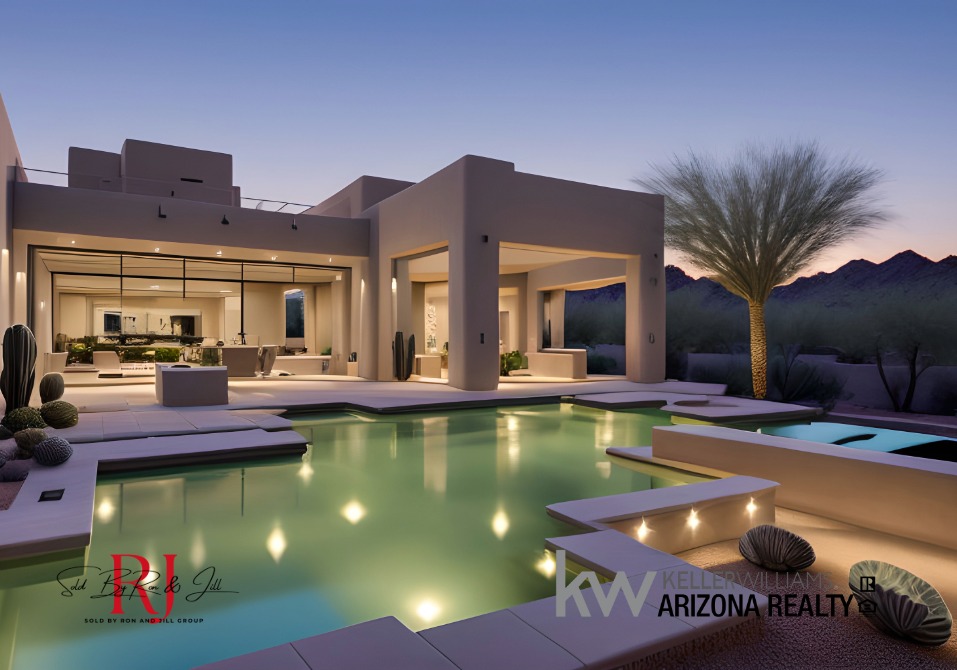
Phoenix Twilight Photos: How They Can Help Sell Your Home Faster
Phoenix Twilight Photos: How They Can Help Sell Your Home Faster Phoenix Twilight Photos: How They Can Help Sell Your