
Buying a New Build in Phoenix: What First-Time Homebuyers Should Know
The Terrain: New Construction’s Weight in the 2026 Market
ARMLS January 2026: 24,358 active listings across Greater Phoenix, $444,740 median sale price, 94 average days on market, 5.17 months supply. West Valley entry range $380,000–$434,000.
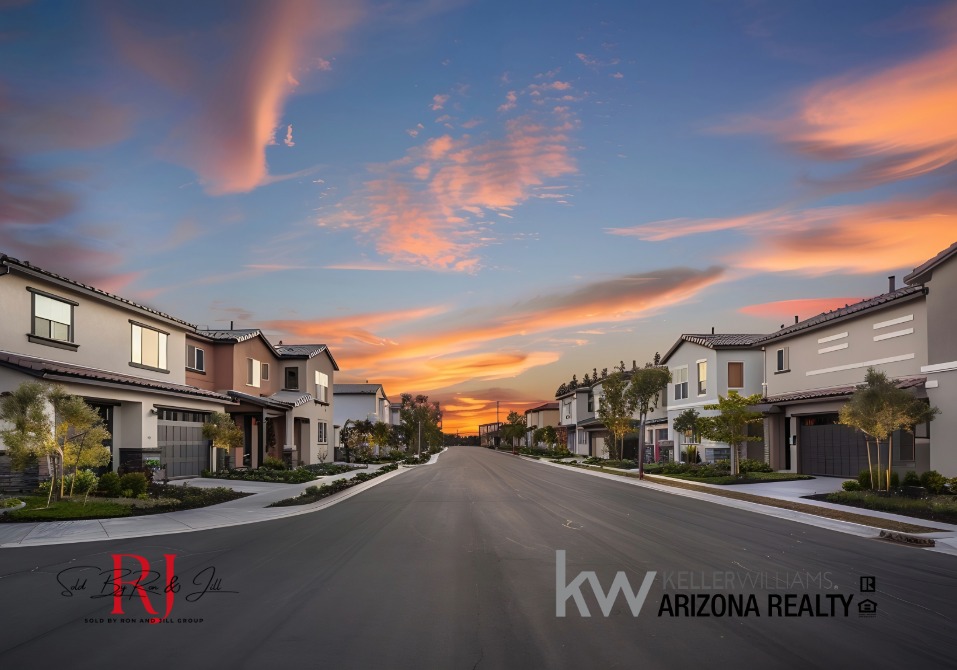
New construction currently represents over 14% of the Phoenix market — the highest share in two decades. In the West Valley specifically, that number is substantially higher. Builders in Buckeye’s northern corridor, Surprise’s Loop 303 expansion zones, Waddell, and greater Goodyear are delivering new inventory at a scale that gives buyers genuine choice at the entry price point.
The Weather: Why First-Time Buyers Are Particularly Exposed
Experienced buyers approach a builder’s sales office knowing they are in a negotiation with a sophisticated counterparty. First-time buyers often approach it as a shopping experience. That framing difference has measurable financial consequences.
The sales consultant in a builder’s model home is a licensed real estate agent — employed by and representing the builder. Their fiduciary obligation runs to the builder, not to the buyer. In Arizona, one agent can legally represent both parties in a transaction, but in a builder sale the agent is functioning as the builder’s representative. A first-time buyer who relies on the builder’s sales consultant for guidance on price negotiation, upgrade prioritization, or lender selection is receiving advice from someone whose compensation depends on completing the transaction at the best terms for the builder.
The honest assessment is that most of the information disadvantages first-time buyers face in the new construction process are eliminable with preparation. This guide is that preparation.
Spec vs. To-Be-Built: The Two New Construction Paths
Spec Homes and Quick Move-In Inventory
A spec home is a completed or nearly completed home that the builder started without a specific buyer. Quick move-in inventory is similar — homes that are 30 to 90 days from completion when you sign. These are the homes where builder incentives are most aggressive, because the builder has capital tied up in completed inventory and wants it sold.
For a first-time buyer, spec and quick move-in homes offer two advantages: speed (you know exactly when you will close) and negotiating leverage (the builder is more motivated on finished inventory). The trade-off is limited customization — the finishes, floor plan, and lot are already determined.
To-Be-Built and Pre-Sale Homes
A to-be-built home involves selecting a lot, choosing a floor plan, and going through a design center process. You sign a contract before the home breaks ground. The timeline to close runs 6 to 12 months depending on the builder’s production schedule.
Builder Incentives: What Is Real, What Is Marketing
Permanent Rate Buydowns
A permanent rate buydown is funded by the builder paying discount points upfront to reduce the buyer’s interest rate for the life of the loan. This is the most valuable incentive type because the payment reduction is permanent. On a $400,000 loan, a 1% permanent rate reduction saves approximately $225 per month — over $81,000 over a 30-year term.
The catch: Permanent rate buydowns are typically only available through the builder’s preferred lender. If you choose an outside lender, you generally lose the buydown. This creates the preferred lender dilemma addressed below.
Temporary (2/1 and 3/2/1) Rate Buydowns
A temporary buydown reduces the buyer’s rate for a fixed period — typically 1 to 3 years — then steps back up to the note rate. A 2/1 buydown on a 6.5% note rate delivers 4.5% in year one, 5.5% in year two, and 6.5% from year three forward.
Closing Cost Credits and Design Center Allowances
Builder closing cost credits typically run $10,000 to $20,000 on West Valley production homes. These are applied at closing and reduce the buyer’s out-of-pocket costs — a genuine first-time buyer advantage, since closing costs are often the barrier preventing buyers who can afford the monthly payment from completing a purchase.
Design center upgrade pricing is typically 20% to 40% above what the same upgrade would cost from a private contractor post-close. A $5,000 design center credit buys less actual value than $5,000 in post-close contractor work. The advantage is that design center upgrades can be rolled into the loan. The disadvantage is that you are paying builder markup on every option.
The Preferred Lender Incentive Package
Builder preferred lenders are affiliated mortgage companies that receive the builder’s volume. The incentive to use them is real: rate buydowns, closing cost credits, and streamlined approvals are frequently tied to preferred lender use.
The Builder Contract: How It Differs From a Resale Contract
A builder purchase agreement is drafted by the builder’s legal team, in the builder’s interest. First-time buyers who sign it without careful review frequently discover what they agreed to after it is too late to negotiate.
Earnest Money at Risk
Builder earnest money in the West Valley runs 1% to 3% of purchase price, with some builders requiring higher deposits on to-be-built homes to cover design center selections. Unlike resale transactions where earnest money is released on contingency failure, builder contracts frequently limit return to specific, narrow triggers. A first-time buyer whose financing falls through after contingency windows have closed risks losing their entire deposit. This exposure is disproportionately serious for buyers with limited financial reserves.
Inspection Rights in Builder Contracts
Builder contracts typically allow a pre-close walk-through and may limit the buyer’s ability to negotiate repairs or exit based on inspection findings. This is materially different from a resale contract where an inspection contingency gives the buyer significant leverage. The walk-through in a builder contract is not the same instrument as a resale inspection contingency.
Price Lock and Change Order Provisions
New construction purchase prices are typically locked at contract signing. However, some production builder contracts include language allowing for cost increases above a threshold percentage without buyer consent. Read the price escalation provisions before signing. Also note that design center upgrade quotes from the appointment date may not be guaranteed against changes if construction is delayed.
The Independent Inspection: Non-Negotiable
Most first-time buyers assume a new home does not require an inspection. This assumption is wrong and costly.
New construction defects are common at every phase of construction. The builder’s inspector works for the builder. An independent third-party inspection creates a different accountability structure entirely.
Energy Efficiency: The Phoenix-Specific Advantage of New Builds
In no American market does a home’s energy specification matter more than Phoenix. Sustained triple-digit temperatures for months at a time mean the HVAC system in a poorly insulated home runs nearly continuously from May through September. The operating cost difference between a well-built and a poorly built home at the same price point is hundreds of dollars per month.
New construction in 2026 is built to current Arizona energy codes: radiant barrier roofing, dual-pane Low-E windows, R-38 or better attic insulation, and high-efficiency HVAC systems rated at 16 SEER2 or above. Many builders offer or include solar panel systems, smart thermostats, and tankless water heaters.
The HERS rating is the number to ask for. The Home Energy Rating System score measures overall energy efficiency — lower is better. A new production home in 2026 should score in the 50 to 65 range. A home scoring above 80 has efficiency issues worth questioning. Ask the sales consultant for the HERS score of the specific home or floor plan you are evaluating, not just a general statement about energy certifications.
The Pivot: Five Things to Do Before Signing a Builder Contract
- Bring your own agent before your first visit. Most builder sales offices require that your agent be registered on your first visit to qualify for buyer representation. An agent pre-registered before you walk in represents your interests at no cost to you — the builder pays the buyer agent commission in new construction.
- Get a competing loan estimate from an outside lender. Before accepting the preferred lender’s package, obtain loan estimates from at least two independent lenders. Compare total cost of ownership over a realistic ownership horizon, not just the headline incentive dollar amount.
- Read the contract before you sign it — all of it. Pay specific attention to the price escalation clause, the delay protection provisions, and the earnest money at-risk language. Ask your agent or a real estate attorney to walk through the non-standard provisions.
- Budget for the full note rate, not the buydown rate. Qualify yourself on the actual loan payment at the full interest rate. If a temporary buydown makes the home feel affordable but the note rate payment does not, the home is outside your budget.
- Order a phase inspection for to-be-built, a full inspection for spec. Do not waive inspection rights for any reason. A new home has not been lived in and tested under real operating conditions. The inspection is the evidence that it was built correctly.
Frequently Asked Questions
Do I need my own real estate agent to buy a new build in Phoenix?
You are not legally required to have your own agent. But the builder’s sales consultant represents the builder, not you. The builder pays buyer agent commissions in new construction — having your own agent costs you nothing and gives you independent representation in a transaction with a sophisticated counterparty who has done this hundreds of times.
Can I negotiate the price of a new build in Phoenix?
Base prices on production builder homes are typically fixed because discounting creates a new comparable that affects the builder’s entire neighborhood valuation. Builders are more flexible on incentives — rate buydowns, closing cost credits, design center allowances, lot premiums, and upgrade packages. The negotiating surface is the incentive package, not the base price. Spec homes sitting longer than 30 days offer the most price flexibility.
What is the difference between a spec home and a to-be-built home?
A spec home is already under construction or completed when you sign the contract. A to-be-built home is selected from a floor plan catalog and built after contract signing, typically over 6 to 12 months. Spec homes offer faster closing timelines and more aggressive incentives. To-be-built homes offer more customization but introduce construction timeline risk.
Should I use the builder’s preferred lender?
Maybe — but only after comparing total terms. Get a loan estimate from the preferred lender and at least two outside lenders. Compare total cost of ownership over a realistic horizon. You cannot be required to use the preferred lender, regardless of what any sales consultant implies.
Do new homes in Phoenix come with warranties?
Yes. Most production builders offer a tiered warranty: 1 year on workmanship and materials, 2 years on mechanical systems (plumbing, electrical, HVAC), and 10 years on structural defects. Read the warranty documentation before closing — the scope of coverage, the claims process, and any arbitration requirements are in the documents, not in verbal descriptions.
Should I get a home inspection on a brand-new home?
Yes. New construction has defects at a higher rate than most buyers expect. An independent inspection by a third-party inspector creates accountability the builder’s own process does not. For to-be-built homes, phase inspections at framing, rough mechanical, and final stages provide the most comprehensive coverage. For spec and quick move-in homes, a full pre-close inspection is the minimum.
What West Valley communities have the most new construction in 2026?
Buckeye’s northern expansion corridors along I-10, Surprise’s Loop 303 communities, greater Goodyear including Estrella and Palm Valley areas, Waddell along the Northern Parkway corridor, and Peoria’s Vistancia and Trilogy communities are the highest-volume West Valley production areas in early 2026.
Schedule a Consultation With Ron and Jill
The new construction process in the West Valley rewards buyers who understand it before they walk into a sales office. The consultation with Ron and Jill covers which builders are currently offering the strongest incentive packages, which communities have the best lot availability, how to evaluate the preferred lender offer, and what a buyer’s contract should say before you sign it. If you are buying your first home in Goodyear, Buckeye, Peoria, Surprise, or Anthem, schedule the conversation now.