

Buying a Home in Phoenix as a Single Person: How to Do It
The Single Buyer Reality Check: What the Math Actually Says
The January 2026 Phoenix Metro market gives single buyers more room than they had in 2021-2022. Active listings stand at 24,358, the Cromford Market Index sits around 80 — a level Cromford senior analyst Tina Tamboer calls the best buyer opportunity in years — and seller concessions appear in roughly 56% of closings. Builders across the West Valley are offering rate buydowns as low as 2.99%-3.99% on quick-move-in homes. The environment is favorable. The constraint for most single buyers is not the market. It is the DTI ceiling.
At a 43% back-end DTI using a 6.31% rate (30-year fixed, March 2026), here is how the income requirement maps to West Valley price points — assuming minimal other monthly debt:
| Target Price | Down Payment (5%) | Est. PITI/mo | Gross Income Needed* |
|---|---|---|---|
| $350,000 | $17,500 | ~$2,450/mo | ~$68,000-$75,000/yr |
| $380,000 | $19,000 | ~$2,650/mo | ~$74,000-$82,000/yr |
| $420,000 | $21,000 | ~$2,950/mo | ~$82,000-$92,000/yr |
| $450,000 | $22,500 | ~$3,150/mo | ~$88,000-$98,000/yr |
*Includes estimated Maricopa County property tax (~0.60%), HOI (~$1,500/yr), PMI (~0.6%). Assumes minimal other monthly debt. Each $500 in existing monthly obligations raises the required income floor by ~$12,000-$14,000.
Loan Programs That Extend the Single Buyer’s Reach
FHA — The High-DTI Access Point
FHA requires a minimum 3.5% down at 580+ FICO and 10% down at 500-579 FICO. The key advantage for single buyers: the 57% DTI ceiling provides meaningful extra qualification room over conventional. The cost: FHA requires mortgage insurance premium (MIP) for the life of the loan at a 3.5% down payment — removal requires refinancing into a conventional loan once you reach 20% equity. Monthly MIP runs 0.15%-0.75% of the loan balance annually. On a $360,000 loan, that is $540-$2,700/year — a real carrying cost to factor in.
Fannie Mae HomeReady — 3% Down, Reduced PMI
HomeReady requires a minimum 620 FICO and income at or below 80% of Area Median Income for the property’s location. In Maricopa County, 80% AMI for a single-person household is approximately $50,000-$58,000 (use Fannie Mae’s AMI Lookup Tool for the exact address-level figure). The upside: reduced PMI compared to standard conventional, and PMI cancels automatically at 80% LTV — unlike FHA MIP. HomeReady also allows rental income from a boarder to count toward qualification, relevant if the property has a rentable room or ADU.
VA Loan — Zero Down for Eligible Veterans
For eligible veterans, this is the strongest tool available to a single buyer in the Phoenix Metro. VA loans require 0% down, no PMI, no formal DTI ceiling, and no loan limit for buyers with full entitlement. The VA funding fee (1.25%-3.3% of the loan amount) is rollable into the loan. On a $380,000 West Valley home with zero down, a single veteran’s PITI runs approximately $2,400-$2,600 per month with no PMI drag. No other program matches that entry efficiency for qualifying veterans.
USDA — Rural/Suburban Zero Down
Parts of outer Buckeye, Waddell, and fringe Surprise may qualify for USDA Rural Development loans — zero down, income-limited, primary residences only. Check the USDA eligibility map at usda.gov for any specific address before making location decisions based on this program.
Arizona Down Payment Assistance Programs for Single Buyers
These programs do not require a spouse or co-borrower. Single buyers qualify independently based on their own income and credit profile.
| Program | Max Assistance | Income Limit | Key Requirement |
|---|---|---|---|
| Home+Plus (statewide) | Up to 4% | $126,351/yr | No first-time buyer req.; 640 FICO; DTI 45-50%; forgivable at 36 months |
| Home in Five Advantage | Up to 6% | $141,820/yr | Maricopa County only; 640 FICO; 5-yr forgiveness; veterans/teachers get extra 1% |
| Home in Five Platinum | Up to 4% | Varies | Maricopa County; first-time buyers; 0% interest forgivable second; 5-yr forgiveness |
| City of Phoenix Open Doors | Up to 10% / $15,000 cap | 80% AMI | City of Phoenix limits; 15-yr forgiveness; HUD counseling required |
| WISH Grant (FHLBank) | Up to $32,099 (4:1 match) | 80% AMI | First-time buyer; enroll early — funds are first-come, first-served |
| Fannie Mae HomeReady | 3% down (DPA-stackable) | 80% AMI | Can layer with most DPA programs; reduced PMI; boarder income allowed |
The WISH Grant deserves attention for single buyers at moderate incomes. The 4-to-1 match means every $1,000 you bring is matched with $4,000 in grant funds — up to $32,099. A single buyer who has saved $8,000 can potentially access the full $32,000 in WISH matching, covering an entire 5% down payment on a $380,000 home. Funds deplete first-come, first-served. Enrollment — not closing — establishes your place in the queue.
Property Selection: What Single Ownership Changes
A two-income household has a backup if one income disappears. A single buyer does not. This changes property selection in specific ways.
HOA-Maintained Exteriors Reduce Financial Exposure
Townhomes, condos, and PUD communities with HOA-covered exterior maintenance shift roof, paint, and landscaping costs from your personal reserve to a shared expense. For a single buyer whose emergency fund has to cover mortgage, living expenses, and unexpected repairs simultaneously, reducing surprise capital expenditures matters. Factor the monthly HOA fee into your total PITI calculation before making price-point decisions.
The 6-Month Emergency Fund Is Not Optional
The standard 3-6 month recommendation assumes a dual-income household where one income absorbs shocks while the other covers the mortgage. Single buyers have no backup income. The practical floor is 6 months of total housing costs — PITI, utilities, and an estimated maintenance reserve — held in liquid accounts, separate from down payment funds. This is a pre-close requirement, not a post-close aspiration.
ADU and Rental Room Potential as Income Insurance
A single buyer purchasing a home with a detached casita, attached suite, or large bonus room has the option — not the obligation — to generate rental income offsetting the mortgage. Lennar’s Next Gen floor plan, present in several West Valley communities, builds a separate attached suite with its own entrance. Even a partial rent contribution of $600-$900/month converts a $2,800 PITI into a $1,900-$2,200 net carrying cost. HomeReady allows projected boarder income to count toward qualification as well.
Taking Title as a Single Person in Arizona
Arizona is a community property state. That matters for married buyers. For single, unmarried buyers the vesting question is simpler — and the protections available are meaningful.
Sole and Separate — The Standard Vesting
An unmarried person purchasing a home in Arizona takes title as sole and separate property. The deed will read “Jane Smith, an unmarried woman” or “John Smith, a single man” — the marital status descriptor is legally required in a community property state to establish ownership type clearly. This provides full ownership rights, full control over disposition, and no co-ownership complications.
Arizona Beneficiary Deed — Estate Planning Without Probate
Under A.R.S. Section 33-405, Arizona allows a property owner to record a beneficiary deed designating who receives the property upon death — without going through probate. The beneficiary has no rights during the owner’s lifetime; the owner can sell, refinance, or change the beneficiary deed at any time. For a single buyer without a co-owner to inherit by default, recording a beneficiary deed at or shortly after close of escrow is the most direct mechanism to ensure the property passes to an intended heir without court involvement.
What Happens If You Get Married Later
Property owned sole and separate before marriage, and kept separate through the marriage — separate funding source, no commingling of community funds for mortgage payments or improvements — remains separate property in Arizona. If you later marry and want to preserve the home as separate property, maintain documentation and consult a family law attorney about the treatment of any mortgage payments made from community income during the marriage.
Assembling the Down Payment on One Income
- Personal savings — the primary source. Know your FICO before targeting programs; most DPA requires 620-640 minimum.
- Gift funds — allowed by FHA, HomeReady, and most DPA programs with a documented gift letter. A family member can gift any amount toward the down payment with no repayment obligation.
- DPA stacking — Home in Five Advantage on top of a conventional or FHA loan can cover the entire 3%-5% down payment requirement for income-qualifying single buyers in Maricopa County.
- Roth IRA first-time buyer exception — up to $10,000 in earnings can be withdrawn penalty-free for a first home purchase (account age and contribution rules apply). Consult a tax advisor before executing.
- WISH Grant — enroll before you find the property. The enrollment process takes time; having it in place before you identify a home gives you flexibility when you need to move quickly.
Building Your West Valley Single-Buyer Strategy
The West Valley submarkets — Goodyear, Surprise, Peoria, Buckeye, Litchfield Park — offer the best price-to-value ratios in the Phoenix Metro for single buyers specifically because the $350,000-$430,000 segment is strongest here. New construction communities with builder incentives (rate buydowns, closing cost credits, free landscaping) provide cash efficiency that resale cannot match.
If you earn $70,000-$90,000: Home in Five Advantage stacked with a conventional or FHA loan can reduce cash-to-close to $5,000-$12,000 on a $380,000-$400,000 home while keeping PITI in the $2,500-$2,800 range. The WISH Grant adds another layer if you are under 80% AMI.
If you earn $126,000+: DPA programs are not your tool — your income qualifies you for standard conventional at the West Valley price point with 5%-10% down. The focus shifts to minimizing PMI drag and building the 6-month reserve before closing.
If you are a veteran: VA loan with zero down on a West Valley home under $500,000 is the most efficient entry path available. No PMI, competitive rates, and the VA funding fee is rollable into the loan.
For more on what West Valley new construction close-outs look like — including how builder contracts differ from resale and what to negotiate — see Blog 43: Should You Buy a Model Home in Phoenix? What to Know Before You Do.
Frequently Asked Questions
Yes. West Valley inventory in the $350,000-$430,000 range is accessible to single buyers earning $70,000-$90,000+ annually with manageable debt levels. DPA programs, VA loans, and builder incentives expand access further for eligible buyers.
At a 6.31% 30-year fixed rate with 5% down and average Maricopa County taxes and insurance, PITI lands around $2,600-$2,800/month. At 43% back-end DTI with minimal other debt, you need approximately $74,000-$82,000 gross annual income. FHA’s 57% DTI ceiling can reduce that floor for buyers with significant income relative to debt load.
Home+Plus (statewide, up to 4%, income limit $126,351), Home in Five Advantage (Maricopa County, up to 6%, income limit $141,820), City of Phoenix Open Doors (up to $15,000, 80% AMI), and the WISH Grant (up to $32,099 at 4:1 match, 80% AMI). These programs do not require a co-borrower — single buyers qualify independently.
An unmarried person takes title as sole and separate property. The deed will include the marital status descriptor — “an unmarried man/woman” or “a single man/woman.” Arizona is a community property state, so the descriptor is legally required to establish the ownership type clearly.
An Arizona beneficiary deed (A.R.S. Section 33-405) lets a property owner designate who receives the property upon death without probate. The beneficiary has no rights during the owner’s lifetime, and the deed can be changed or revoked at any time. For a single buyer without a co-owner, recording a beneficiary deed at or shortly after closing is the most direct way to keep the property out of probate.
For eligible veterans, yes. VA loans offer 0% down, no PMI, no formal DTI ceiling, and no loan limit for buyers with full entitlement. On a $380,000 West Valley home, a single veteran’s monthly payment can run $400-$600 less than a conventional buyer with 5% down once PMI is removed. The VA funding fee (1.25%-3.3%) is rollable into the loan.
Yes. Single buyers have no backup income if theirs disappears. The practical floor is 6 months of total housing costs — PITI, utilities, and estimated maintenance — held in liquid accounts, separate from down payment and closing cost funds. This is a pre-close requirement, not a post-close goal.
Under Fannie Mae HomeReady, projected boarder income from a person who will share the home can count toward qualification. FHA also allows rental income from a unit within the property. Particularly relevant for West Valley buyers considering Lennar Next Gen floor plans, casitas, or homes with detached ADUs.
The Single Buyer’s Honest Assessment
Buying alone in the Phoenix Metro in 2026 is achievable — but the margin is thinner and the planning requirements are higher than most single buyers realize going in. The DTI ceiling bites harder with one income. The emergency fund has to be real and liquid before close, not aspirational. The estate planning piece — beneficiary deed, power of attorney, healthcare directive — is not something to get to eventually. It is something to have in place when you sign.
The advantage a single buyer has in this market: you answer to no one. No co-buyer to convince, no competing timelines, no joint decision bottlenecks. When the right home comes available, you can move. In a market where decisiveness is a competitive asset, that is worth something. Ron and Jill work with single buyers across the West Valley — from first-time buyers stacking DPA programs to established professionals targeting $500,000+ with straightforward conventional financing. Schedule a consultation to run your specific numbers before you start shopping.



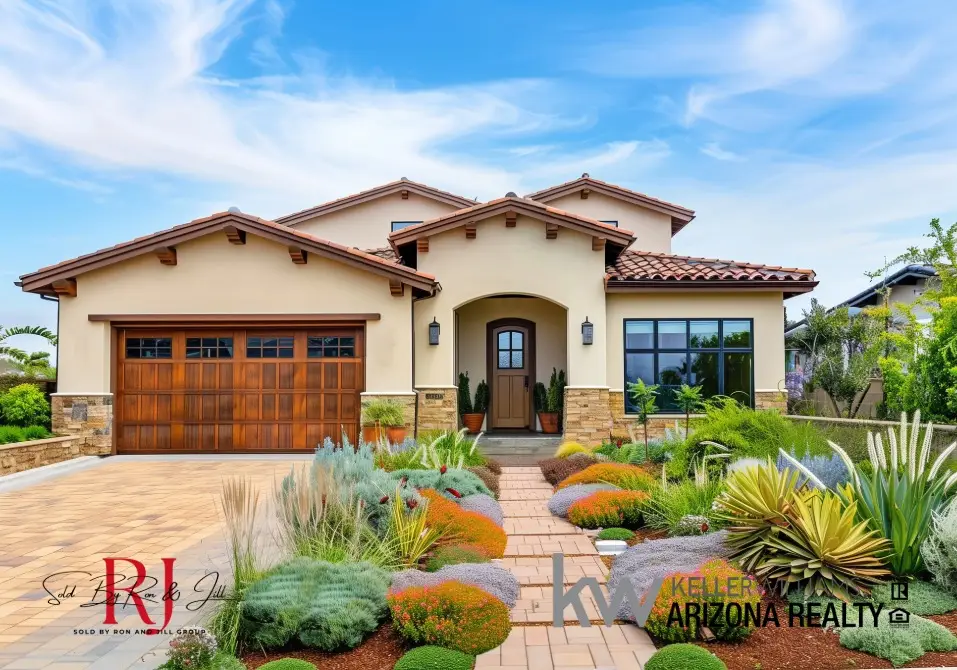
Should You Buy a Model Home in Phoenix? What to Know Before You Do
Should You Buy a Model Home in Phoenix? What to Know Before You Do | 2026 Should You Buy a

Buying a House for Your Parents in Phoenix: 5 Ways to Make It Happen
Buying a House for Your Parents in Phoenix: 5 Ways to Make It Happen | 2026 Buying a House for