
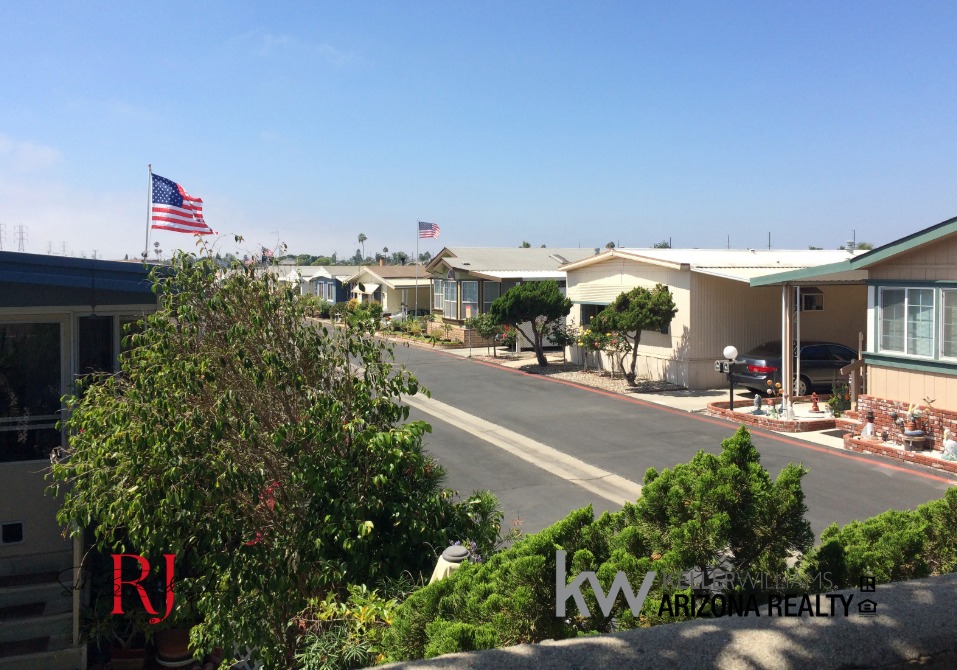
Buying a Mobile Home in Phoenix: Costs, Financing, and What to Expect
The Terrain: Why Mobile Homes Matter in Phoenix’s Affordability Picture
ARMLS January 2026: 24,358 active listings, $444,740 median site-built home price, 94 average days on market. West Valley entry range $380,000–$434,000.
As of early 2026, there are approximately 245 mobile homes for sale in the Phoenix metro, priced from under $10,000 for older park units to over $600,000 for premium manufactured homes on owned land. The practical buyer range for affordable manufactured housing sits between $40,000 and $150,000 — well below the entry range for any site-built alternative in the Valley.
The Critical Fork: Land Ownership vs. Land Lease
The single most important decision in a manufactured home purchase is not the home itself — it is the land arrangement. Everything else flows from this one variable.
Owned Land (Real Property)
- Home permanently affixed on permanent foundation
- Titled as real property with the land
- Access to FHA, VA, USDA, conventional mortgages
- Competitive rates (6.0–7.5%)
- Equity builds; appreciation possible
- Property taxes apply to both home and land
- No exposure to space rent increases
Park / Land Lease (Chattel)
- Home titled as personal property
- Monthly space rent paid to park operator
- Chattel loans only (8–9% rates, 10–20 yr terms)
- No access to government-backed programs
- Depreciation typical; limited equity
- Space rent subject to increase (90 days notice)
- Park closure / redevelopment risk
Cost Structure: What You Are Actually Paying
Home Prices
Used single-wide manufactured homes in Phoenix-area parks: $10,000 to $90,000. Used double-wide units: $40,000 to $120,000. New manufactured homes installed on owned land: $80,000 to $200,000+ for double-wide configurations. New single-wide entry-level units: $50,000 to $120,000 before installation.
Ongoing Monthly Costs in a Park Setting
- Space rent: $425 to $700+ per month (Phoenix metro)
- Home loan payment: depends on purchase price and loan type
- Utilities: electric, water, sewer (some parks bundle; most bill separately)
- Homeowner’s insurance: $50 to $150 per month
- Property tax on the home: assessed as personal property if on leased land
A realistic total monthly cost for a $70,000 used double-wide on $550/month space rent, financed via a 15-year chattel loan at 8.5%, adds up to approximately $1,800 to $2,000 per month all-in before utilities.
Financing Options: The Complete Map
| Loan Type | Min. Down | Rate Range 2026 | Land Req. | Term |
|---|---|---|---|---|
| Chattel Loan | 5–20% | 8–9% | None required | 10–20 years |
| FHA Title II | 3.5% | 6.5–7.25% | Owned land | 30 years |
| VA Loan | 0% | 6.0–6.75% | Owned land | 30 years |
| USDA Loan | 0% | ~6.5% | Owned land (rural) | 30 years |
| Conventional | 3–20% | 6.5–7.5% | Owned land | 15–30 years |
Chattel Loans (Park / Leased Land)
Chattel loans finance the home as personal property. No land ownership required, making them the primary mechanism for park-based purchases. Rates run 8% to 9% in 2026 (versus 6% to 6.5% for site-built conventional loans), terms are shorter (10 to 20 years), and equity builds more slowly. Approval is faster — often 2 to 3 weeks — with minimum credit scores around 580 to 620.
FHA Title II
FHA-insured loans for manufactured homes permanently affixed to owned land. The home must meet HUD manufacturing standards (post-1976), be on a permanent foundation, and be titled as real property. Down payment is 3.5% with a 580+ credit score. MIP applies for the life of the loan if less than 10% down.
VA Loans
Available to eligible veterans for manufactured homes permanently affixed to owned land. Zero down payment. Rates currently 6.0% to 6.75%. The home must meet VA minimum property requirements and be on a permanent foundation. For eligible buyers, this is the strongest financing option in the manufactured home category. See our post on down payment options for Phoenix buyers for the full VA loan picture.
Conventional (Fannie Mae MH Advantage / Freddie Mac CHOICEHome)
Conventional financing at 3% to 20% down for manufactured homes meeting specific construction and installation standards. Rates run 6.5% to 7.5% in 2026. PMI applies below 20% down and is removable at 80% LTV. Finding a lender with manufactured home financing experience is important — not all lenders offer these programs.
The HUD Standard: What Pre-1976 Means for Buyers
June 15, 1976 is the dividing line in manufactured home financing. Homes built before that date — sometimes called pre-HUD or “true mobile homes” — do not qualify for FHA, VA, USDA, or most conventional mortgage financing. They typically require cash or chattel financing through specialty lenders at higher rates and may have difficulty obtaining standard homeowner’s insurance.
Verify the HUD data plate before investing time in financing applications. It is typically located inside the home near the electrical panel or on the exterior near a door. If the placard is missing, assume pre-HUD treatment for financing purposes and verify through the Arizona Department of Housing’s title records.
Arizona-Specific Protections for Park Residents
The Arizona Mobile Home Parks Residential Landlord and Tenant Act (A.R.S. Title 33, Chapter 11) governs the relationship between park operators and residents who own their homes on leased land. Key protections:
- 90 days written notice required before any rent increase (A.R.S. 33-1437)
- 180 days notice required if the park is closing or being redeveloped
- Relocation Fund assistance available for displaced residents (up to $7,500 single-wide; $12,500 multi-section)
- Park operators cannot retaliate against tenants who file complaints or organize tenant associations
- Park operators cannot require home sale through a park-owned broker
The Pivot: Questions to Answer Before You Buy
What is the park’s rent history over the past 5 years? Ask the park manager directly and talk to existing residents. A park raising rent 8% annually for 5 consecutive years is a materially different long-term financial commitment than one holding rates for 3 years.
How long is the current lease, and can you negotiate a longer fixed-rate term? A 3-year or 5-year lease with a fixed rent cap provides meaningful protection. Month-to-month arrangements leave you fully exposed to whatever the park decides to charge.
What is the park’s ownership situation? Parks owned by large institutional investors have a different redevelopment risk profile than family-owned parks. Research the current owner and their portfolio.
What is the total all-in monthly cost? Space rent + home loan payment + utilities + insurance. Compare to renting a comparable apartment and to site-built home ownership at the same monthly cost level.
Is this home titled as real property or chattel? If buying on owned land, confirm the title has been converted from personal property to real property and recorded with the county assessor. Without this step, you may not qualify for mortgage financing regardless of what the seller tells you.
Frequently Asked Questions
Can you get a mortgage on a mobile home in Phoenix?
Yes, with conditions. If the manufactured home is permanently affixed to owned land and titled as real property, FHA, VA, USDA, and conventional mortgage financing are all available. If the home is on leased land in a park, a chattel loan is the typical financing mechanism — shorter terms, higher rates, no access to government-backed programs. Pre-1976 homes have the most restricted financing options regardless of land arrangement.
What is space rent and how does it affect the purchase decision?
Space rent is the monthly fee paid to the park operator for the right to place your home on their land. In the Phoenix metro, it runs $425 to $700 per month in most established communities. Under Arizona law, park operators must provide 90 days written notice before any increase, but there is no state-mandated cap on increase amounts. Calculate the total monthly cost including space rent before committing to any park-based purchase.
What is the difference between a manufactured home and a mobile home?
Technically, “mobile home” refers to factory-built homes constructed before June 15, 1976. “Manufactured home” refers to those built after that date under HUD construction standards. The financing distinction is significant: pre-1976 homes cannot be financed through FHA, VA, or conventional mortgage programs.
Do manufactured homes appreciate in value?
On owned land, manufactured homes can appreciate — though typically more slowly than site-built homes. The land component drives most of the appreciation; the home itself depreciates. On leased land in a park, manufactured homes typically depreciate over time. Location and park quality matter: homes in stable, well-maintained communities with managed space rent tend to hold value better.
What should I inspect before buying a used manufactured home?
All mechanical systems: HVAC, water heater, plumbing connections. Roof condition — manufactured homes often have lower-pitch roofs that are more vulnerable to UV degradation in Phoenix’s climate. Undercarriage and pier condition. Exterior siding and skirting. Water intrusion history around windows and roof penetrations. Verify the HUD data plate is present and that the title is clear with no liens.
Is buying in a 55+ community different from a standard park?
Age-restricted communities legally limit residency to households where at least one person is 55 or older under the federal Housing for Older Persons Act (HOPA). Rules are typically stricter. If you inherit a home in a 55+ park, you must meet the age requirement to remain as a resident or must sell the home. Space rent in 55+ communities can be lower than all-age parks due to demographic factors.
What happens if the park closes or is redeveloped?
Under the Arizona Mobile Home Parks Residential Landlord and Tenant Act, the park operator must provide 180 days advance notice. Displaced residents are eligible for relocation assistance through the Arizona Department of Housing’s Relocation Fund: up to $7,500 for a single-wide home, up to $12,500 for a multi-section home. These amounts have not kept pace with actual relocation costs in the current Phoenix market, making this scenario a genuine financial risk for park residents.
Schedule a Consultation With Ron and Jill
Manufactured home purchases in the Phoenix metro involve a different set of variables than site-built transactions — land arrangement, financing structure, space rent evaluation, and Arizona-specific tenant protections all require specific knowledge to navigate correctly. If you are evaluating a manufactured home purchase in Goodyear, Buckeye, Surprise, Peoria, or anywhere in the West Valley, schedule a consultation before you commit.