
Home Staging in Phoenix: What It Is and Why It Matters
The January 2026 ARMLS STAT report established the competitive context: $444,740 metro median sales price, 94 days average days on market, 24,358 active listings, and 59.6% of Q3 2025 closings below list price. That is 24,000+ homes competing for the same pool of buyers simultaneously.
In that environment, staging is not a cosmetic upgrade — it is a competitive positioning decision. A buyer who opened the MLS on a Saturday morning in early 2026 had dozens of options at any given price point. They filtered by price, bedrooms, and zip code. After that, photos decided which listings got a showing. According to NAR research, 43% of buyers’ first step is searching online, and agents consistently cite photos as the highest-impact listing element. The home that photographs well with strategic staging generates more showing requests. The home that does not loses to the one next door that did.
West Valley sellers in Goodyear, Peoria, Buckeye, Surprise, and Litchfield Park face an additional competitive layer: new construction. Builders in the $400K–$600K range are staging model homes with professional furniture, curated finishes, and controlled lighting. Buyers who tour two or three model homes on a Saturday and then walk into an unstaged resale are making a comparison that the resale consistently loses, regardless of the resale’s objective value.
Most Phoenix sellers who hear “staging” think of one of two things: either someone coming to rearrange their furniture for an hour, or an expensive full-house furniture rental that only makes sense for luxury listings. Both assumptions miss what staging actually does.
Staging is not about making a home look decorated. A well-decorated home and a well-staged home are not the same thing — and understanding the difference is the first step toward using staging strategically. The seller who thinks their home “already looks good” because they have nice furniture and tasteful art may be the hardest sell on the value of staging, precisely because their decorating reflects their personality rather than neutralizing it for the market.
What Home Staging Actually Is
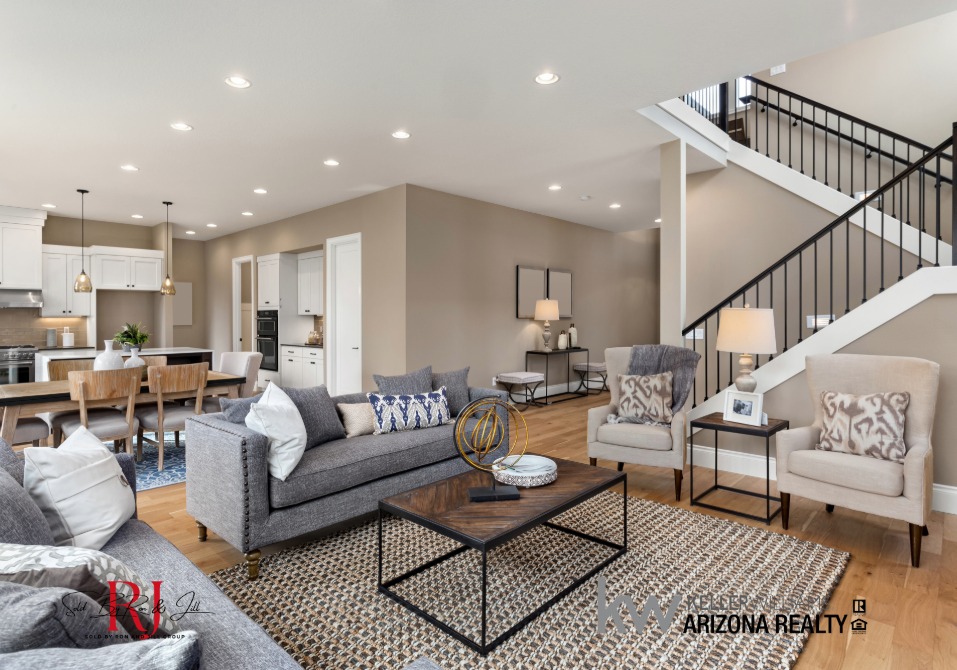
Home staging is the process of preparing a residential property for sale by strategically manipulating its presentation — furniture arrangement, lighting, color, texture, and spatial flow — to maximize buyer appeal and minimize perceived weaknesses.
The clearest way to understand staging is through the distinction between its goal and the goal of interior decorating:
| Interior Decorating | Home Staging |
|---|---|
| Expresses the occupant’s personal taste and lifestyle | Suppresses the seller’s personality to create a neutral canvas |
| Goal: the occupant loves living in the space | Goal: buyers can imagine living in the space |
| Distinctive, personal, reflects who you are | Universally inoffensive, aspirational, belongs to no one specific |
| Long-term investment in your enjoyment | Short-term investment in the sale outcome |
| Succeeds when you love the result | Succeeds when buyers make offers |
This distinction matters because sellers often resist staging precisely because their home already feels well-decorated to them. They have lived in it, they chose the furniture, they love the color on the walls. The stager’s job is to reframe the space for a stranger who is imagining their own life there, not the seller’s. That reframing requires neutralization — which can feel like a personal critique to sellers who have not made the conceptual shift from “my home” to “a product on the market.”
The Psychology Behind Why Staging Works
Staging is applied buyer psychology. Understanding the mechanisms makes it easier to evaluate staging decisions rationally rather than aesthetically.
The Seven-Second Impression
Environmental psychology research indicates that people form initial impressions of interior spaces within approximately seven seconds — an automatic, pre-conscious evaluation that happens before the analytical brain engages. By the time a buyer walks through the front door and reaches the center of the main living area, they have already formed a fundamental positive or negative response to the space.
This initial impression creates a perceptual frame that colors everything that follows. A buyer who forms a positive first impression looks for reasons to like the home. A buyer who forms a negative one looks for confirmation of their doubts. Staging works to ensure the first impression is positive, which changes the entire showing dynamic from skeptical evaluation to emotional engagement.
The Visualization Problem
Most buyers struggle to visualize a furnished life in a space that shows as either someone else’s lived-in environment or as a vacant shell. Staging solves both problems by creating a neutral but habitable-feeling presentation that asks buyers to see themselves in the space rather than the current occupant.
NAR’s 2025 Profile of Home Staging measured this directly: 83% of buyers’ agents said staging made it easier for buyers to visualize the property as their future home. That figure represents the core mechanism staging targets — closing the gap between what a buyer sees and what they can imagine.
The HGTV Baseline Effect
A less discussed but practically significant driver of staging’s importance in 2026: buyer expectations have been permanently raised by television. NAR’s 2025 survey found that 48% of buyers expect homes to look like those staged on TV shows, and 58% of agents reported buyers were disappointed when homes did not match what they saw on television.
This is not about luxury properties — it applies across price tiers. A buyer in the $500K–$600K Goodyear range has been consuming HGTV content and online listing photos for months before their first showing. Their reference point for “what a home should look like” is a curated, staged presentation. An unstaged home does not just compare unfavorably to a staged competitor — it compares unfavorably to the buyer’s mental model of what they expect.
The Empty Room Problem
Vacant homes present a specific psychological challenge that Phoenix sellers underestimate. Empty rooms appear smaller than furnished ones because buyers have no furniture for scale reference. Without context, a 15’ x 18’ great room can feel cramped rather than spacious. Buyers who cannot gauge whether their sectional will fit, or whether there is room for a dining table and six chairs, start building doubt rather than desire.
In Phoenix, where open-concept great rooms are the design standard in the $450K–$900K range, vacant staging is especially consequential. A 400-square-foot open great room with soaring ceilings and no furniture reads as a cavernous, impersonal space rather than the entertaining and living hub it was designed to be. Professional staging gives those sightlines purpose and scale.
What the Staging Process Actually Involves
Understanding the staging process demystifies it and helps sellers engage with it as a production step rather than a disruption.
Step 1: The Staging Consultation
A professional stager visits the property, assesses each room with a buyer’s eye, and develops a prioritized action plan. The consultation typically runs two to three hours and produces specific recommendations: what to remove, what to rearrange, what accent pieces to add, and what repairs or paint changes would have the highest return. In Phoenix, expect the consultation to include the outdoor living area and pool deck — both are highly weighted by Valley buyers.
For sellers still living in the home, many stager recommendations can be executed independently based on the consultation output. This “consultation plus DIY” approach significantly reduces total staging cost while still capturing the benefit of professional guidance.
Step 2: Declutter and Depersonalize
This is the highest-impact, lowest-cost staging action available to any seller. Removing personal photographs, family art, excessive furniture, decorative clutter, and items that identify the home as belonging to specific people allows buyers to project their own life into the space. It is also the action most sellers resist — because the objects being removed are meaningful to them, even when they are invisible to a buyer.
The test is simple: does this item make it easier or harder for a stranger to imagine living here? If it makes it harder, it should be removed before photography.
Step 3: Furniture Arrangement and Editing
Professional stagers rearrange furniture to create logical flow, define sightlines, and emphasize the function of each space. In Phoenix’s open floor plans, this typically means anchoring the great room with a clear living zone and a distinct dining zone, so buyers can read the space’s purpose at a glance. Excess furniture — the extra armchair, the secondary side table — is removed to make rooms feel larger and cleaner.
For vacant properties, this step involves delivering and positioning rented furniture. The stager selects pieces that fit the home’s architecture and price tier — a West Valley new construction needs different furniture than a mid-century Glendale home or a Peoria master-planned community property.
Step 4: Lighting, Color, and Accent Layers
Lighting is one of the most under-utilized staging tools and one of the most effective. Opening blinds, adding lamps where overhead fixtures leave dark corners, and replacing dated light fixtures are all low-cost interventions with outsized visual impact. In Phoenix, where natural light is abundant but summer sun can bleach interior photos, controlling how natural light enters staged rooms during photography is a stager’s practical skill.
Color and accent pieces — throw pillows, area rugs, artwork, greenery — add visual warmth and create the aspirational lifestyle cues that make buyers linger rather than move through quickly. A dining table set for a dinner party says “entertaining happens here.” A reading chair with a lamp and a throw blanket says “this is a cozy, private space.” These narrative cues help buyers connect their aspirations to the specific property.
Step 5: Photography — Only After Staging Is Complete
This sequence is non-negotiable: staging must be complete and set before the listing photographer arrives. Staging a home after listing photos are taken eliminates the primary marketing benefit — 97% of buyers begin their home search online, and the listing photos are the first showing. A home that photographs poorly because it was photographed before staging is staged for showings but not for the first impression that generates showings in the first place.
Phoenix-Specific Staging Considerations
Several aspects of Phoenix’s housing market and climate create staging considerations that national guides do not address.
Indoor-Outdoor Living as a Staging Priority
Phoenix buyers weight outdoor living heavily. A covered patio, a pool deck, or an outdoor kitchen is not a bonus feature in the Valley — for many buyers in the $450K–$900K range, it is a primary reason they are looking at a particular property. Staging the outdoor living space is therefore a higher-priority intervention in Phoenix than in most U.S. markets.
A clean pool with properly positioned outdoor furniture, desert-appropriate plants, and good patio lighting often photographs better than the interior in a Phoenix listing. Sellers who stage inside the home but leave the outdoor area as-is are missing the feature that may close the deal.
Desert Color Palettes and Neutral Staging
Phoenix’s design vernacular leans toward earth tones, warm neutrals, and Southwestern accents. Staging palettes that work well in coastal markets — bright whites, ocean blues, coastal textures — can feel tonally mismatched in Valley homes. An experienced Phoenix stager chooses warm greiges, terracotta accents, and natural textures that feel native to the desert environment and reinforce the lifestyle buyers are seeking when they choose Arizona over a coastal city.
Open Floor Plans and Spatial Definition
The challenge of Phoenix’s open floor plans — standard in new construction and prevalent in 2000s-era resale — is that an underfurnished or poorly arranged great room reads as one large, undifferentiated space rather than a thoughtful combination of living, dining, and kitchen zones. Staging defines these zones through furniture placement and area rugs, creating visual boundaries that help buyers read the home’s functionality at a glance.
| Staging Impact: What NAR’s 2025 Data Shows | Finding |
|---|---|
| Buyers who can visualize the home as their future residence | 83% of buyers’ agents confirmed staging helped |
| Agents reporting staging led to higher offers | 29% reported 1–10% higher dollar value offered |
| Agents reporting reduced time on market | 49% of sellers’ agents observed fewer days on market |
| Buyers who expect HGTV-level presentation | 48% expect staged-show appearance |
| Buyers disappointed by unstaged homes | 58% of agents reported buyer disappointment |
| Most important room to stage (buyers’ agents) | Living room (37%), primary bedroom (34%), kitchen (23%) |
Source: NAR 2025 Profile of Home Staging, May 2025
Frequently Asked Questions
Ready to Stage Your Phoenix Metro Home for Maximum Impact?
The Ron and Jill Group works with sellers across Goodyear, Peoria, Buckeye, Surprise, Litchfield Park, Anthem, and Glendale. We connect sellers with vetted local staging professionals, advise on what level of staging makes financial sense for your specific property, and ensure photography happens after staging is complete — not before. Schedule a consultation below.
🤝 Agent Referral🌐 soldbyronandjillgroup.com
🏠 soldbyronandjill.com (Search Listings)
▶ YouTube: @SoldByRonAndJillGroup



How to Depersonalize Your Phoenix Home Before Selling
How to Depersonalize Your Phoenix Home Before Selling How to Depersonalize Your Phoenix Home Before Selling 📋 Bottom Line Up
How Long Are You Liable After Selling a House in Arizona? (Phoenix Sellers)
How Long Are You Liable After Selling a House in Arizona? (Phoenix Sellers) How Long Are You Liable After Selling