
How to Buy a New Construction Home in Phoenix
Buying new construction in Phoenix is not the same process as buying resale — and the differences create real financial risk for unprepared buyers. Builder contracts are written by the builder’s legal team, not the AAR. The sales agent in the model home represents the builder, not you. Incentives are real, but often conditional on using a captive lender. Community Facilities District (CFD) assessments in the West Valley can add hundreds of dollars per month to your actual housing cost that the sales center price sheet does not reflect. This post walks through the full new construction buying process for Phoenix Metro buyers in 2026: the three purchase modes, builder contract mechanics, incentive evaluation, CFD due diligence, and what West Valley buyers specifically need to verify before signing.
The Terrain: New Construction in the Phoenix Metro in 2026
New construction represents a significant share of the Phoenix Metro housing supply. ARMLS early 2026 data: 24,358 active listings metro-wide, 94-day average DOM, with supply-heavy new development corridors in Buckeye, Goodyear, Surprise, and Peoria. Major builders operating in the West Valley include Pulte, KB Home, Del Webb (active adult), Taylor Morrison, Meritage, and Lennar, with additional regional builders active in master-planned communities like Verrado in Buckeye and Victory at PebbleCreek in Goodyear.
In 2025–2026, builder incentives reshaped the competitive landscape. With spec inventory accumulating in fast-growth West Valley corridors, Phoenix-area builders deployed permanent rate buydowns (reaching 2.99–3.99% on select quick move-in homes), closing cost credits of $5,000–$15,000, complimentary upgrade packages, and landscaping allowances. These incentives resale sellers structurally cannot match. On a $500,000 purchase, a permanent 1.5-point rate buydown represents approximately $380/month in reduced payment — $136,800 in cumulative payment reduction over a 30-year loan. That number warrants a serious comparison to resale options in the same price range.
The honest assessment: Phoenix new construction in 2026 offers genuine value opportunities — but only for buyers who understand the contract differences, verify the full tax picture, and bring independent representation into the transaction before walking into a model home for the first time.
The Three New Construction Purchase Modes
Understanding which type of new construction you are buying determines your timeline, your customization options, and the incentive structure available to you:
| Purchase Mode | What It Is | Timeline to Close | Customization | Incentive Availability |
|---|---|---|---|---|
| Spec Home | Fully completed, vacant; builder built on spec | 30–60 days | None — finishes pre-selected | Highest — builder has carrying costs and wants to move it |
| Quick Move-In (QMI) | 30–90 days from completion; major systems done | 45–120 days | Limited — some cosmetic selections may still be open | Strong — builder motivated to close before quarter end |
| To-Be-Built | Lot + floor plan selection; construction hasn’t begun | 6–10 months | Full — design center selections for most finishes | Lower — less builder urgency; rate buydown may expire before close |
Incentive timing risk on to-be-built contracts: Builders often quote rate buydown incentives at the time of contract execution. On a to-be-built home with a 6–10 month build timeline, that incentive may be tied to locking a rate within a defined window — which may not align with optimal rate timing. Read the incentive terms carefully: some rate buydowns lock the builder-paid rate at contract; others expire or convert if market rates shift significantly before closing. Get the incentive terms in writing before signing.
The Weather: What Phoenix New Construction Buyers Are Getting Wrong
The model home experience is a controlled sales environment. The finishes in the model are almost always the premium upgrade packages, not the base price inclusions. The sales agent is a builder employee whose compensation is tied to the builder’s margin. The price sheet on the wall does not include the special district tax assessment. The monthly payment estimate assumes the builder’s preferred lender rate, the incentive package, and the minimum down payment — all simultaneously, all optimal conditions.
First-time new construction buyers in Phoenix frequently encounter three specific surprises after signing: the upgrade costs at the design center that were not visible in the model; the CFD or special assessment tax that materializes on the first property tax bill; and the builder’s contract terms on earnest money forfeiture and timeline delays that differ fundamentally from the AAR resale contract they may have used on a prior transaction. All three are preventable with the right preparation. None of them are the builder’s disclosure failure — the information is available if you know where to ask.
Bring Your Agent Before Your First Visit — This Is Non-Negotiable
This is the single most important process point for Phoenix new construction buyers. Most Phoenix Metro builders allow buyer’s agents and pay their commission — meaning independent representation costs the buyer nothing. But many builders enforce a “first visit” rule: if you register at the sales office without your agent present on your first visit, the builder may decline to recognize or compensate that agent if you later try to add them. Some builders will allow a grace period; many will not.
The practical rule: contact your agent before visiting any model home or sales center, even for an “informational” visit. Have your agent’s information ready to register on arrival. If you have already visited a community without representation, contact your agent immediately — the registration window may still be open, but it closes fast.
The builder’s sales agent represents the builder, not you. They are not required to advise you against signing a contract with unfavorable terms. They are not required to tell you about CFD assessments beyond what the required disclosures specify. They are not required to recommend you get your own financing comparison. An independent agent owes you fiduciary duty. The builder’s sales agent does not.
Builder Contract vs. AAR Contract: What Changes
Builder purchase contracts in Arizona are written by the builder’s legal team and are not standardized. The AAR Residential Resale Real Estate Purchase Contract — which governs resale transactions — includes buyer protections built in through decades of practice and AAR form revision. Builder contracts typically include provisions that are significantly more builder-favorable in several areas:
Earnest Money
Builder earnest money deposits in Phoenix typically run 1–3% of the purchase price — $5,000–$15,000 on a $500,000 home — and the forfeiture terms are usually stricter than in an AAR resale contract. In a standard AAR resale transaction, a buyer who cancels within the inspection period typically receives their earnest money back with no penalty. In a builder contract, earnest money forfeiture may be triggered by any cancellation not specifically covered by an explicit contingency in the contract. A buyer who cannot get their preferred financing, changes their mind on the lot, or loses their job six weeks into a build timeline may forfeit their deposit under terms that would result in a full refund in a resale transaction.
Construction Timeline Provisions
Builder contracts include broad force majeure and delay provisions that protect the builder from specific timeline commitments. The quoted “6–8 month” build window is typically an estimate, not a contract obligation. Supply chain disruptions, labor shortages, permit delays, and weather events (including Phoenix monsoon damage to partially completed structures) can extend timelines significantly. Buyers whose own lease ends, whose relocation timeline is fixed, or who have rate locks expiring should understand that the builder’s timeline risk is largely passed to the buyer in the contract.
Material Substitution
Many builder contracts include a clause permitting the builder to substitute specified materials, brands, or features with “equal or equivalent” alternatives if supply chain issues prevent delivery of the contracted items. The definition of “equivalent” is typically at the builder’s discretion. A buyer who selected a specific flooring product, appliance brand, or cabinet hardware based on model home presentation may receive a substitution without individual approval rights unless the contract specifically restricts substitution rights. Ask your agent to review the material substitution language before signing.
Inspection Rights
Unlike the AAR resale contract, which automatically grants a buyer an inspection period, new construction inspection rights must be negotiated into the builder contract explicitly. For to-be-built homes, negotiate access rights for phase inspections at pre-drywall and pre-close milestones. For spec and QMI homes, negotiate a standard pre-closing inspection period. Many builders offer their own walk-through process that is not a substitute for an independent third-party inspection — the builder’s walk-through identifies cosmetic punch-list items, not structural or system-level defects.
The Captive Lender Question
Nearly every major Phoenix Metro builder operates or partners with a preferred lending affiliate. Pulte has Pulte Mortgage. KB Home has KB Home Mortgage. Meritage partners with preferred lenders in each market. The incentive structure is straightforward: use our lender, receive the rate buydown, closing cost credit, and upgrade package. Use an outside lender, and the incentive package is reduced or eliminated.
This is not inherently predatory — builder lending affiliates often have streamlined pre-approval and draw processes that keep construction timelines on track. The risk is that buyers accept the incentive package without independently verifying whether it represents better economics than an independent lender comparison. The evaluation framework:
| Factor | Builder Preferred Lender | Independent Lender |
|---|---|---|
| Rate | May carry below-market buydown (e.g., 5.5% vs. market 6.5%) | Market rate; no buydown unless you negotiate or pay points separately |
| Closing Cost Credits | Often $5,000–$15,000 conditional on using preferred lender | No builder credits; may have lender credits depending on rate structure |
| Upgrade Package | Often conditional on preferred lender use | Upgrades may not be available without preferred lender |
| Base Purchase Price | Verify — some builders inflate base price when incentive packages are offered | May negotiate lower base price if not receiving incentive package |
| Origination Fees | Verify independently — not always disclosed prominently | Fully disclosed and comparable on Loan Estimate form |
The analysis to run: Get a competing Loan Estimate from an independent lender for the same loan amount and term. Calculate the total interest cost over 5 years (a realistic refinance horizon) for both scenarios. Add the builder incentive value to the preferred lender column. Compare net total cost. A $10,000 closing cost credit plus a 1-point permanent rate buydown on a $500,000 loan often totals $25,000–$40,000 in 5-year value — which usually exceeds any independent lender advantage unless the base purchase price has been inflated to offset the incentives.
West Valley CFD and Special Assessment Due Diligence
This is the most common surprise in West Valley new construction purchases, and it is entirely preventable. Community Facilities Districts (CFDs) are government entities created under Arizona ARS Title 48 that issue bonds to fund infrastructure in new developments — roads, water lines, drainage, parks, and community facilities. The bond debt is repaid through special assessments on properties within the district, which appear as a separate line item on the annual Maricopa County property tax bill.
In Goodyear alone, there are 10 active CFDs and 8 special assessment areas, concentrated in master-planned communities including Estrella Mountain Ranch. Buckeye and Surprise have active CFDs in virtually every large new development corridor. On a new construction purchase, the CFD assessment is often not included in the sales center price sheet’s property tax estimate. A buyer who budgets based on the quoted base tax rate and then receives a first-year property tax bill with a $1,800–$3,600 CFD assessment layer was not necessarily deceived — the information is available in public records — but they were not asked to look for it.
The verification process: Pull the parcel record at treasurer.maricopa.gov, search by the community address or preliminary plat lot number, and look for the Special District section of the tax bill. If the parcel is not yet assigned a specific APN (as may be the case for a to-be-built contract), ask the builder for the master CFD bond documentation for the subdivision and have your agent verify the annual assessment obligation per lot before signing.
The Pivot: New Construction as a Strategic Choice in West Valley in 2026
For West Valley buyers evaluating the $450K–$700K range in Goodyear, Buckeye, Surprise, and Peoria, new construction in 2026 offers a set of advantages that are genuinely difficult to replicate with resale: builder-paid rate buydowns that effectively reduce the monthly carrying cost below what most resale sellers can concession; 10-year structural warranties and 1–2 year systems warranties that eliminate the near-term maintenance uncertainty that comes with a resale home’s aging HVAC, roof, and plumbing; and energy-efficient construction standards that meaningfully reduce utility costs relative to 1990s and early 2000s resale stock.
The risks are real but manageable: the builder contract requires careful review, the CFD assessment requires active verification, the captive lender incentive requires independent comparison, and the to-be-built timeline requires financial flexibility. None of those are reasons to avoid new construction — they are reasons to approach it with the same analytical rigor you would apply to any $500,000 financial decision.
For West Valley relocating buyers: New construction is disproportionately attractive for out-of-state buyers relocating to the Phoenix Metro for a simple reason — you are not constrained by what is currently on the resale market. You can select a floor plan, lot orientation, and community that matches your specific use case before the home exists. West Valley builders are actively competing for relocating California and Pacific Northwest buyers who arrive with significant equity. The incentive packages for this buyer segment — who often come with larger down payments, solid credit, and predictable income — are often stronger than what is publicly advertised.
Frequently Asked Questions
What is the difference between a spec home, quick move-in, and to-be-built in Phoenix?
A spec home is fully completed and vacant — the builder built it anticipating buyer demand, with pre-selected finishes. A quick move-in (QMI) is 30–90 days from completion at time of contract. A to-be-built starts from a lot and floor plan selection with a 6–10 month build timeline. Spec and QMI homes carry the strongest builder incentives because the builder has carrying costs on completed or near-completed inventory. To-be-built contracts offer maximum customization but typically carry fewer incentives and more timeline uncertainty.
Should I use the builder’s preferred lender or get my own financing?
Get a competing Loan Estimate from an independent lender before deciding. Builder-preferred lender incentives — rate buydowns, closing cost credits, upgrade packages — are often worth $20,000–$40,000 in 5-year value on a $500,000 purchase. But some builders inflate the base price to offset incentive cost. Compare the all-in total cost: base price + incentive value vs. negotiated lower price + independent lender rate. The preferred lender wins more often than not when the incentive is a permanent rate buydown of 1+ points — but always verify with the numbers in front of you.
Do I need a real estate agent to buy a new construction home in Phoenix?
You are not required to have representation, but the dynamics strongly favor bringing an independent agent. The builder’s sales agent represents the builder. Builder contracts require review before signing. Most Phoenix Metro builders pay the buyer’s agent commission — meaning representation costs you nothing. Critical: register your agent’s name before your first visit to the sales office. Many builders will not allow you to add an agent after your first unregistered visit.
What makes a builder contract different from a standard AAR purchase contract?
Builder contracts are written by the builder’s legal team and are more builder-favorable than the AAR resale contract. Key differences: earnest money forfeiture terms are broader; construction timelines include wide delay provisions; material substitution clauses may allow builder changes without buyer approval; and inspection rights must be negotiated in explicitly — they are not automatic as they are in the AAR contract. Arbitration clauses limiting litigation rights are common. Have your agent or an attorney review the contract before signing.
What is a Community Facilities District (CFD) and how does it affect new construction in Phoenix?
A CFD is a government entity under ARS Title 48 that issues bonds to fund infrastructure in new developments. The bond debt is repaid through special assessments on properties within the district, appearing as a separate line item on the Maricopa County property tax bill. West Valley new developments frequently carry CFD assessments — Goodyear alone has 10 active CFDs. The assessment is often not included in the builder’s quoted tax estimate. Verify by searching the parcel at treasurer.maricopa.gov before signing.
Do I need a home inspection on a new construction home in Phoenix?
Yes. Municipal building inspectors verify code compliance, not workmanship quality. For to-be-built homes, negotiate phase inspection access at pre-drywall and pre-close milestones. For spec and QMI homes, conduct a standard pre-closing third-party inspection. Phoenix new construction commonly shows issues with attic ventilation, HVAC installation quality, stucco application near window and roof penetrations, and drainage grading. Arizona’s implied warranty of workmanship and habitability protects against hidden defects, but it is easier to document and address them before closing than after.
What new construction builder incentives are available in Phoenix in 2026?
In the current market with elevated inventory in Buckeye, Goodyear, and Surprise, builders are offering permanent rate buydowns (reaching 2.99–3.99% on select spec homes), closing cost credits of $5,000–$15,000, free or discounted upgrade packages, complimentary lot premiums, and landscaping allowances. Incentives are strongest on completed spec and QMI inventory where the builder has carrying costs. To-be-built contracts on future lots typically carry fewer incentives.
What warranties come with a new construction home in Arizona?
Builder express warranties: typically 1 year on workmanship and materials, 2 years on mechanical systems, and 10 years on structural defects — exact terms vary by builder and must be verified in the contract. Arizona implied warranty: common law protects buyers from hidden defects not discoverable by reasonable inspection. ROC coverage: buyers with unresolved construction defect complaints can file with the Arizona Registrar of Contractors at roc.az.gov. Manufacturer warranties on appliances, roofing, and HVAC transfer to the buyer at closing — collect all documentation before or at closing.
New Construction Is a Different Transaction — Run It That Way
Builder contracts, incentive stacking, CFD due diligence, phase inspection access, and preferred lender comparison all require a different approach than a resale transaction. Ron and Jill work with Phoenix Metro new construction buyers across the West Valley — including direct experience with the major builder communities in Goodyear, Buckeye, Surprise, and Peoria. Schedule a consultation before your first model home visit.
🤝 Agent Referral


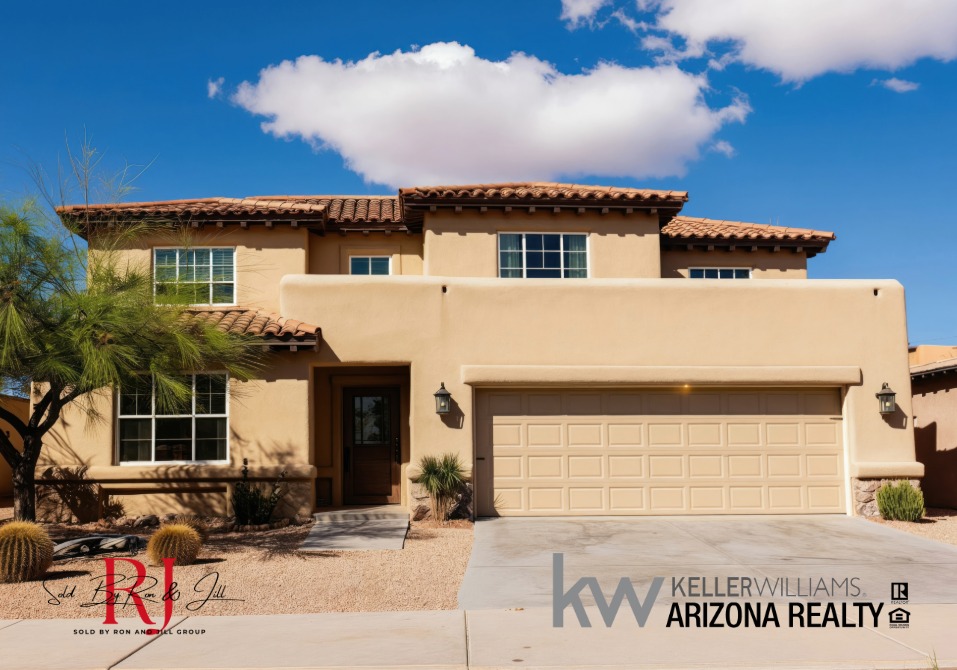
Why Phoenix Homes Are So Expensive Right Now: 3 Key Reasons
Why Phoenix Homes Are So Expensive Right Now: 3 Key Reasons | Sold By Ron and Jill Group Why Phoenix

Phoenix Home Inspections: Resources for Homebuyers and Sellers
Phoenix Home Inspections: Resources for Homebuyers and Sellers | 2026 Phoenix Home Inspections: Resources for Homebuyers and Sellers Bottom Line