
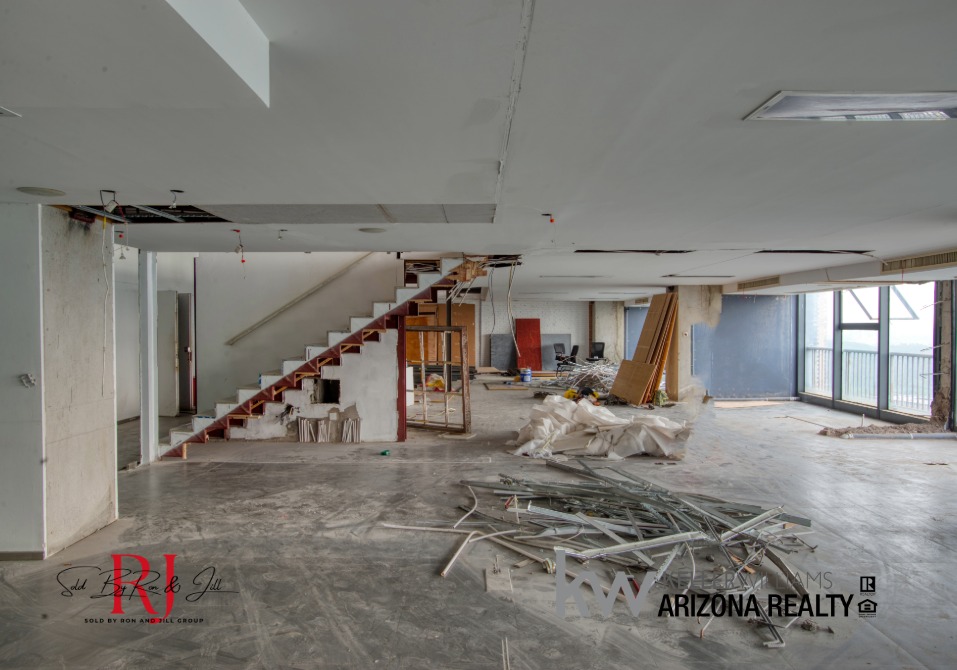
How to Buy an Abandoned House in Phoenix
BOTTOM LINE UP FRONT: Abandoned houses in Phoenix can be acquired — but the path is not a standard MLS transaction. Depending on the property’s legal status, the route is either: (1) direct outreach to the owner of record, (2) a tax lien or tax deed process through Maricopa County, (3) a trustee’s sale or Sheriff’s auction via the foreclosure pipeline, or (4) REO purchase from a lender.
Each path has different title risk, financing constraints, and timeline. The single biggest mistake buyers make is assuming “abandoned” means “available.” In most cases, an abandoned Phoenix property has an owner of record, unpaid taxes, code violations, abatement liens, or some combination of all four. Buying it means navigating those encumbrances — not bypassing them.
This post explains where abandoned Phoenix properties come from, how to find them, how to acquire them through each legal path, and what rehabilitation costs look like in the Phoenix Metro’s climate.
The Terrain: What “Abandoned” Actually Means in Phoenix
“Abandoned” is not a legal designation in Arizona property law. It is a colloquial description of a property that appears vacant, is visibly deteriorating, and has an absent or unresponsive owner. The property still has an owner of record at the Maricopa County Assessor’s office. It still carries tax obligations. It may carry code violation notices, City of Phoenix abatement liens, or a pending foreclosure filing.
ARMLS data through January 2026: 24,358 active listings, $444,740 median sale price, 94 average days on market, 5.17 months supply. The Phoenix Metro’s current buyer’s market means distressed inventory often surfaces as as-is MLS listings before going through the full abandonment cycle. Buyers pursuing abandoned properties are typically looking for below-market acquisition in a specific submarket, a specific renovation play, or a price point not achievable through standard listings.
The City of Phoenix Neighborhood Services Department maintains a Neighborhood Preservation Ordinance enforcement program. Properties identified as vacant and accessible receive a Notice of Ordinance Violation granting the owner 35 days to correct violations. Properties with repeated non-compliance enter the City’s Abatement Lien Program — which can ultimately result in judicial foreclosure and Sheriff’s auction.
CRITICAL DISTINCTION: “Abandoned” in the common sense does not mean the property is ownerless, free, or available for occupation. Every abandoned property in Phoenix has a legal owner of record. Moving in without permission is criminal trespass (ARS 13-1502/13-1503). Adverse possession in Arizona requires 10 years of continuous, open, hostile, and exclusive possession — it is not a shortcut for anyone planning to occupy a vacant house and wait it out.
How to Find Abandoned Properties in Phoenix
mcassessor.maricopa.gov — Search by property address to retrieve the Assessor Parcel Number (APN), current owner of record, and the owner’s mailing address. When the mailing address differs from the property address, the owner is not on-site. This is the primary indicator of absentee ownership and the starting point for any direct outreach strategy.
mctreasurer.maricopa.gov — Property tax delinquency is publicly searchable. In Arizona, unpaid property taxes accumulate at 16% annual interest. After three years of non-payment, the County can initiate a tax lien certificate sale. After five years of delinquency, a tax deed (foreclosure) action becomes available.
Tax delinquency combined with a mailing address mismatch on the Assessor database is the clearest indicator of genuine abandonment vs. a simply vacant property. An owner who has stopped paying taxes on a property they don’t occupy has often effectively walked away — even if title has not formally transferred.
apps-secure.phoenix.gov/PDD/Search — Shows active code violation cases and permit history by address. Properties with multiple active violations coded as “vacant and unsecured” are candidates for further investigation. Properties in the City of Phoenix Abatement Lien Program have a documented history of City-contracted abatement work.
In Goodyear, Surprise, Buckeye, and Peoria, abandonment concentrates in older established neighborhoods rather than post-2000 master-planned communities. Key indicators: dead landscaping (notable in a desert-landscaped neighborhood), boarded or broken windows, visible HOA violation notices, mail accumulation, tagged surfaces, absence of utility meter activity. Once identified, run the Assessor and Treasurer lookups immediately.
Four Acquisition Paths
Path 1: Direct Owner Outreach
The most straightforward path and the most overlooked. Once the owner of record is identified, a direct letter to their mailing address opens a negotiation. Many absentee owners who have allowed a Phoenix property to deteriorate are motivated sellers — they simply have not been approached with a structured offer. The property’s accumulated liabilities (unpaid taxes, code violations, deferred maintenance) are the basis for pricing the offer below market.
Research before making any offer: Outstanding tax balance (Maricopa County Treasurer), all recorded liens (recorder.maricopa.gov), open code violations (Phoenix PDD portal), and current appraised value (Assessor full cash value). The offer should reflect the as-is property value minus estimated rehabilitation cost minus the cost of clearing all encumbrances.
Owner’s title insurance is non-negotiable. Abandoned properties carry title complications — unresolved liens, heir disputes, or gaps in the recorded ownership chain. A title policy from a licensed Arizona title company protects the buyer against undiscovered encumbrances that survive the transaction.
Path 2: Arizona Tax Lien / Tax Deed Process
Arizona is a tax lien state. When a property owner fails to pay taxes, Maricopa County offers the delinquent tax lien at an annual auction (typically February). Purchasing a tax lien certificate earns up to 16% annual interest on the delinquent amount — but does not convey any ownership rights. It is a debt instrument, not a deed.
| Stage | Timeline | What Happens | Buyer Position |
|---|---|---|---|
| Tax lien certificate purchased | Year 1+ | Investor pays delinquent taxes to County; earns up to 16% interest | Creditor — no ownership rights |
| Redemption period | 3 years from certificate | Owner can redeem by paying taxes + interest | Investor gets paid back with interest |
| Tax deed petition eligible | After 3-year redemption expires | If unredeemed, lienholder can petition for tax deed | Can initiate deed transfer process |
| Tax deed issued | After court process | Court transfers title after clearing other liens | Buyer receives deed — may still need quiet title |
| Quiet title action | 60-120 days typical | Court confirms clean title | Clear marketable title established |
Key risk: Other lienholders (mortgage lenders, HOA, City of Phoenix abatement program) may have rights that survive the tax deed process. A full title search before purchasing a tax lien certificate is essential. A quiet title action after receiving the deed is standard practice before reselling or financing.
Path 3: Trustee’s Sale and Sheriff’s Auction
Most Arizona residential foreclosures are nonjudicial. The lender records a Notice of Trustee’s Sale with the Maricopa County Recorder, followed by a 90-day pre-foreclosure waiting period.
Trustee’s Sale: Held at a designated location or online (hubzu.com, auction.com). Properties sell to the highest bidder above the lender’s opening bid. Cash or cashier’s check required — often day-of. No inspection contingency. No financing contingency. As-is, subject to any encumbrances that survive the sale (senior liens, IRS liens, HOA super-priority liens under ARS 33-1807).
Sheriff’s Auction: Properties through judicial foreclosure or the City of Phoenix Abatement Lien Program may end at a Maricopa County Sheriff’s Office sale. Same cash-required, as-is structure as a trustee’s sale. Different legal path.
REO / Bank-Owned (post-foreclosure): If a property does not sell at the trustee’s sale, the lender takes it as REO and typically lists it on the MLS. REO transactions offer a more conventional structure — possible inspection contingencies, financing eligibility (including FHA 203(k)) once the lender has established clean title.
Path 4: City of Phoenix Abatement Lien Program Properties
A Phoenix-specific acquisition channel. Properties with accumulated abatement liens and repeated non-compliance enter the City’s judicial foreclosure track and ultimately auction at Maricopa County Sheriff’s sales. The critical difference from a standard foreclosure: these properties carry City of Phoenix abatement liens in addition to any mortgage debt. The lien priority stack determines what is cleared at auction and what survives.
CITY OF PHOENIX ABATEMENT LIEN PROGRAM — KEY FACTS:
Abatement process begins with a 35-day notice to the owner to correct violations. Repeated non-compliance leads to City-contracted abatement (cleaning, securing) with costs recorded as liens. Judicial foreclosure on accumulated liens leads to Sheriff’s auction. Cash required at sale, as-is condition, full encumbrance stack research required before bidding.
Research open cases: phoenix.gov Neighborhood Services Department and the PDD Online portal. Verify recorded liens at recorder.maricopa.gov before placing any bid.
Title Risk: The Core Problem with Abandoned Properties
Title is the central risk variable in every abandoned property purchase. Complications that survive acquisition make the property difficult or impossible to finance, resell, or insure until resolved.
| Title Issue | What It Means | Resolution Path | Cost / Timeline |
|---|---|---|---|
| Recorded mortgage lien | Unpaid mortgage not cleared at sale | Senior mortgage survives tax sales; does not survive trustee’s sale of the first mortgage | Verify at recorder.maricopa.gov before purchase |
| City abatement liens | Phoenix has paid for repeated cleanup and recorded costs | Paid at closing or negotiated in direct purchase price | $2,000-$30,000+ depending on history |
| HOA super-priority lien | ARS 33-1807 gives HOA six months of dues super-priority in some cases | Must be addressed at or before closing | Verify HOA dues status pre-closing |
| IRS tax lien | Federal tax obligation recorded against the owner | IRS liens can survive some foreclosure types; 120-day redemption applies | Consult title attorney; requires federal release |
| Estate / probate issues | Owner died without clear succession; property in legal limbo | Probate court action required | 3-12 months; attorney required |
| Unpermitted improvements | Additions, converted garages, casitas built without permits | Does not cloud title directly but creates financing obstacles | Retroactive permitting varies by scope |
| Quiet title needed | Chain of title has gaps, defects, or competing claims | Quiet title action in Maricopa County Superior Court | 60-120 days; $2,000-$8,000 attorney fees |
Owner’s title insurance is non-negotiable. Budget $1,000-$2,500 for an owner’s title policy on any distressed property acquisition. The pre-closing title search may reveal encumbrances that kill the deal before money changes hands — which is exactly what the search is designed to do.
Financing an Abandoned House in Phoenix
Standard conventional, FHA, and VA loans require the property to meet minimum habitability standards at appraisal. A property with broken windows, non-functional systems, or structural damage will not pass. Know your financing options before making an offer.
| Financing Type | Works for Abandoned? | Key Requirements / Limits |
|---|---|---|
| Cash | Yes — always | No condition restrictions; fastest closing; strongest negotiating position |
| Hard money loan | Yes | Short-term (6-24 months), 8-14% interest, 60-75% LTV based on ARV; for investors with exit strategy |
| Conventional (standard) | No — in most cases | Property must meet habitable condition standards; abandoned homes routinely fail appraisal |
| FHA 203(k) renovation loan | Yes — if qualified | Finances purchase + renovation in one loan; primary residence only; min $5,000 in repairs; 6-month completion deadline |
| Fannie Mae HomeStyle loan | Yes — if qualified | Like 203(k) but conventional; can be used for non-primary; requires 680+ credit score |
The FHA 203(k) is the most relevant loan for owner-occupants buying an abandoned Phoenix property. It finances the purchase price plus renovation costs in a single loan, eliminating the need for separate construction financing. The catch: property must be at least one year old, primary residence intent required, all work completed by licensed contractors within six months of closing, and a HUD-approved 203(k) consultant is required for substantial renovations. Not every Phoenix Metro lender offers 203(k) — start with a 203(k)-specialized lender.
The Phoenix Climate Rehabilitation Reality
Buying an abandoned house anywhere involves deferred maintenance. In Phoenix, it involves deferred maintenance compounded by one of the most demanding climates in the country. A home that has sat vacant for two to three Arizona summers has experienced conditions that accelerate system degradation faster than nearly any other US market.
| System | Phoenix Abandonment Risk | Replacement Cost Range |
|---|---|---|
| HVAC | Phoenix summers will cook a neglected system. Refrigerant loss, capacitor failure, compressor damage are common. A sealed vacant home traps heat and accelerates damage. | $5,000-$12,000 per unit |
| Roof | Tile roof underlayment degrades; flat/foam roof coating expires and seams fail. Monsoon seasons exploit any weakness. Two-year abandonment = likely underlayment or full replacement. | $8,000-$25,000 |
| Plumbing | Exposed copper corrodes; drain lines crack under thermal cycling; water heaters fail; galvanized pipe in pre-1985 homes is end of life. | $3,000-$15,000 |
| Electrical | Aluminum wiring in pre-1975 homes is a fire hazard at connections. Rodent damage to wiring is common in vacant Phoenix homes. | $5,000-$20,000 |
| Pool (if present) | An untreated pool goes green within weeks. Plaster degrades; equipment fails. Two-year abandonment typically requires replaster + equipment replacement. | $8,000-$20,000 |
| Foundation/slab | Caliche soil + thermal cycling + undetected water intrusion can produce slab movement. Phoenix soil profile is specific — a structural engineer assessment is non-optional. | $0-$30,000+ depending on findings |
MINIMUM DUE DILIGENCE CHECKLIST FOR ANY ABANDONED PHOENIX PROPERTY:
1. Title search at recorder.maricopa.gov — every recorded lien, deed, and instrument
2. Tax balance at mctreasurer.maricopa.gov
3. Code violations at City of Phoenix PDD Online portal
4. Full home inspection by Arizona BTR-licensed inspector
5. HVAC evaluation by licensed mechanical contractor — separate from general inspection
6. Structural/foundation evaluation by licensed engineer if any slab cracking or settling visible
7. Pool inspection if present
8. Preliminary title commitment from a licensed Arizona title company before finalizing offer price
9. Pest/termite inspection — Maricopa County has active Formosan and subterranean termite populations
Frequently Asked Questions
Can I just move into an abandoned house in Phoenix if no one is living there?
No. An apparently abandoned property still has a legal owner of record. Entering and occupying without permission is criminal trespass under Arizona law (ARS 13-1502/13-1503). Arizona’s adverse possession statute (ARS 12-526) requires a minimum of 10 years of continuous, open, hostile, and exclusive possession. The 5-year shortcut requires color of title plus payment of property taxes. The 3-year shortcut requires color of title in specific statutory circumstances. None of these paths apply to simply moving into a vacant house.
How do I find out who owns an abandoned Phoenix property?
The Maricopa County Assessor’s database (mcassessor.maricopa.gov) provides the owner of record and their mailing address. The Maricopa County Recorder (recorder.maricopa.gov), searched by owner name, shows all recorded liens, mortgages, and notices filed against that owner and property. Together, these provide the full ownership and encumbrance picture before any outreach or offer is made.
What happens to abandoned Phoenix properties if no one buys them?
The City of Phoenix Abatement Lien Program tracks properties with repeated code violations. After the 35-day notice period and repeated non-compliance, the City contracts to abate hazards and records the costs as liens. Properties with accumulated abatement liens may enter the judicial foreclosure track, ultimately ending at a Maricopa County Sheriff’s auction. Properties with significant tax delinquency enter a parallel County track that can also result in forced transfer of title. In some cases, the City of Phoenix takes ownership as part of its blight elimination mandate.
Can I buy an abandoned house in Phoenix with an FHA loan?
A standard FHA purchase loan requires the property to meet HUD Minimum Property Standards at appraisal. A structurally compromised or non-habitable abandoned property will not pass. The relevant product is the FHA 203(k) renovation loan — it finances the purchase and renovation in a single loan. Requirements: primary residence only, property at least one year old, minimum $5,000 in eligible repairs, all work completed within six months by licensed contractors. Work with a 203(k)-specialized lender from the start — not all Phoenix Metro lenders offer this product.
Do I need a real estate agent to buy an abandoned house in Phoenix?
Not legally. But an agent with direct experience in distressed, off-market, and foreclosure transactions in the Phoenix Metro adds practical value in navigating a trustee’s sale bid, interpreting a Maricopa County Recorder title search, coordinating a 203(k) loan with contractors, or structuring a direct outreach offer that accounts for accumulated encumbrances. Look specifically for agents with REO or distressed property experience, or who hold the SFR (Short Sale and Foreclosure Resource) certification.
What is a quiet title action and when do I need one in Phoenix?
A quiet title action is a civil lawsuit filed in Maricopa County Superior Court asking the court to officially confirm who holds clear, marketable title. It is required when the title chain has gaps, competing claims, or defects — common in tax deed, foreclosure, and estate acquisitions. Without it, most title companies will not issue a policy and most conventional lenders will not fund the loan. Budget 60-120 days and $2,000-$8,000 in attorney fees for a standard quiet title action in Maricopa County.
Are there abandoned houses in Goodyear, Surprise, or Buckeye?
West Valley abandonment concentrates in older established neighborhoods rather than post-2000 master-planned communities. Buckeye has higher proportional distress in its older neighborhoods. Goodyear and Surprise have distressed pockets in inventory built through the 1990s-2000s. The current buyer’s market (94 average DOM, 5.17 months supply per ARMLS January 2026) means much distressed West Valley inventory surfaces on the MLS as as-is listings before going through the full abandonment cycle. Truly off-market abandoned properties that have not surfaced on the MLS represent the opportunity — but require the research work described above.
Schedule Your Consultation
Navigating an abandoned or distressed property purchase in the Phoenix Metro requires different skills than a standard MLS transaction — title research, encumbrance analysis, renovation cost modeling, and financing decisions specific to each property’s legal status. The opportunity in abandoned Phoenix real estate is real. So is the complexity. The buyers who capture it understand both.




How to Buy a House in Phoenix with No Money Down
How to Buy a House in Phoenix with No Money Down | Sold By Ron and Jill Group How to

Do You Need a Down Payment to Refinance a Mortgage in Arizona?
Do You Need a Down Payment to Refinance a Mortgage in Arizona? | Sold By Ron and Jill Group Do