
Income Needed for a $700k House in Phoenix: What to Know
BOTTOM LINE UP FRONT: At current rates (Freddie Mac 30-year average: 6.11% as of March 12, 2026), a $700,000 home in Phoenix requires gross household income of approximately $181,000/year with 20% down, $214,000/year with 10% down, or $229,000/year with 5% down — using the conservative 28% housing payment-to-income rule.
These are qualifying thresholds, not comfortable thresholds. Add existing debt, include Phoenix’s full cost stack (taxes, insurance, HOA, summer electricity), and the income floor rises further.
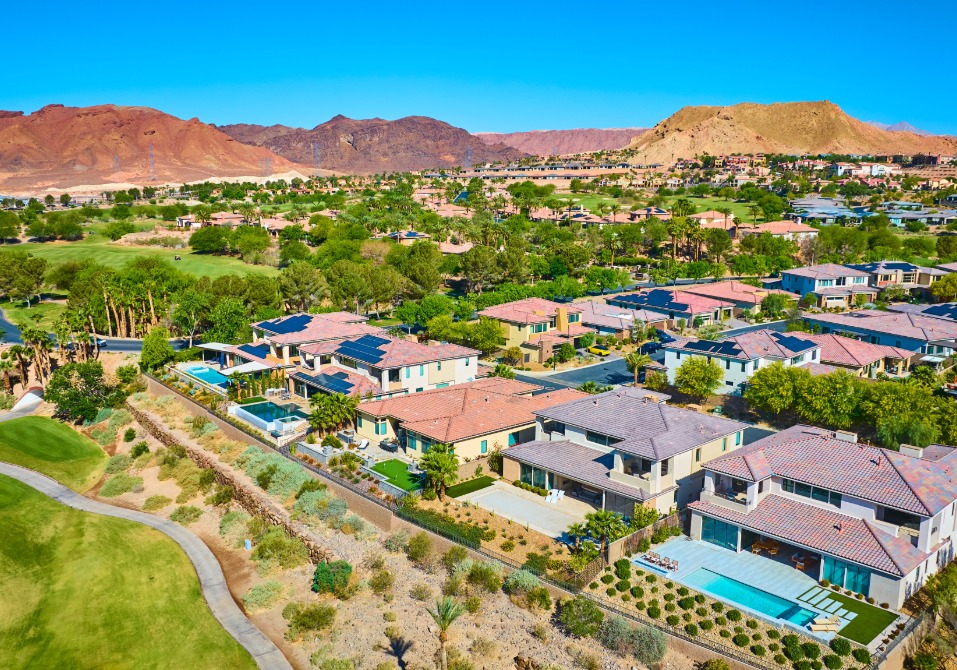
$700,000 is 57% above the Phoenix Metro median sale price of $444,740 (ARMLS January 2026). It places a buyer in move-up and executive home territory across the West and Northwest Valley, and at the entry level of Scottsdale’s luxury tier.
($140K) / $4,219/mo
($70K) / $4,991/mo
($35K) / $5,337/mo
The Terrain: What $700K Buys in Phoenix Right Now
ARMLS data through January 2026: 24,358 active listings, $444,740 median sale price, 94 average days on market, 5.17 months supply, 56% of closings with seller concessions. Cromford Market Index: approximately 78-80 (buyer’s market territory).
$700,000 lands in materially different positions depending on where in the Phoenix Metro you are looking. The HOA, property tax profile, and carrying cost at $700,000 in Goodyear differs from the same price in Scottsdale.
| Submarket | What $700K Delivers | Market Context |
|---|---|---|
| Goodyear / Surprise / Peoria | 3,500-4,500 sq ft, 4-5 BR, 3-car garage, pool, premium new construction in master-planned community | Well above local median; strong inventory; sellers negotiating |
| Anthem / North Phoenix | 4,000+ sq ft executive resale or upper-tier new construction; gated communities; mountain views | Limited inventory at this tier; lot premiums significant |
| Chandler / Gilbert | 3,000-3,800 sq ft, established neighborhood, top-rated schools, often without pool | High East Valley employment demand; less buyer leverage vs. West Valley |
| Scottsdale (entry level) | 1,800-2,400 sq ft older resale or smaller new build; entry-level for that market | $700K is lower quartile for Scottsdale; limited, fast-moving inventory |
| Paradise Valley | Not viable as standalone single-family purchase; entry starts $1.5M+ | Different market entirely; $700K buys a lot or teardown |
The Math: Building the $700K Payment Stack
Every income calculation starts with the full monthly payment. Here is the complete Phoenix cost stack at $700,000 with 20% down:
| Cost Component | Monthly | Notes |
|---|---|---|
| Principal & Interest ($560K loan, 6.25%, 30yr) | $3,448 | Working rate at 6.25% — above PMMS benchmark (6.11%) to reflect individual borrower pricing above survey average |
| Property Taxes | $321 | Maricopa County effective rate ~0.55% of $700K ($3,850/yr). Two installments: Oct 1 and Mar 1 |
| Homeowners Insurance | $250 | ~$3,000/yr on a $700K Phoenix home; monsoon coverage and pool rider add cost |
| HOA (baseline) | $200 | West Valley master-planned communities: $75-$300/mo. Scottsdale gated communities: $400-$800/mo |
| TOTAL PITI + HOA | $4,219 | Pre-PMI, no existing debt |
The Three Down Payment Scenarios
| Down Payment | Down Amount | Loan | P&I/mo | PMI/mo | Total/mo | Income @ 28% | Income @ 36% (no debt) |
|---|---|---|---|---|---|---|---|
| 20% | $140,000 | $560,000 | $3,448 | $0 | $4,219 | $181,000/yr | $141,000/yr |
| 10% | $70,000 | $630,000 | $3,879 | $341 | $4,991 | $214,000/yr | $166,000/yr |
| 5% | $35,000 | $665,000 | $4,095 | $471 | $5,337 | $229,000/yr | $178,000/yr |
IMPORTANT NOTE ON 28% vs. 36%: The 28% rule is a front-end ratio (housing payment only). The 36% rule is a back-end ratio (all monthly debt obligations including housing). Lenders evaluate both. A buyer with zero existing debt can qualify at the lower income threshold shown in the 36% column.
A buyer with $800/month in car payments and student loans adds roughly $27,000-$30,000 to the minimum income requirement across all three scenarios. Most Phoenix buyers in the $700K range carry some existing debt. The practical income floor for a buyer with moderate existing debt and 20% down is approximately $165,000-$175,000/year.
The Debt Variable: What It Actually Costs You
The 36% back-end DTI rule is what lenders actually underwrite against. Here is the impact of existing monthly debt on the 20% down scenario ($4,219/month housing payment):
| Existing Monthly Debt | Total Monthly Obligations | Income Needed @ 36% DTI |
|---|---|---|
| $0 (debt-free) | $4,219 | $141,000/yr |
| $400 (minimal debt) | $4,619 | $154,000/yr |
| $800 (car + student loan) | $5,019 | $167,000/yr |
| $1,200 (multiple obligations) | $5,419 | $181,000/yr |
| $1,600 (heavy debt load) | $5,819 | $194,000/yr |
Every $400/month in existing monthly debt raises the required annual income by approximately $13,300 at the 36% DTI. Eliminating a car payment before applying for a $700K mortgage is not just good financial hygiene — it is a meaningful qualification lever.
Phoenix-Specific Costs That Affect Your Real Income Requirement
Standard national mortgage calculators do not capture Phoenix’s climate-specific carrying costs. A buyer who qualifies at the income threshold without accounting for these will be surprised by their first summer utility bill.
Summer Electricity
At 3,500-4,000 square feet, a $700K Phoenix home will run $350-$550/month in electricity in peak summer (June-August). AC accounts for 60-70% of summer electric consumption in the Phoenix Valley, per SRP data. Annual electricity budget on a home this size: $2,800-$4,500 depending on HVAC efficiency and solar.
Pool Operating Cost
Most $700K Phoenix homes in master-planned communities include a pool. Pool operating costs add $80-$120/month for professional service plus $30-$60/month in pool pump electricity. Budget $150-$200/month as a year-round fixed cost.
Property Tax Structure
Arizona’s effective rate works out to approximately 0.52%-0.60% of market value for most Maricopa County residential properties. On a $700K home: $3,640-$4,200/year ($303-$350/month). Review your specific assessed value at mcassessor.maricopa.gov before finalizing income calculations. Arizona’s assessment limitation caps annual LPV increases at 5% per year.
HOA and Special Assessments
HOA fees at $700K range from $100-$250/month in West Valley master-planned communities to $400-$800/month in Scottsdale gated communities. Special assessments — one-time levies for major capital expenditures — are common and not captured in the monthly HOA quote. Review the HOA’s reserve fund status before closing. An underfunded reserve on a 15-year-old community is a near-term special assessment risk.
The Full Monthly Budget at $700K: What $181K Income Actually Looks Like
Complete monthly housing cost profile for the 20% down scenario, including Phoenix’s climate-specific carrying costs:
| Cost | Monthly | Annual |
|---|---|---|
| Principal & Interest ($560K, 6.25%, 30yr) | $3,448 | $41,376 |
| Property Taxes (0.55% of $700K) | $321 | $3,850 |
| Homeowners Insurance | $250 | $3,000 |
| HOA (West Valley baseline) | $200 | $2,400 |
| Electricity (annual avg incl summer peak) | $325 | $3,900 |
| Pool service + pool electric | $175 | $2,100 |
| HVAC maintenance and filters | $40 | $480 |
| Home maintenance reserve (1% of value) | $583 | $7,000 |
| TOTAL HOUSING COST | $5,342 | $64,106 |
Total annual housing cost: $64,106. At $181,000 gross income, that is 35.4% of gross income going to housing — before federal and state income taxes, retirement contributions, healthcare, food, transportation, or childcare. This is functional but tight for a single-income household. A dual-income household contributing to the $181K threshold has more breathing room but still requires a carefully constructed budget.
The Dual Income Calculation
| Profile | Combined Income | Down Scenario | Assessment |
|---|---|---|---|
| Two professionals (tech / healthcare / finance) | $180K-$220K combined | 20% down ($140K) | Qualifies; budget discipline required |
| One executive + one professional | $200K-$250K combined | 20% or 10% down | Qualifies comfortably; some flexibility |
| Single high earner (medicine, law, executive) | $200K-$250K solo | 20% down | Qualifies; savings rate determines timeline |
| Military dual income (officer grades) | $130K-$160K combined | VA loan (zero down) | VA eliminates PMI and down payment; different math |
| Single income below $150K | Below $150K | Any | Does not qualify at 28% rule; requires debt elimination or co-borrower |
The Seller Concession Play: Using Market Conditions to Reduce the Income Requirement
With 56% of Phoenix Metro closings including seller concessions as of January 2026, buyers at $700,000 have a realistic option to negotiate rate reductions that materially change the income calculation.
Permanent Rate Buydown
Each mortgage discount point paid at closing reduces the interest rate by approximately 0.25% permanently. On a $560,000 loan, one point costs $5,600 and reduces the rate from 6.25% to approximately 6.00%, dropping the monthly P&I from $3,448 to $3,358 — saving $90/month. Two seller-paid points reduce the rate to 5.75% and the monthly payment to $3,270, saving $178/month. If a seller contributes two points as a concession, the income required at 28% drops from $181,000/year to approximately $173,000/year.
Temporary 2-1 Buydown
A 2-1 buydown reduces the rate by 2% in year one and 1% in year two, returning to the contract rate in year three. On a 6.25% loan with $560K balance:
- Year 1: Effective rate 4.25% — payment $2,756/month (saving $692/month)
- Year 2: Effective rate 5.25% — payment $3,092/month (saving $356/month)
- Year 3+: Full rate 6.25% — payment $3,448/month
Cost of a 2-1 buydown on a $560,000 loan: approximately $11,200-$14,000. In a market where 56% of sellers offer concessions, requesting a seller-paid 2-1 buydown is a legitimate negotiation position.
THE MARKET LEVERAGE POINT: A $700,000 home in the West Valley averaging 94 days on market with seller concessions is a negotiating opportunity. The smart move at this price point is not simply to push on list price — it is to negotiate a seller-paid rate buydown that directly reduces your carrying cost.
A $14,000 seller-paid 2-1 buydown is worth more to a cash-constrained buyer than a $14,000 price reduction, because it front-loads the savings in the years when cash is tightest and the payment discipline is most critical.
What $700K Does Not Buy: The Honest Assessment
Context for buyers relocating from other markets: $700,000 in Phoenix does not deliver the coastal luxury product some buyers associate with that price point.
No custom finishes are standard. Builder-grade or entry-level upgrades are common in master-planned new construction at this price point. A fully custom kitchen, resort-style pool with water features, and high-end finishes require mid-$800Ks and above in the West Valley, or substantially more in Scottsdale.
Location premiums are real. $700,000 in Goodyear buys a physically larger home than $700,000 in Chandler or North Scottsdale. The size premium in the outer West Valley reflects longer commutes, less established commercial infrastructure, and newer school district records.
The market is not moving fast at this tier. At 94 days average market-wide DOM and a Cromford Market Index of approximately 78-80, buyers at $700,000 have real negotiating leverage — and should use it on structure (concessions, rate buydowns) as well as price.
Frequently Asked Questions
Is $700,000 considered luxury in Phoenix?
Depends on the submarket. In the West Valley (Goodyear, Surprise, Peoria, Buckeye), $700K is firmly move-up/executive territory, well above the local median but not the luxury tier that starts around $900K-$1M in those markets. In Scottsdale, $700K is entry-level and buys a smaller or older product. The Cromford Report and local agents typically segment the Phoenix luxury market as properties above $1 million.
What credit score do I need for a $700K mortgage in Phoenix?
Conventional financing requires a minimum 620 FICO for qualification, but the rate you pay is heavily tied to your credit tier. At 760+, you access the best rates (approximately 6.11-6.25% currently). At 680-719, expect rates 0.5-1.0% higher, adding $200-$400/month to the payment on a $560K loan. For a $700K home at the income threshold, optimizing your credit score before applying can materially change the calculation.
Can I use a VA loan for a $700K home in Phoenix?
Yes, if you meet service requirements. VA loans have no income cap, no down payment requirement, and no PMI. On a $700K purchase, the funding fee (2.15% first use) produces a loan of approximately $714,750. Monthly P&I at 6.25% is approximately $4,399; total with taxes, insurance, and HOA is approximately $5,170/month. Income required at 28%: approximately $221,000/year. However, VA uses residual income analysis rather than a strict DTI cap, which frequently qualifies veterans with lower incomes than conventional underwriting allows.
What does the Phoenix conforming loan limit affect at $700K?
The 2026 conforming loan limit for Maricopa County is $806,500 for a single-unit property. A $700K purchase with 20% down produces a $560K loan — well within conforming limits. A $700K purchase with 5% down produces a $665K loan — also within conforming limits. Buyers at this price point access standard conventional financing rather than jumbo loan products, which require larger down payments and have stricter underwriting.
How does the 2026 Phoenix market affect my negotiating position at $700K?
Current conditions (94 days average DOM, 56% of closings with seller concessions, Cromford Market Index approximately 78-80) favor buyers at the $700K price point. The practical negotiating agenda: ask for seller-paid rate buydown points, closing cost credits, home warranty, and inspection repair credits. Sellers of $700K homes on market for 60+ days are receptive to structured concession requests.
What income is needed with less than 20% down on a $700K Phoenix home?
At 10% down ($70K), the income requirement rises to approximately $214,000/year using the 28% front-end rule, accounting for PMI of approximately $341/month on the $630,000 loan. At 5% down ($35K), the requirement is approximately $229,000/year with PMI of approximately $471/month on a $665,000 loan. PMI drops off when the loan-to-value ratio reaches 80% through appreciation and principal paydown.
What is a seller-paid rate buydown and how does it help at $700K?
A 2-1 buydown reduces the rate by 2% in year one and 1% in year two, returning to the contract rate in year three. On a 6.25% loan with $560K balance, year one payments drop from $3,448 to $2,756 — saving $692/month. Cost: approximately $11,200-$14,000. In a market where 56% of sellers offer concessions, a seller-paid 2-1 buydown is a legitimate and effective negotiation request.
Schedule Your Consultation
If you are evaluating whether a $700,000 Phoenix home is the right move for your income and financial situation — or want to model specific scenarios with your actual debt, down payment, and credit profile — that is exactly the conversation a buyer consultation with Ron and Jill covers. The income number is where the calculation starts. The full budget is where it ends.