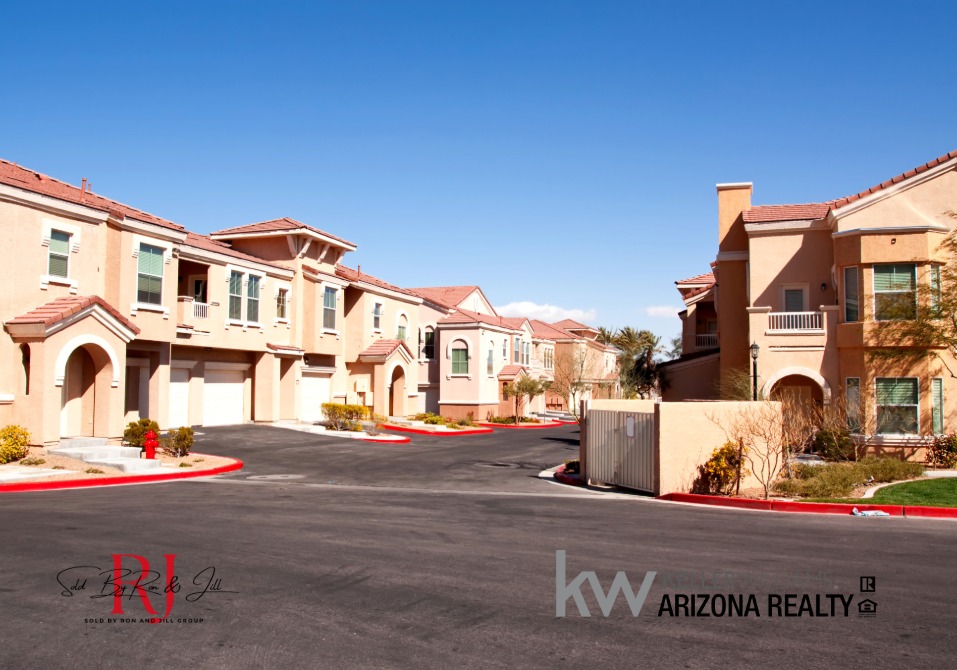
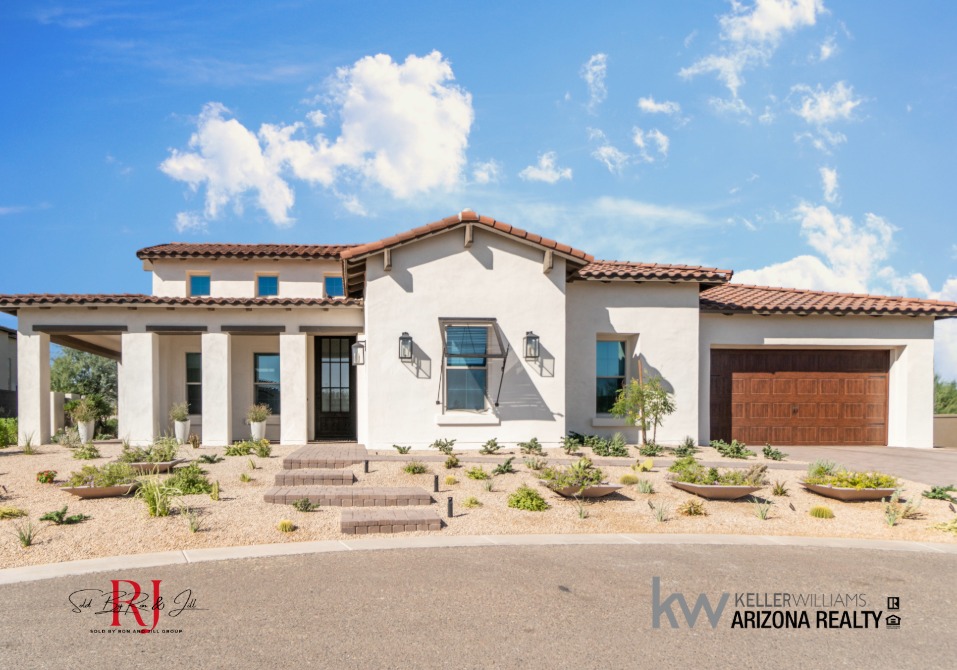
Buying Spec Homes vs. Custom Homes in Phoenix: Which Is Right for You?
Most Phoenix buyers searching this question are actually looking at a third option they have not named yet: the semi-custom production home. The West Valley spec-home conversation rarely maps cleanly onto a binary choice. Here is what the three paths actually look like in the Phoenix market, what each costs, how long each takes, and what the current builder incentive environment means for the decision in 2026.
The Terrain: Why Phoenix Is a New Construction Market
Phoenix is one of the most active new construction markets in the country. Maricopa County led the nation in new unit production in 2024 with 38,310 new homes built, according to Census data. Zonda’s Builder Magazine ranked Phoenix #3 among the 50 hottest new home markets for 2025. The top three builders alone — D.R. Horton (2,680 closings), Lennar (2,627), and Taylor Morrison (2,099) — accounted for more than 7,400 Phoenix metro closings in 2025.
The Phoenix metro median sale price landed at $444,740 in January 2026 per ARMLS. West Valley submarkets — Goodyear, Buckeye, Surprise, Peoria — run $380,000 to $420,000. At those price points, production new construction from the major builders is directly competitive with resale, especially when builder incentives are factored in. Throughout much of 2025, builders were buying down mortgage rates to the 4% to 5% range on many West Valley communities — a financing advantage resale sellers could not replicate.
That incentive environment has moderated in early 2026 as market conditions improve, but builder programs remain a meaningful factor in the buy-new calculation. The question for buyers who want new construction is no longer just spec versus custom — it is which of the three construction categories fits their timeline, budget, and need for control.
The Three Paths: What Phoenix Buyers Are Actually Choosing
Production Spec Home
What it is: Completed or nearly complete. Builder has already chosen the floor plan, lot, and all finishes. Move-in ready or close to it.
Typical close: 30–90 days
Customization: None to minimal
Price range: $380K–$550K (West Valley entry to mid-tier)
Semi-Custom (Production-to-Order)
What it is: Buyer selects from pre-designed floor plans and chooses finishes at builder’s design center. Some structural modifications possible before framing.
Typical close: 6–9 months from contract
Customization: Floor plan selection + finish choices
Price range: $400K–$700K+
Full Custom Home
What it is: Buyer owns the lot; works with architect or design/build firm. Every decision made by the buyer from floor plan to fixtures.
Typical close: 12–18+ months
Customization: Complete
Price range: $600K–$1.5M+ all-in (land + build)
The semi-custom production home is what most West Valley buyers who “want to build” actually purchase. They work with a builder like Taylor Morrison, Meritage, Pulte, or K. Hovnanian, choose a floor plan from three or four options in a given community, visit the design center to select flooring, countertops, cabinetry, and exterior color, and then wait 6 to 9 months for the home to be built. This is not the same as designing a home from scratch — but it delivers substantially more personalization than a completed spec home.
The Weather: What Each Type of Buyer Is Actually Weighing
Buyers drawn to spec homes are usually solving for one of three problems: a hard move-in deadline (lease ending, job relocation, school start), a desire to avoid construction-period limbo (no construction loan, no living in a rental for nine months), or the current financing advantage that builder incentives on standing inventory represent.
Buyers leaning toward semi-custom or full custom are typically solving for a different problem: the absence of what they need in existing inventory. Maybe every spec home in their price range has a layout that does not work — a second bedroom the wrong size, a kitchen facing the wrong direction, no multi-generational suite option. In the West Valley, where master-planned communities have filled in substantially over the past decade, the spec home inventory is deep enough that most buyers can find something close. But “close” and “right” are different calculations.
The full custom home buyer in Phoenix is a specific profile: typically a buyer with a longer horizon, sufficient cash reserves to carry the construction period, a specific lot already in mind (often in an infill location, a rural county island, or a luxury hillside community), and a strong preference for a design that production communities do not offer at any price. This is a distinct market segment, not an upgrade path from semi-custom.
Spec and Production Homes: What the Incentive Window Means in 2026
Through 2025, Phoenix builders ran some of the most aggressive incentive programs in the market’s history. Rate buydowns to 4% to 5% on 30-year fixed mortgages, $10,000 or more in closing cost credits, design center upgrades worth $15,000 to $50,000 on some semi-custom contracts, and appliance packages were standard offers from builders competing against rising resale inventory.
As of early 2026, some of those programs have wound down. Several builders have ended or scaled back 50%-off design center promotions as market conditions tighten. Rate buydown programs remain available but at narrower terms than the peaks of 2025. The honest assessment is that the window for the most aggressive incentive packages is closing, not closed — but buyers who timed their purchase during peak incentive periods captured deals that are no longer fully replicable.
The Full Custom Home Path in Phoenix: What It Actually Costs
Building a full custom home in the Phoenix metro requires the buyer to first solve the land problem. Available infill lots in desirable West Valley communities are limited. Rural county island parcels in Peoria and Surprise exist but come with utility extension costs. The North Phoenix luxury corridor (Cave Creek, Carefree, North Scottsdale adjacencies) has lot inventory but at significantly higher land costs.
| Cost Component | Typical Phoenix Range | Notes |
|---|---|---|
| Land (lot purchase) | $150,000–$400,000+ | Varies enormously by location; infill lots in established neighborhoods premium-priced |
| Architecture and design | $20,000–$80,000+ | 7–15% of construction budget; required for permit submission |
| Construction (per sq ft) | $120–$250/sq ft | $300K–$625K for 2,500 sq ft; luxury finishes push higher |
| Permits and fees | $5,000–$25,000 | Maricopa County + city-specific; varies by municipality |
| Site preparation | $10,000–$50,000+ | Grading, utility hookup, soil conditions vary widely in desert terrain |
| Construction loan carrying costs | $12,000–$40,000+ | Interest accrues during 12–18 month build period; factor this into true cost |
| All-in estimated total | $550,000–$1.2M+ | Typical for a 2,500–3,500 sq ft custom build in Metro Phoenix |
The construction loan structure for a full custom home also differs significantly from a standard mortgage. Buyers typically require a construction-to-permanent loan — a specialized product that funds draws to the builder at construction milestones and converts to a permanent mortgage at certificate of occupancy. These loans require larger down payments (typically 20–25%), rigorous underwriting, and ongoing lender inspections throughout the build. The interest during construction is paid by the buyer on the drawn amount — a real cost that does not appear in square-foot estimates.
New Construction Inspection: The Protection Most Buyers Miss
New construction homes — spec, semi-custom, or custom — do not use the standard AAR Residential Resale Purchase Contract. Builders use their own contracts, which have different protections, different inspection provisions, and different default remedies. The builder’s sales agent represents the builder, not the buyer. A buyer’s agent familiar with Phoenix builder contracts is the buyer’s primary protection at the negotiation stage.
For new construction inspections specifically, three points of independent inspection are critical:
- Pre-drywall inspection: After framing, plumbing rough-in, and electrical rough-in — before the walls close. This is the only opportunity to verify structural framing, plumbing placement, and electrical panel location before they are concealed.
- Pre-certificate of occupancy inspection: Before the final walkthrough with the builder. An independent inspector will identify finish defects, system performance issues, and code compliance items that the buyer can submit to the builder as a punch list before accepting the home.
- 11-month warranty inspection: Timed to occur before the builder’s one-year workmanship warranty expires. Gives the buyer a documented list of warranty claims to submit before the first coverage period ends.
The Decision Framework: Which Path Fits Your Situation
Use This Framework to Match Your Path
Choose a Spec or Production Home If…
- You have a hard move-in deadline within 90 days
- Current builder incentive packages materially lower your effective rate or cost
- You do not need structural customization — layout and location work
- You want new construction warranties without the build-period wait
- Your budget is $380K–$550K in the West Valley
- You are relocating from out of state and cannot manage a 9-month build remotely
Choose a Semi-Custom or Full Custom Build If…
- No production floor plan in your budget addresses a non-negotiable layout requirement
- You have an 8–18+ month timeline flexibility
- You have cash reserves to carry the build period without stress
- You have a specific lot in mind or need an infill location
- Your target price point is $600K+ and customization delivers proportional value
- You want to design for long-term needs (multigenerational, accessibility, hobby space)
The semi-custom production home is the right path for most buyers who say they want to “build.” It delivers meaningful personalization — floor plan selection, finish choices, some structural modifications — at a significantly lower cost and shorter timeline than full custom, and with a cleaner financing path than a construction-to-permanent loan. The full custom home delivers complete control but at a premium in time, cost, and complexity that is proportionate only when the premium is genuinely necessary.
Frequently Asked Questions
What is the difference between a spec home and a custom home in Phoenix?
A spec home is built by a production builder before a buyer is under contract — the builder selects the lot, floor plan, and all finishes. A custom home is designed and built for a specific buyer on a lot they own, with full control over every decision. In between is the semi-custom production home: the buyer chooses from pre-designed floor plans and selects finishes at a builder design center. This is the most common “new construction” path in the Phoenix West Valley.
How long does it take to close on a spec home in Phoenix?
A completed spec home can close in 30 to 60 days. A spec home still under construction may close in 60 to 120 days. Semi-custom production homes where the buyer is selected before framing take 6 to 9 months from contract to close. Full custom homes take 12 to 18 months or more from initial design through certificate of occupancy.
What builder incentives are available on Phoenix spec homes in 2026?
Through most of 2025, Phoenix builders offered rate buydowns to the 4%–5% range, $10,000+ in closing cost credits, and significant design center upgrade packages. As of early 2026, some of the most aggressive incentives have wound down as market conditions improve. Incentive availability varies by community and builder. Most packages are conditioned on using the builder’s preferred lender — buyers should compare total cost including financing against independent mortgage alternatives.
Can I negotiate on a spec home from a Phoenix builder?
Yes, but differently than a resale transaction. Builders typically protect base prices to preserve community comparables. Negotiation happens through incentive packages: rate buydowns, closing cost credits, design upgrades, lot premium waivers, or extended rate locks. On standing spec inventory that has been sitting, builders have more flexibility on both price and incentives. A buyer’s agent who works regularly with Phoenix builders knows which communities have the most room.
How does the home inspection process work for new construction in Phoenix?
New construction uses builder contracts, not the AAR resale contract — buyer protections and inspection provisions differ. Buyers should hire an independent inspector at three stages: pre-drywall (after framing but before walls close), pre-certificate of occupancy (before final builder walkthrough), and at 11 months (before the one-year workmanship warranty expires). The builder’s sales agent represents the builder, not the buyer. A buyer’s agent familiar with builder contracts is essential protection.
How much does it cost to build a custom home in Phoenix?
Building a custom home in Phoenix (excluding land) costs approximately $120 to $250 per square foot. For a 2,500-square-foot home, that is $300,000 to $625,000 in construction costs alone. Land in desirable Phoenix metro locations adds $150,000 to $400,000+. Architecture fees, permits, site preparation, and construction loan carrying costs add further. Total all-in cost for a typical custom build in the Phoenix metro ranges from $550,000 to well over $1 million.
Where are spec homes being built in the Phoenix West Valley?
The West Valley — Goodyear, Buckeye, Surprise, Peoria, and Waddell — hosts the highest concentration of production new construction in the metro. Major builders active in West Valley communities include D.R. Horton, Lennar, Taylor Morrison, Meritage, Pulte, K. Hovnanian, and Ashton Woods. Master-planned communities in Buckeye (Verrado, Tartesso, Festival Ranch), Goodyear (Palm Valley, Estrella Mountain Ranch), and Surprise (Marley Park, Surprise Farms) represent the dominant new construction inventory in Ron and Jill’s service territory.
Does new construction come with a warranty in Arizona?
Yes. Arizona law provides statutory warranties on new homes: one year on workmanship, two years on mechanical systems (plumbing, electrical, HVAC), and ten years on structural defects. Review the specific warranty terms in the builder’s contract before signing. An 11-month independent inspection — timed before the first-year workmanship warranty expires — is strongly recommended to document any claims before coverage lapses.
📅 New Construction or Resale — We Know Both Sides of the Phoenix Market
Builder contracts are not the same as AAR contracts. The builder’s agent works for the builder. Schedule a consultation and we will walk through current spec inventory, builder incentive packages, and how new construction compares to resale in the specific submarkets you are targeting.
👥 Agent Referral