

How to Win a House in Phoenix’s Seller’s Market: A Complete Guide
The Terrain: Where the Market Actually Stands in January 2026
ARMLS January 2026: 24,358 active listings across Greater Phoenix, $444,740 median sale price, 94 average days on market, 5.17 months supply. 59.6% of closings below list, seller concessions present in approximately 56% of transactions. Cromford Market Index: Greater Phoenix approximately 78–80.
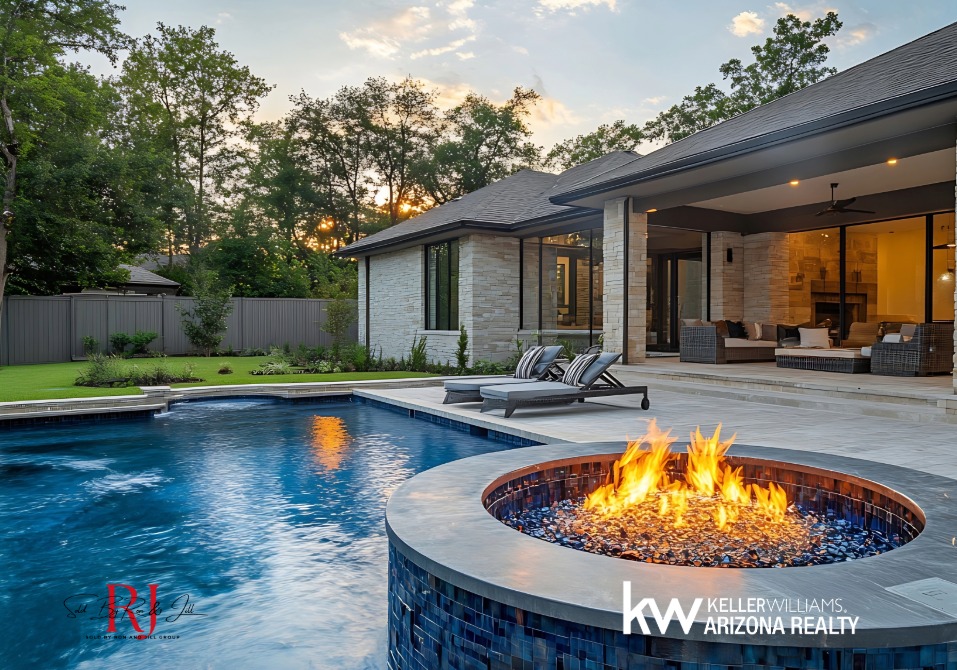
That aggregate picture masks meaningful submarket variation. The West Valley entry range of $380,000–$434,000 — particularly well-configured homes with pools, north-facing yards, and three-car garages in Peoria, Goodyear, and Surprise — absorbs faster than the overall market data suggests. Homes with all three of those attributes, correctly priced, often see multiple offers within days. The 94 DOM average includes overpriced inventory that is dragging the number up. Remove that cohort and the well-positioned segment is moving much faster.
The second category of concentrated seller’s market behavior is new construction. West Valley production builders in Buckeye, Surprise, and Waddell are deploying aggressive financing incentives — rate buydowns to the sub-5% range on certain inventory — which creates competitive pressure on resale buyers who need to match or beat that payment math. A resale buyer competing against a new build offering 4.99% financing on a $400,000 home is fighting a different battle than a buyer in a traditional resale-versus-resale competition.
The competitive offer toolkit in this guide applies in both scenarios. Know which one you are in before you make your move.
The Weather: Why Buyers Get Beaten on Homes They Could Afford
The most common failure pattern in a competitive Phoenix submarket is not a budget problem. It is a preparation problem. Buyers who have been casually browsing, who have a pre-qualification letter from three months ago, who have not discussed contingency strategy with their agent, and who need 48 hours to get their earnest money liquid — those buyers lose. Consistently. Not because they cannot afford the home, but because a more prepared buyer was positioned to move first and cleaner.
The second failure pattern is emotional overreach. A buyer who wants a specific home badly enough to waive all contingencies, exceed their ceiling, and ignore appraisal risk is not competing strategically. They are competing emotionally. Those buyers sometimes win the house and later discover what the win actually cost them.
The honest assessment is that competitive offer success in Phoenix is 80% preparation before the offer and 20% offer structure on the day. The 80% is the work most buyers skip because it is less interesting than touring.
Foundation Layer: The Pre-Offer Work That Determines the Outcome
Pre-Approval vs. Pre-Underwrite: Know the Difference
A pre-qualification letter is a lender’s informal estimate based on self-reported information. It carries almost no weight with a sophisticated seller. A standard pre-approval involves income and asset documentation reviewed by a loan officer — better, but the underwriter has not touched the file.
Call your lender now, before you identify the property. Ask specifically: can we complete full underwriting before I identify a home? The answer should be yes. If it is not, find a lender who can deliver it.
Earnest Money: Skin in the Game
Standard earnest money in Phoenix transactions runs approximately 1% of purchase price. In a competitive situation, 2% to 3% is the signal that separates serious buyers from price-shoppers. On a $420,000 purchase, the difference between 1% and 3% earnest money is $8,400. That $8,400 goes toward your down payment and closing costs at the close of escrow — it is not an additional cost. If you are not willing to put 3% in escrow, you are signaling to the seller that you are not fully committed to closing.
Ensure your earnest money is liquid before you write an offer. Wire transfer from a savings account that requires three business days to access is not liquid. Know exactly where those funds are and how fast you can deliver them.
Closing Timeline Flexibility
Sellers have lives on the other side of a transaction. Many West Valley sellers are purchasing their next home simultaneously, which creates either urgency to close fast or need for a longer timeline to coordinate move-out. Either condition can be a buyer advantage — if you know which one applies and can accommodate it.
Instruct your agent to have a direct conversation with the listing agent before you submit your offer. Ask: what closing timeline does the seller need? A buyer who can close in 21 days on a seller who needs to move fast, or who can offer a 45-day close with a rent-back on a seller who needs coordination time, has differentiated their offer without changing the price.
The Offer Architecture: What Each Component Does
Purchase Price and the Escalation Clause
In a multiple-offer situation where you do not know the competing bids, an escalation clause lets you compete aggressively without overpaying if competition is thin. The mechanics: you submit a base offer at a price you are comfortable paying, and include an addendum that automatically increases your offer by a set increment above the highest competing offer, up to a defined cap.
Example structure for a $420,000 list-price home: base offer of $418,000, escalating in $2,000 increments above the highest bona fide competing offer, up to a maximum of $435,000. If no competing offer exists, your price is $418,000. If a competing offer comes in at $422,000, your escalated price is $424,000. The seller must provide proof of the competing offer before the escalation triggers. Reference: Rocket Mortgage — Escalation Clause in Real Estate.
Contingency Strategy: What to Keep, What to Consider Modifying
Contingencies protect buyers and create uncertainty for sellers. The question is not “waive everything” — that is reckless advice. The question is: which contingencies present genuine deal risk for you, and which add seller uncertainty without meaningful buyer protection?
Inspection contingency: Keep it unless you are buying a recent-build with a known condition history and an active builder warranty. The mechanical systems in a Phoenix home carry the full thermal load of 115-degree summers. A modified inspection contingency — retaining the right to back out for major defects above a set dollar threshold — is a reasonable competitive compromise that does not require accepting unknown mechanical risk.
Financing contingency: If you have a pre-underwrite in hand, this contingency adds minimal protection. Buyers with pre-underwritten approvals can legitimately negotiate a compressed or waived financing contingency because the underwriting is already done. The only remaining condition is the property appraisal, not their creditworthiness.
Appraisal contingency: This is the contingency that matters most in a competitive market. An appraisal gap clause — agreeing to cover up to a specified dollar amount above appraised value — gives the seller confidence without a full appraisal waiver. “Buyer agrees to cover up to $10,000 above appraised value, not to exceed the purchase price” is a standard formulation. Only include gap coverage you have the cash to deliver.
Offer Cleanliness: What Not to Ask For
Every request in a competitive offer is a friction point for the seller. In a multiple-offer scenario, asking for the washer and dryer, the patio furniture, a home warranty, closing cost contributions, and a 7-day inspection period with a repair list is how you lose to a buyer who asked for nothing extra.
Seller concessions remain present in approximately 56% of Phoenix closings — but those concessions are being negotiated after the offer is selected, not front-loaded into the competitive offer itself. Submit a clean offer. Save the closing cost credit conversation for after you are under contract on a home where the seller has no competing offers.
For more on defining your purchase criteria before you get into competitive situations, see our earlier post on The Complete House Wish List for Phoenix Buyers.
Phoenix-Specific Competitive Dynamics: What Out-of-State Buyers Miss
Buyers relocating from California, Colorado, Washington, and the Pacific Northwest often have significant equity from prior home sales and can move aggressively on price. The competitive response from Phoenix-area buyers is not to match dollar-for-dollar but to outperform on certainty — cleaner offers, faster closes, pre-underwritten financing, and local agent relationships that provide advance notice of coming inventory.
The builder competition variable is unique to Phoenix and particularly the West Valley. A buyer competing against a new construction purchase in the same price range faces a seller incentive structure — rate buydowns, appliance packages, free upgrades — that resale sellers cannot easily replicate. A resale buyer who can close quickly and cleanly, without the 6 to 12-month build timeline uncertainty, has a legitimate comparative advantage to articulate. Speed of certainty is the resale’s competitive response.
The timing variable matters more in Phoenix than most buyers realize. Spring listings hit the market in February and March. Buyers who are fully prepared — pre-underwritten, earnest money liquid, agent relationship established, priority list finalized — in January have a competitive window before the spring surge activates. Buyers who complete their preparation in April are competing in the most crowded window of the Phoenix buying calendar.
The Pivot: When You Lose
Losing a competitive offer is data, not defeat. The debrief matters more than the emotion. The questions to answer after any lost offer: Did you lose on price or terms? Was the winning offer cash or financed? Did the seller accept an escalation clause, or did they run a highest-and-best process? What was the gap between your offer and the winner?
Each answer tightens your preparation for the next round. Buyers who debrief systematically typically win within three to four offer attempts. Buyers who take every loss personally and recalibrate emotionally rather than analytically tend to either overpay on the eventual win or exit the market.
If you are losing on cash offers, evaluate whether a bridge loan or temporary cash-out refinance on a current property changes your competitive position. If you are losing on terms, identify the specific term causing the loss and address that variable precisely rather than escalating price.
Frequently Asked Questions
Is Phoenix actually a seller’s market right now in early 2026?
At the aggregate level, no — 5.17 months supply and 94 DOM are buyer-favorable metrics. At the submarket level, correctly priced homes in the West Valley entry range with strong configurations (pool, three-car garage, north-facing yard, good schools) still attract multiple offers in days. The full competitive offer playbook applies to those pockets even as the broader market favors buyers.
What is the single most important competitive preparation step?
A pre-underwrite from your lender, completed before you identify a property. This converts your financing contingency from a seller risk into a near-certainty, and signals seriousness that a standard pre-approval letter cannot convey. It typically takes two to four business days and costs nothing additional beyond the standard pre-approval process.
Should I waive the inspection contingency to be competitive?
In most cases, no — not in Phoenix. The mechanical systems in a Phoenix home carry the full thermal load of sustained 115-degree summers. An HVAC system with deferred maintenance is a $10,000 to $18,000 exposure. A modified inspection contingency — retaining the right to back out for major defects above a defined threshold — is a reasonable competitive compromise that does not require accepting unknown mechanical risk.
How does builder competition in the West Valley affect my offer strategy on a resale?
When a builder is offering rate buydowns to sub-5% financing on nearby inventory, a resale buyer who can close quickly and cleanly — without the 6 to 12-month build timeline uncertainty — has a legitimate comparative advantage to articulate. Speed of certainty is the resale’s competitive response to the builder’s incentive package.
What is the difference between an escalation clause and a highest-and-best offer request?
An escalation clause is submitted with your initial offer and automatically adjusts your price in response to competing bids. A highest-and-best request comes from the seller after receiving multiple offers — all buyers submit their final best offer by a deadline. In a highest-and-best round, there is no escalation mechanism; you simply submit the number you are prepared to pay.
How much earnest money should I put down in a competitive Phoenix offer?
2% to 3% is the range that signals serious commitment. On a $420,000 purchase, that is $8,400 to $12,600. That money applies to your down payment and closing costs at close of escrow — it is not an additional cost. The earnest money is at risk if you back out for reasons not covered by a remaining contingency.
Can a personal letter to the seller help in Phoenix?
It can help at the margin when offers are otherwise close. Never rely on a letter as a primary competitive strategy. Build the offer so it stands on its terms alone. Letter-writing also opens fair housing risk, and sophisticated listing agents often advise sellers to select based on offer terms only.
Schedule a Consultation With Ron and Jill
Competitive offer preparation is not something you assemble the day you find a home. It is a two-week build that starts with a lender call and ends with a pre-underwrite, liquid earnest money, and a clear contingency strategy. If you are targeting the West Valley — Goodyear, Buckeye, Peoria, Surprise, or Anthem — and want to walk into the spring buying season as the prepared buyer, schedule the consultation now.




Conveyance in Arizona Real Estate: Defined and Explained for Phoenix Buyers
Conveyance in Arizona Real Estate: Defined and Explained for Phoenix Buyers Conveyance in Arizona Real Estate: Defined and Explained for
The Complete House Wish List for Phoenix Buyers to Find Your Dream Home
The Complete House Wish List for Phoenix Buyers to Find Your Dream Home Sold By Ron and Jill Group The