
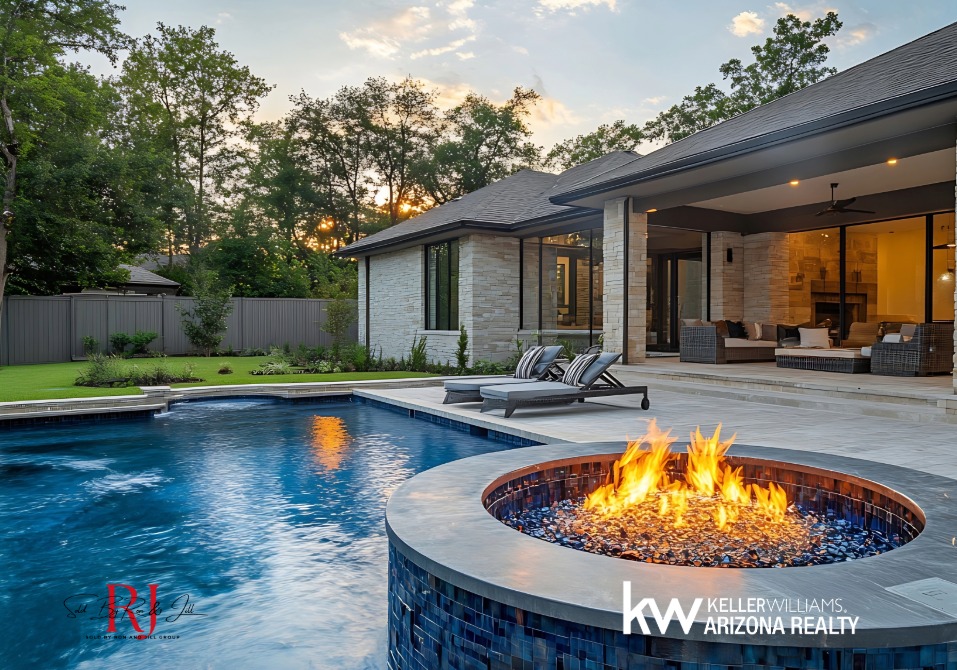
The Complete House Wish List for Phoenix Buyers to Find Your Dream Home
The Terrain: What You Are Navigating in 2026
ARMLS January 2026: 24,358 active listings across Greater Phoenix, $444,740 median sale price, 94 average days on market, 5.17 months supply. West Valley entry range $380,000–$434,000. 59.6% of closings below list price, seller concessions in approximately 56% of transactions.
That is a buyer’s market — not dramatically, but measurably. It means you have time to be deliberate. It also means sellers are watching days on market with anxiety, which gives a prepared buyer real leverage. The preparation starts with knowing exactly what you are looking for before you walk into the first showing.
The West Valley in 2026 is primarily a new construction and recent-build inventory market. Buckeye, Surprise, Goodyear, Peoria, and Waddell are adding housing at scale. The production builder world operates on floor plan menus and option packages, which means your priority list needs to be built before you sit down in a sales office — not during it.
The Weather: Why Buyers Skip This Step
Two behavioral patterns torpedo otherwise competent buyers in Phoenix. The first is the couple that disagrees about priorities but has never written those disagreements down. They tour 30 homes and cannot agree because they are measuring against different undeclared criteria. The second is the solo buyer or aligned couple who knows what they want in the abstract but has never pressure-tested those wants against actual budget constraints and Phoenix-specific trade-offs.
Both patterns produce the same outcome: decision paralysis, extended searches, and eventually an emotionally-driven purchase that looks right in the moment but feels off after 90 days of living in it.
The wish list solves both problems. It is a shared document that forces the conversation before the emotions of touring interfere. And when the conversation reveals that the non-negotiable list costs $80,000 more than the budget allows, you find that out in a spreadsheet — not in a sales office under pressure.
The Three-Tier Framework: Non-Negotiables, Preferences, and Nice-to-Haves
The most durable organizing structure for a home purchase priority list is a three-tier system. Everything you put on the list goes into exactly one tier.
Tier 1 — Non-Negotiables
Features whose absence disqualifies a home regardless of all other qualities. Three to five items maximum. Focus on things that cannot be added or changed: lot size, bedroom count, school district, location radius, single vs. two-story.
Tier 2 — Preferences
Features you want that factor heavily into your decision but do not alone disqualify a home. Pool, garage configuration, floor plan layout, kitchen finishes. These decide ties between comparable homes.
Tier 3 — Nice-to-Haves
Items that add satisfaction but that you would not pay a premium for. These often become negotiating tools — if the seller won’t move on price, maybe they leave the outdoor kitchen or window treatments.
Non-Negotiables Unique to Phoenix: What the Desert Changes
Phoenix buyers have several priority decisions that buyers in other markets do not face at the same weight. These should be resolved explicitly before the search begins.
Single-Story vs. Two-Story
In most markets this is a preference. In Phoenix it is a thermal and lifestyle variable with real implications. Single-story homes typically have larger footprints, more exterior surface exposed to the sun, and higher cooling costs per square foot. Two-story homes can be more energy-efficient, but master bedroom placement on the second floor traps heat overnight in summer without adequate HVAC zoning. If you have mobility considerations, aging-in-place plans, or strong opinions about bedroom layout, this belongs in Tier 1.
Pool: Present vs. Absent vs. Pool-Ready Lot
In Phoenix, a pool is not a luxury feature — it is a July survival mechanism for families with children. A pool-equipped resale home commands a premium, but adding a pool to a home post-purchase runs $60,000 to $100,000 for a quality build in 2026. If a pool is genuinely a non-negotiable for your lifestyle, treat it as Tier 1 and price accordingly. If it is a preference, note whether the lot is pool-ready — adequate size, proper setbacks, and no obstructions — which makes future addition feasible.
Energy Efficiency and Solar
Phoenix is already averaging months of triple-digit temperatures, and projections suggest that window is expanding. A home’s energy envelope is a financial variable that compounds over ownership years. HERS rating, insulation specification, window Low-E coatings, radiant barrier roofing, and solar panel presence or preparation belong on your evaluation checklist. A low-HERS home can save $150–$300 per month in summer utility costs compared to a poorly-specified home at the same price point.
Garage Configuration
The West Valley builds heavily with two-car garages as standard. In Phoenix, the garage is not just vehicle storage — it is where tools, recreational equipment, and overflow storage go because no one uses outdoor sheds in sustained 115-degree summers. If your household has three vehicles, a trailer, RV parking needs, or a workshop requirement, garage configuration belongs in Tier 1. Check HOA rules on RV gates and street parking for any community you evaluate.
HOA vs. No HOA
The West Valley is a masterplanned community market. Most new construction comes with an HOA. HOA fees in Buckeye, Surprise, and Goodyear communities range from approximately $50 to $250 per month depending on amenities. HOA rules govern exterior paint colors, landscaping standards, fence materials, short-term rental permissions, and vehicle storage. If you have strong preferences about how you use and modify your property, HOA restrictions deserve close scrutiny before you fall in love with a specific community.
The Preferences Layer: What Phoenix Buyers Consistently Value
Based on what moves homes fastest in the West Valley market and what buyers cite most often, these are the preference-tier items that most commonly separate shortlisted homes from purchased homes:
- Open-concept kitchen and great room with island seating — the dominant floor plan demand in West Valley new construction
- Covered patio sized for year-round outdoor use — minimum 200 square feet, ideally with ceiling fan and TV conduit
- Primary bedroom suite on main floor in two-story homes — avoids the nighttime heat-trap issue
- Walk-in pantry — consistently ranked among the top kitchen priorities in national buyer surveys
- Laundry room location — ground floor or primary bedroom proximity scores highest
- Three-car garage or extended tandem bay with service door
- North or east-facing rear yard orientation — critical for afternoon shade from May through October
- Updated or new kitchen finishes — quartz countertops, undermount sinks, 42-inch upper cabinets
- Flex room or dedicated office space — remote and hybrid work schedules have made this a consistent Tier 2 item since 2020
- School district verification by parcel — Dysart, Buckeye Union, and Peoria Unified boundaries have significant variation in school performance by individual campus
The Nice-to-Have Layer: The Tie-Breakers
These items rarely close or kill a deal on their own, but they resolve ties between otherwise equivalent homes and give buyers negotiating angles when sellers are inflexible on price:
- Extended or upgraded paver driveway
- Built-in outdoor kitchen or BBQ island
- Spa or hot tub in addition to pool
- Smart home technology pre-installed (thermostat, security, doorbell, irrigation)
- Epoxy garage flooring and built-in cabinetry
- Artificial turf installation — water savings and low maintenance premium in the desert context
- Window treatments and shutters included
- Upgraded appliance packages
- Mountain or preserve views — adds lifestyle value but rarely moves comparables
The Resale Lens: Separating Personal Taste From Market Value
A priority list built entirely around personal preference without a resale filter is a liability. The West Valley has 94 days average time on market — buyers are selective. The question to ask of every Tier 1 and Tier 2 item is not just “do I want this?” but “will the next buyer also want this?”
Features with strong resale performance in Phoenix: pools, covered patios, open floor plans, three-car garages, energy-efficient systems, flexible floor plans with a ground-floor bedroom and bath (multigenerational demand is rising). Features with weaker or more polarizing resale profiles: highly personalized interior color schemes, single-purpose room configurations, pool-only backyards with no patio or shade structure.
Lot orientation is the sleeper item on every wish list. A north-facing rear yard in Phoenix — meaning the patio stays in shade during afternoon hours — is a meaningful lifestyle and energy efficiency advantage. It is rarely listed as a feature by builders and almost never appears on buyer wish lists. Yet buyers who have owned a west-facing backyard in Phoenix through a full summer know exactly why it matters.
For the financial mechanics that shape your purchase structure, see our post on Primary Residence in Arizona: Definition and Impact on Your Mortgage and Taxes. For a full overview of what West Valley new construction actually delivers at various price points, consult the NAHB homebuyer preference research as a national benchmark against your own list.
The Pivot: When the Budget Does Not Match the List
Extend the geography first. Buckeye’s northern expansion zones deliver more square footage and more lot depth per dollar than comparable communities in Goodyear’s established core. Waddell and areas further from the Loop 303 can deliver Tier 1 and 2 features at lower price points with commute trade-offs. If you are remote or hybrid, the commute calculus changes significantly.
Compress the list, not the criteria. If the list has 12 Tier 1 items, three of them are actually Tier 2. Revisit the exercise and be rigorous about what truly disqualifies a home versus what you strongly prefer. Most buyers discover their actual hard non-negotiables are three to four items, not ten.
Separate what you can add from what you cannot. A pool can be added. Lot orientation cannot. A kitchen can be updated. School district boundaries cannot be moved. Build your Tier 1 list around the permanent and structural — the things that 10 years of ownership cannot change.
Frequently Asked Questions
How many items should be on a Phoenix buyer’s non-negotiable list?
Three to five is the practical target. Anything longer usually contains disguised preferences. Run each item through this filter: if a home had every other quality I wanted but lacked this one thing, would I still walk away? If the answer is “probably not,” it belongs in Tier 2.
Is a pool really a non-negotiable in Phoenix or does it depend on the buyer?
It depends on household composition and lifestyle, but the financial case is stronger in Phoenix than anywhere else in the country. Adding a quality pool post-purchase in 2026 costs $60,000 to $100,000. A pool-equipped resale home typically sells at a $20,000 to $50,000 premium over a comparable pool-less home. If your household will use a pool, buying with one already in place is almost always the better financial decision.
How should I think about school districts in West Valley communities?
School district assignment requires parcel-level verification. Community boundaries and school district boundaries do not always align. Within Peoria Unified, Dysart, and Buckeye Union, individual school performance varies significantly by campus. Verify the specific elementary, middle, and high school assigned to a parcel address before treating school district as a checked box.
Does lot orientation actually affect energy bills in Phoenix?
Measurably, yes. A west-facing backyard means your patio, pool area, and rear-facing windows take direct afternoon sun from roughly 1 PM to sunset for the hottest months of the year. East or north-facing rear yards stay shaded during the most intense heat window. Over a 10-year ownership period in Phoenix, the cumulative energy cost difference between an efficiently oriented home and a poorly oriented one is a real number.
What is the most commonly overlooked item on West Valley buyer wish lists?
Lot size and coverage ratio. West Valley production builds have trended toward larger home footprints on standard lots, leaving minimal side and rear yard space. If you want room for a pool, extended covered patio, artificial turf play area, and a functional yard simultaneously, the lot size required is typically 7,200 square feet or more. Buyers who do not specify minimum lot size often find themselves with a beautiful interior and a backyard that cannot accommodate their intended outdoor configuration.
How do I handle disagreements with a partner about the wish list?
Build the list independently first, then compare. Each person ranks their top five non-negotiables without knowledge of the other’s list. The overlap items are your actual shared non-negotiables. Items that appear on only one person’s list get discussed — if the other person cannot articulate a strong reason against it, it moves to Tier 2. This process eliminates the dynamic where one person’s strong preference wins by default because the other person never stated a counter-preference.
Should I be thinking about resale when I write my wish list?
Yes, but not at the expense of your actual lifestyle. The resale lens is most useful for items on the margin — when you are choosing between two homes that both meet your non-negotiables, the one with better resale characteristics (lot orientation, pool, flexible floor plan, three-car garage) is the stronger long-term financial position.
Schedule a Consultation With Ron and Jill
The wish list is the starting document. The consultation with Ron and Jill is where that list gets pressure-tested against actual inventory in the West Valley, current builder incentives, and what the data says about what is available in your price range right now. If you are buying in Goodyear, Buckeye, Peoria, Surprise, or Anthem, schedule the conversation before you tour.



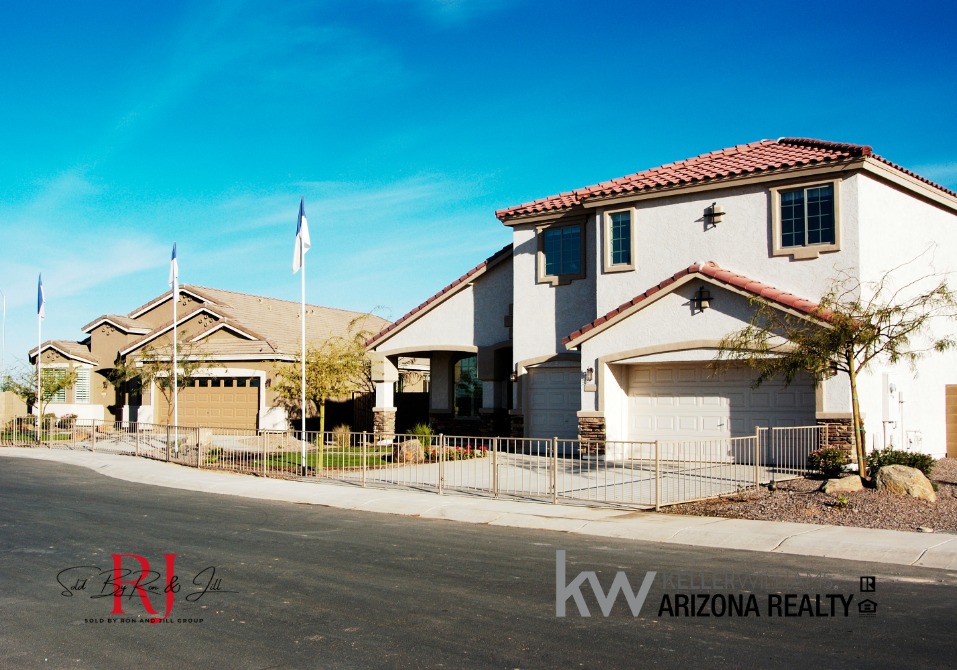
Modern vs. Contemporary Home Designs in Phoenix: What to Know
Modern vs. Contemporary Home Designs in Phoenix: What to Know Modern vs. Contemporary Home Designs in Phoenix: What to Know
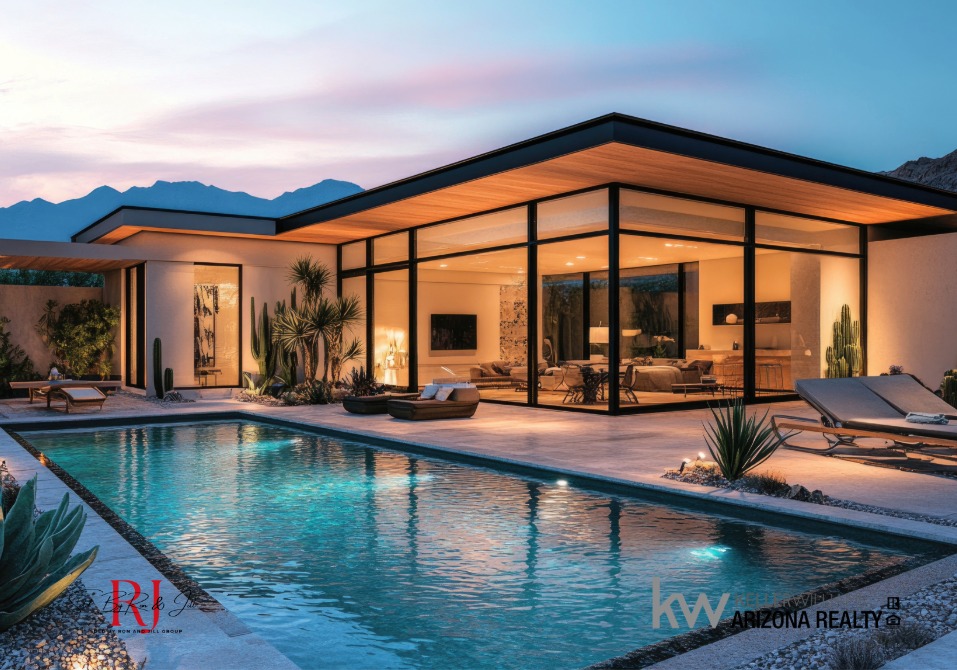
Primary Residence in Arizona: Definition and Impact on Your Mortgage and Taxes
Primary Residence in Arizona: Definition and Impact on Your Mortgage and Taxes Primary Residence in Arizona: Definition and Impact on