
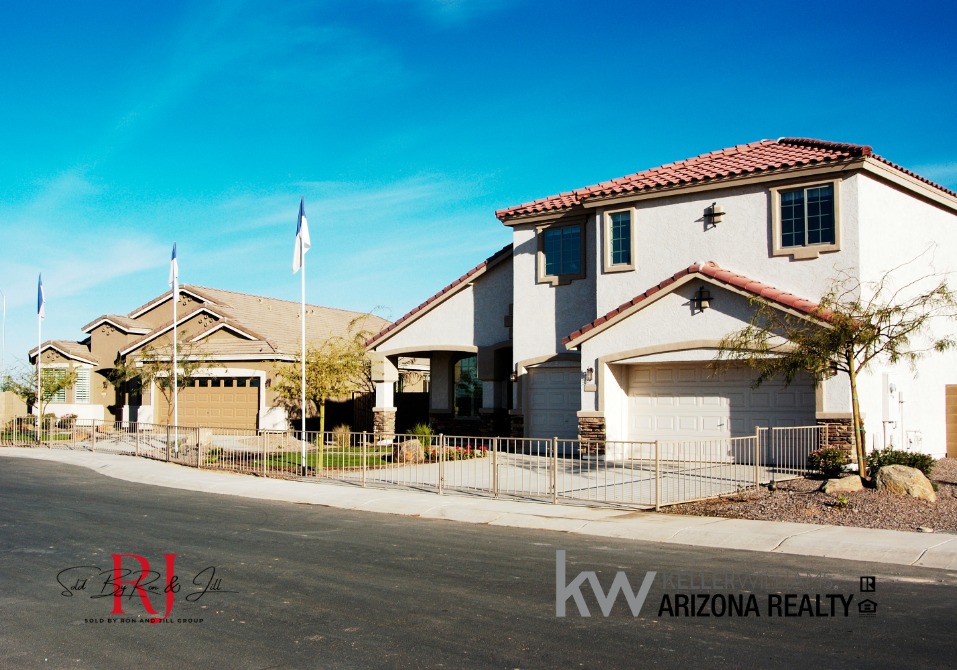
Modern vs. Contemporary Home Designs in Phoenix: What to Know
The Terrain: Design Language in a 24,358-Listing Market
ARMLS January 2026: 24,358 active listings Valley-wide, $444,740 median sale price, 94 average days on market, 5.17 months supply. West Valley entry range $380,000–$434,000. Cromford Market Index: Greater Phoenix approximately 78–80, indicating a buyer-leaning market where design differentiation matters more than it did in 2021.
New construction in the West and Northwest Valley — Buckeye, Surprise, Peoria, Goodyear, Waddell — is heavily concentrated in two design categories: Desert Contemporary and what builders loosely market as “Modern.” The terminology is used interchangeably by sales staff who are not architects. That imprecision costs buyers money. A buyer who values the warm material palette of true Modern design is going to be disappointed walking into a Contemporary build expecting to find it. A buyer who wants the fluid, experimental energy of Contemporary architecture is not going to find it in a midcentury-rooted Modern floor plan.
Understanding the actual definitions before you tour is how you stop wasting weekends on homes that look right in photos but feel wrong in person.
The Weather: Why Everyone Gets This Wrong
The confusion is not laziness — it is a language problem. In everyday English, “modern” means current, new, up to date. In architecture, it means a specific historical movement that peaked between the 1920s and 1960s. Contemporary, meanwhile, literally means “of the present moment” — which is why it cannot be pinned to a fixed aesthetic. By definition, contemporary design is always shifting.
Phoenix compounds the confusion with its own regional hybrid: Desert Modernism. This is a third category that draws from both traditions and layers in Sonoran Desert climate logic — thick thermal mass walls, strategic glazing to manage 115-degree summers, indoor-outdoor connection as a structural necessity, and native material palettes that blur the line between building and landscape.
The honest assessment is that most Phoenix-area new construction marketed as “modern” in 2026 is actually Desert Contemporary — a commercially accessible interpretation of contemporary principles adapted for the Sonoran environment. Knowing that before you walk in changes what you look for.
Modern Design: What It Actually Means
Time period: 1920s through the late 20th century. Rooted in the Bauhaus movement, Scandinavian functionalism, and the work of architects like Le Corbusier and Frank Lloyd Wright. In Phoenix specifically, the midcentury modern tradition runs through Al Beadle, Ralph Haver, and the early Taliesin-influenced work that shaped Scottsdale and central Phoenix.
Modern Design Signatures
- Clean geometric forms, flat or low-sloped rooflines
- Warm natural materials: wood, brick, stone, leather
- Earth-tone palette: taupe, warm gray, ochre
- Horizontally framed windows — light without full glazing
- Symmetry and proportion as organizing principles
- Fixed design philosophy — ages predictably
Contemporary Design Signatures
- Asymmetry, cantilevered forms, fluid shapes
- Floor-to-ceiling glazing, glass walls
- Mixed materials: steel, concrete, glass, stone
- Crisp neutrals with deliberate color pops
- Sustainability and smart tech integrated
- Fluid — always evolving with current trends
In Phoenix context: True modern homes are more likely found in Scottsdale, central Phoenix midcentury neighborhoods, and preservation-conscious infill developments. In the West Valley new construction market, Modern influence most often appears in Desert Modern custom builds and some higher-end production builders referencing midcentury DNA in their exterior palettes and rooflines.
Contemporary Design: What It Actually Means
Time period: Now. Always now. Contemporary design by definition reflects current trends, technologies, and cultural values — which means it looked different in 2005, looks different in 2026, and will look different again in 2035. It is not an architectural style. It is an architectural posture: responsive, experimental, and intentionally non-dogmatic.
In Phoenix context: The Desert Contemporary category dominates luxury new construction across North Scottsdale, Paradise Valley, and high-end custom builds in areas like Anthem and the northern Peoria hills. What West Valley production builders deliver in the $380,000–$500,000 range is a budget interpretation of Contemporary principles — simplified geometry, stucco facades with stone accents, open plans — without the full material specification or engineering sophistication of true contemporary architecture.
Desert Modernism: Phoenix’s Third Category
Phoenix has produced its own architectural hybrid that belongs to neither camp cleanly. Desert Modernism draws the structured geometry and warm material warmth of Modern design, adds the experimentation and indoor-outdoor fluidity of Contemporary, and grounds both in the specific demands of the Sonoran Desert: heat management, solar orientation, water consciousness, and visual integration with the landscape.
Key Desert Modern signatures: rammed earth, adobe, and local stone alongside steel and glass; roof overhangs engineered to block summer sun angles while admitting winter light; courtyard configurations that create shaded outdoor rooms; xeriscaped grounds where the landscape is an extension of the architecture. Reference: azarchitecture.com documents the best examples of this tradition from Al Beadle and Ralph Haver through contemporary desert practitioners.
Why it matters for buyers: A Desert Modern home in Phoenix is typically better calibrated for long-term performance in this climate than either a pure Modern design or a generic Contemporary build. When evaluating new construction in the West Valley, look for evidence of climate-responsive design thinking — not just style vocabulary.
What This Means When You Are Shopping
Production new construction ($380,000–$500,000): Builders in Buckeye, Surprise, Waddell, and Goodyear are overwhelmingly delivering Desert Contemporary at accessible specifications — flat or low-sloped rooflines, open floor plans, stucco with stone veneer accents, neutral interior palettes. Functional and market-appropriate for the price point. Do not expect the material depth of true Modern design or the engineering ambition of high-end Contemporary.
Custom and semi-custom ($600,000+): This is where the design vocabulary diverges meaningfully. A genuine architect-led project in Peoria’s Trilogy or the northern Anthem corridor can deliver Desert Modern or Contemporary execution that production builders cannot replicate. The glazing strategy, material specification, and indoor-outdoor transition are where those builds separate from the volume segment.
Resale positioning: In Phoenix’s current buyer-leaning market — 94 average days on market, 59.6% of closings below list — homes with coherent design identities sell faster and hold value better than trend-chasing hybrids. For more on the new construction evaluation process, see our earlier post on New Construction Phase Inspections in Phoenix.
The Pivot: Practical Decision Framework
If you are deciding between Modern and Contemporary for a new build or renovation in the West Valley, the deciding variables are not aesthetic — they are behavioral. How do you actually live in a home?
Modern design ages better for buyers who value stability over novelty. The fixed principles that define it mean a well-executed Modern home looks intentional in 20 years, not dated. Contemporary design rewards buyers who want the home to reflect the current moment and are willing to update it as that moment shifts.
For Phoenix specifically: prioritize any design that has been engineered for the desert before you prioritize whether it looks Modern or Contemporary. A home with the right roof overhangs, correctly oriented glazing, and thermal mass wall logic will outperform a visually striking but climatically indifferent design every summer for the life of the building.
Frequently Asked Questions
Is Desert Modern the same as midcentury modern?
Related but distinct. Midcentury modern refers to residential design from roughly 1945–1969 that drew on International Style and Organic modernism principles. Desert Modern is a regional evolution that applies those structural and material sensibilities specifically to the Sonoran Desert environment, incorporating climate-responsive elements that standard midcentury design did not prioritize.
Does the design style affect a home’s appraised value?
Not directly — appraisers use comparable sales, not design labels. Indirectly, yes: homes with coherent, marketable design identities in Phoenix have historically demonstrated stronger buyer demand and faster absorption than stylistically ambiguous properties. In a market with 5.17 months of supply, absorption rate is a financial variable, not just a preference.
What should I look for to tell the difference on a new construction tour?
Look at the roof and the glass. True Modern design will have horizontal banding, structured window placement, and warm material textures. Contemporary design will lean toward floor-to-ceiling glazing, asymmetric forms, and material contrast. Desert Modern specifically will show evidence of solar orientation logic — overhangs angled for the Phoenix sun angle, courtyard configurations, or landscape that functions as part of the thermal strategy.
Does design style affect energy efficiency in Phoenix?
Significantly. Floor-to-ceiling west-facing glass in a Phoenix home that was not engineered to manage heat gain is an air conditioning liability. Desert Modern and well-executed contemporary builds use Low-E glass, strategic overhangs, and thermal mass to manage this. Ask the builder for the HERS rating — a lower number means better energy performance.
Can a home be both Modern and Contemporary?
In practice, yes — most Phoenix homes occupy a hybrid space. What you are more likely to find is a Desert Contemporary home with Modern material influences (warm wood tones, earth palette) layered into a contemporary structural framework. The labels matter less than the execution: a coherent design outperforms an incoherent one in both livability and resale.
Where do I see the best examples of each in the Phoenix Metro?
True midcentury Modern: the Marlen Grove and Woodlea neighborhoods in central Phoenix, and the Scottsdale Road corridor around Old Town. Desert Modern: Paradise Valley custom builds and North Scottsdale hillside developments. West Valley Contemporary production: Buckeye’s newer masterplanned communities along I-10, and Surprise’s northern expansion zones off Grand Avenue.
Does Frank Lloyd Wright’s influence show up in Phoenix architecture?
Yes — notably at Taliesin West in Scottsdale, which Wright built as his winter home in 1937. His organic architecture principles — buildings that grow from and respond to their specific land — are a direct antecedent of Desert Modernism. Several Phoenix and Scottsdale architects trained at or drew from Taliesin’s legacy, and its influence on how serious Phoenix architects approach site and climate is still visible in the best contemporary desert builds.
Schedule a Consultation With Ron and Jill
Understanding design vocabulary is intelligence preparation for the actual purchase decision. Whether you are evaluating production new construction in the West Valley, comparing resale homes across design categories, or planning a custom build in Goodyear, Buckeye, Peoria, or Anthem — the conversation with Ron and Jill starts with what you actually need, not what a brochure calls the style.



The Complete House Wish List for Phoenix Buyers to Find Your Dream Home
The Complete House Wish List for Phoenix Buyers to Find Your Dream Home Sold By Ron and Jill Group The
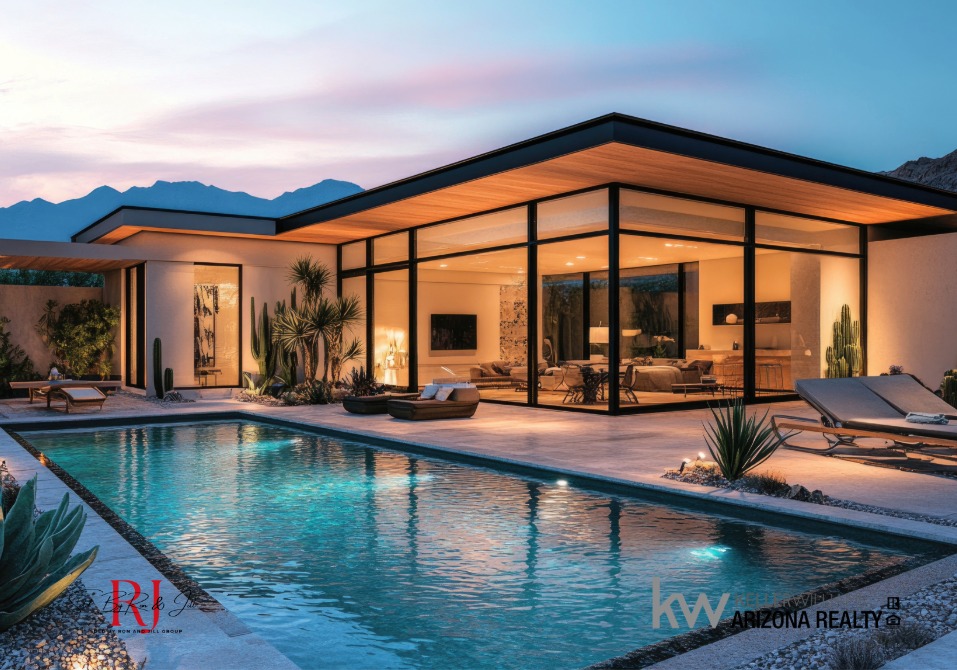
Primary Residence in Arizona: Definition and Impact on Your Mortgage and Taxes
Primary Residence in Arizona: Definition and Impact on Your Mortgage and Taxes Primary Residence in Arizona: Definition and Impact on